Safety and efficacy of low-dose esketamine weakly opioidized anesthesia in elderly patients with lumbar spinal stenosis undergoing surgery: a prospective, double-blind randomized controlled trial.
Ni-Na Hou, Meng-Yun Zhang, Yu-Wei Zhang, Hong-Jing Wu, Hong Luo, Heng Yang
{"title":"Safety and efficacy of low-dose esketamine weakly opioidized anesthesia in elderly patients with lumbar spinal stenosis undergoing surgery: a prospective, double-blind randomized controlled trial.","authors":"Ni-Na Hou, Meng-Yun Zhang, Yu-Wei Zhang, Hong-Jing Wu, Hong Luo, Heng Yang","doi":"10.1186/s12871-025-02908-3","DOIUrl":null,"url":null,"abstract":"<p><strong>Background: </strong>The perioperative use of esketamine may reduce opioid use and their adverse effects. We aimed to evaluate the intraoperative safety and efficacy of weak opioidized anesthesia with low-dose esketamine in the treatment of elderly patients with lumbar spinal stenosis undergoing total laminectomy with complete decompression and interbody implant fusion.</p><p><strong>Methods: </strong>In total, 90 elderly patients were randomized into three groups: the esketamine HS group (0.2 mg/kg induction, 0.25 mg/(kg·h) infusion), the esketamine LS group (0.2 mg/kg induction, 0.125 mg/(kg·h) infusion), and the control group (group C receiving an equal volume of saline). The primary outcome was the cumulative dose of sufentanil administered during the perioperative period. Pain (VAS rest and movement scores) on preoperative day 1 (POD-1), postoperative day 1 (POD1), postoperative day 3 (POD3), and postoperative day 7 (POD7), and serum levels of tumor necrosis factor-α (TNF-α), interleukin-1β (IL-1β), interleukin-6 (IL-6), and interleukin-10 (IL-10) on POD-1, POD1, POD3, and POD7 were the secondary outcomes. We also measured mean arterial pressure and the heart rate of the three groups at each time point before anesthesia (T0), immediately after intubation (T1), 5 min after intubation (T2), at the time of surgical skin incision (T3), at the time of extubation (T4), and 30 min after surgery (T5), intraoperative propofol and remifentanil dosage, and the incidence of adverse reactions within 5 days postoperatively, etc. RESULTS: The cumulative perioperative sufentanil dosage and the number of patients undergoing postoperative PACU remedial analgesia were significantly lower in the HS and LS groups compared to the C group (P < 0.05). Cumulative perioperative sufentanil use was lower in the HS group compared with the LS group (P < 0.01). The VAS dynamic and static pain scores were significantly lower in the HS group at POD1 compared to the C and LS groups. There was no significant difference in VAS dynamic and static pain scores among the three groups at POD3 and POD7 (P > 0.05). At POD1, the VAS dynamic and static pain scores were significantly lower in the HS group compared to the C and LS groups. VAS static pain scores were lower in the LS group at POD1 compared to group C (P < 0.05), whereas VAS dynamic pain scores did not differ compared to group C (P > 0.05). Compared with group C, the serum levels of TNF-α, IL-1β, and IL-6 were significantly lower in the HS and LS groups at POD1, POD3, and POD7. At POD1 and POD3, the serum levels of TNF-α, IL-1β, and IL-6 were lower in the HS group than in the LS group (P < 0.05). Serum IL-10 levels were significantly increased at POD1, POD3, and POD7 in the HS and LS groups compared with group C (P < 0.05). The incidence of intraoperative hypotension was significantly lower in the HS and LS groups compared with group C (P < 0.05). At T2 and T4, the HS and LS groups had significantly lower levels of MAP and HR decline than the C group. At T5, the MAP and HR of the C group were significantly higher than those of the HS and LS groups (P < 0.05). The HR at T3 was reduced in the LS group compared with the C and HS groups (P < 0.05). The incidence of postoperative respiratory depression was reduced in the HS and LS groups compared to the C group (P < 0.05). There was no significant difference between the three groups in terms of postoperative psychiatric adverse reactions, such as hallucinations, nightmares, diplopia, somnolence, and dizziness (P > 0.05).</p><p><strong>Conclusion: </strong>Low-dose esketamine is used for its anti-inflammatory and analgesic effects in lumbar spine surgery of elderly patients. It is beneficial to hemodynamic stabilization and can reduce the incidence of postoperative respiratory depression in elderly patients. Among them, 0.2 mg/kg induction and 0.25 mg/(kg-h) infusion were more effective.</p>","PeriodicalId":9190,"journal":{"name":"BMC Anesthesiology","volume":"25 1","pages":"57"},"PeriodicalIF":2.6000,"publicationDate":"2025-02-05","publicationTypes":"Journal Article","fieldsOfStudy":null,"isOpenAccess":false,"openAccessPdf":"https://www.ncbi.nlm.nih.gov/pmc/articles/PMC11796069/pdf/","citationCount":"0","resultStr":null,"platform":"Semanticscholar","paperid":null,"PeriodicalName":"BMC Anesthesiology","FirstCategoryId":"3","ListUrlMain":"https://doi.org/10.1186/s12871-025-02908-3","RegionNum":3,"RegionCategory":"医学","ArticlePicture":[],"TitleCN":null,"AbstractTextCN":null,"PMCID":null,"EPubDate":"","PubModel":"","JCR":"Q2","JCRName":"ANESTHESIOLOGY","Score":null,"Total":0}
引用次数: 0
Abstract
Background: The perioperative use of esketamine may reduce opioid use and their adverse effects. We aimed to evaluate the intraoperative safety and efficacy of weak opioidized anesthesia with low-dose esketamine in the treatment of elderly patients with lumbar spinal stenosis undergoing total laminectomy with complete decompression and interbody implant fusion.
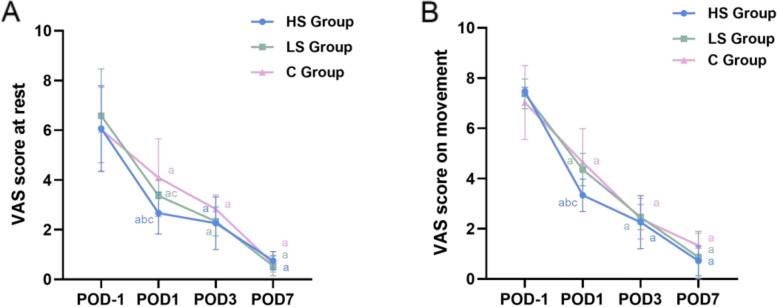
Methods: In total, 90 elderly patients were randomized into three groups: the esketamine HS group (0.2 mg/kg induction, 0.25 mg/(kg·h) infusion), the esketamine LS group (0.2 mg/kg induction, 0.125 mg/(kg·h) infusion), and the control group (group C receiving an equal volume of saline). The primary outcome was the cumulative dose of sufentanil administered during the perioperative period. Pain (VAS rest and movement scores) on preoperative day 1 (POD-1), postoperative day 1 (POD1), postoperative day 3 (POD3), and postoperative day 7 (POD7), and serum levels of tumor necrosis factor-α (TNF-α), interleukin-1β (IL-1β), interleukin-6 (IL-6), and interleukin-10 (IL-10) on POD-1, POD1, POD3, and POD7 were the secondary outcomes. We also measured mean arterial pressure and the heart rate of the three groups at each time point before anesthesia (T0), immediately after intubation (T1), 5 min after intubation (T2), at the time of surgical skin incision (T3), at the time of extubation (T4), and 30 min after surgery (T5), intraoperative propofol and remifentanil dosage, and the incidence of adverse reactions within 5 days postoperatively, etc. RESULTS: The cumulative perioperative sufentanil dosage and the number of patients undergoing postoperative PACU remedial analgesia were significantly lower in the HS and LS groups compared to the C group (P < 0.05). Cumulative perioperative sufentanil use was lower in the HS group compared with the LS group (P < 0.01). The VAS dynamic and static pain scores were significantly lower in the HS group at POD1 compared to the C and LS groups. There was no significant difference in VAS dynamic and static pain scores among the three groups at POD3 and POD7 (P > 0.05). At POD1, the VAS dynamic and static pain scores were significantly lower in the HS group compared to the C and LS groups. VAS static pain scores were lower in the LS group at POD1 compared to group C (P < 0.05), whereas VAS dynamic pain scores did not differ compared to group C (P > 0.05). Compared with group C, the serum levels of TNF-α, IL-1β, and IL-6 were significantly lower in the HS and LS groups at POD1, POD3, and POD7. At POD1 and POD3, the serum levels of TNF-α, IL-1β, and IL-6 were lower in the HS group than in the LS group (P < 0.05). Serum IL-10 levels were significantly increased at POD1, POD3, and POD7 in the HS and LS groups compared with group C (P < 0.05). The incidence of intraoperative hypotension was significantly lower in the HS and LS groups compared with group C (P < 0.05). At T2 and T4, the HS and LS groups had significantly lower levels of MAP and HR decline than the C group. At T5, the MAP and HR of the C group were significantly higher than those of the HS and LS groups (P < 0.05). The HR at T3 was reduced in the LS group compared with the C and HS groups (P < 0.05). The incidence of postoperative respiratory depression was reduced in the HS and LS groups compared to the C group (P < 0.05). There was no significant difference between the three groups in terms of postoperative psychiatric adverse reactions, such as hallucinations, nightmares, diplopia, somnolence, and dizziness (P > 0.05).
Conclusion: Low-dose esketamine is used for its anti-inflammatory and analgesic effects in lumbar spine surgery of elderly patients. It is beneficial to hemodynamic stabilization and can reduce the incidence of postoperative respiratory depression in elderly patients. Among them, 0.2 mg/kg induction and 0.25 mg/(kg-h) infusion were more effective.
期刊介绍:
BMC Anesthesiology is an open access, peer-reviewed journal that considers articles on all aspects of anesthesiology, critical care, perioperative care and pain management, including clinical and experimental research into anesthetic mechanisms, administration and efficacy, technology and monitoring, and associated economic issues.





 京公网安备 11010802042870号
京ICP备2023020795号-1
京公网安备 11010802042870号
京ICP备2023020795号-1

 分享
分享
 求助内容:
求助内容: 应助结果提醒方式:
 扫码关注我们
