Functional Recovery After 18 Sessions of Radio Electric Asymmetric Conveyor Tissue Optimization Reparative Protocol for Hill-Sachs Lesion in a Post-traumatic Shoulder Dislocation.
{"title":"Functional Recovery After 18 Sessions of Radio Electric Asymmetric Conveyor Tissue Optimization Reparative Protocol for Hill-Sachs Lesion in a Post-traumatic Shoulder Dislocation.","authors":"Alessandro Castagna, Enrico Castagna, Vania Fontani, Salvatore Rinaldi","doi":"10.7759/cureus.78495","DOIUrl":null,"url":null,"abstract":"<p><p>This case report describes the clinical progress of a 22-year-old male patient diagnosed with a consolidating Hill-Sachs lesion, treated with 18 sessions of Tissue Optimization Reparative (TO-Rpr) protocol, specific to Radio Electric Asymmetric Conveyor (REAC) technology. At baseline, the patient reported persistent pain with a numeric rating scale (NRS) score of 7 out of 10 and significant functional limitations of the shoulder (flexion 90°, abduction 70°, external rotation 20°), accompanied by bone marrow edema, tendinous alterations, and significant inflammation. The therapeutic protocol aimed to modulate tissue bioelectric activity to promote reparative processes and reduce inflammation. Follow-up MRI, performed four months after treatment, revealed complete resolution of bone marrow edema, normalization of tendinous structures, and reduced cortical irregularities. Clinically, flexion improved to 160°, abduction to 150°, and external rotation to 70°, with muscle strength restored to 5/5 and pain reduced to 0/10 on the NRS. This case highlights the role of REAC TO-Rpr treatment in managing complex joint lesions, showcasing its potential to significantly improve clinical and radiological parameters within a short timeframe.</p>","PeriodicalId":93960,"journal":{"name":"Cureus","volume":"17 2","pages":"e78495"},"PeriodicalIF":1.3000,"publicationDate":"2025-02-04","publicationTypes":"Journal Article","fieldsOfStudy":null,"isOpenAccess":false,"openAccessPdf":"https://www.ncbi.nlm.nih.gov/pmc/articles/PMC11796299/pdf/","citationCount":"0","resultStr":null,"platform":"Semanticscholar","paperid":null,"PeriodicalName":"Cureus","FirstCategoryId":"1085","ListUrlMain":"https://doi.org/10.7759/cureus.78495","RegionNum":0,"RegionCategory":null,"ArticlePicture":[],"TitleCN":null,"AbstractTextCN":null,"PMCID":null,"EPubDate":"2025/2/1 0:00:00","PubModel":"eCollection","JCR":"Q3","JCRName":"MEDICINE, GENERAL & INTERNAL","Score":null,"Total":0}
引用次数: 0
Abstract
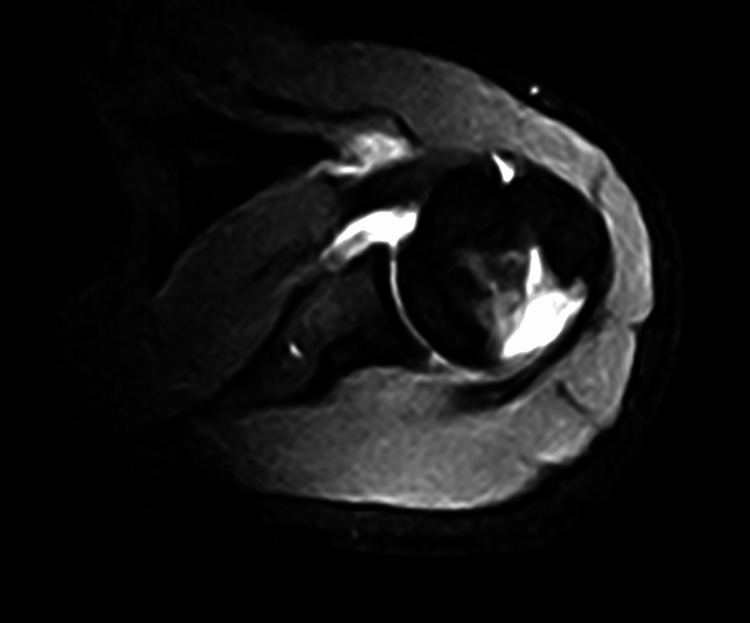
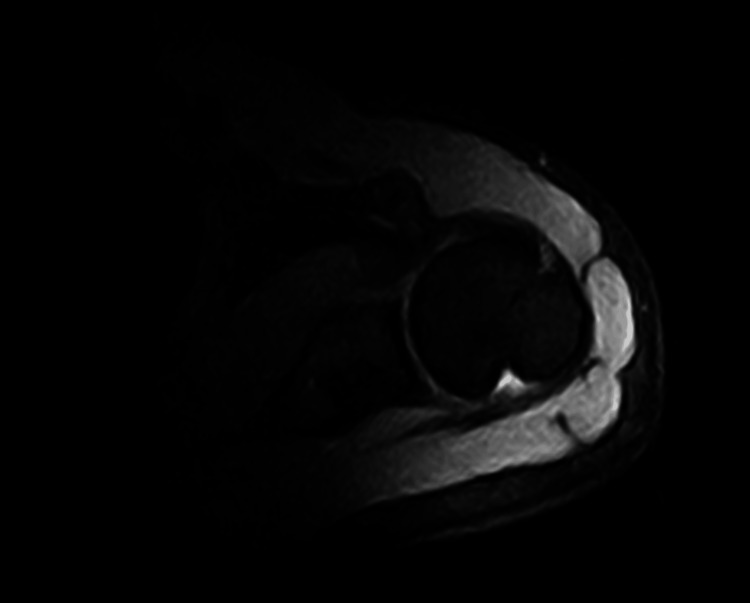
This case report describes the clinical progress of a 22-year-old male patient diagnosed with a consolidating Hill-Sachs lesion, treated with 18 sessions of Tissue Optimization Reparative (TO-Rpr) protocol, specific to Radio Electric Asymmetric Conveyor (REAC) technology. At baseline, the patient reported persistent pain with a numeric rating scale (NRS) score of 7 out of 10 and significant functional limitations of the shoulder (flexion 90°, abduction 70°, external rotation 20°), accompanied by bone marrow edema, tendinous alterations, and significant inflammation. The therapeutic protocol aimed to modulate tissue bioelectric activity to promote reparative processes and reduce inflammation. Follow-up MRI, performed four months after treatment, revealed complete resolution of bone marrow edema, normalization of tendinous structures, and reduced cortical irregularities. Clinically, flexion improved to 160°, abduction to 150°, and external rotation to 70°, with muscle strength restored to 5/5 and pain reduced to 0/10 on the NRS. This case highlights the role of REAC TO-Rpr treatment in managing complex joint lesions, showcasing its potential to significantly improve clinical and radiological parameters within a short timeframe.




 京公网安备 11010802042870号
京ICP备2023020795号-1
京公网安备 11010802042870号
京ICP备2023020795号-1

 分享
分享

 求助内容:
求助内容: 应助结果提醒方式:
 扫码关注我们
