{"title":"Barriers and facilitators to equitable implementation of long-acting ART for adolescents and youth with HIV in low- and middle-income settings.","authors":"Nadia Adjoa Sam-Agudu, Chibueze Adirieje, Allison Lorna Agwu, Natella Rakhmanina","doi":"10.11604/pamj.2024.49.53.45322","DOIUrl":null,"url":null,"abstract":"<p><p>Recent approvals of long-acting (LA) antiretroviral treatment (ART) support an innovative alternative to daily oral pills that can improve adherence and treatment outcomes among adolescents and youth (AY) with HIV. We solicited stakeholder feedback on the implementation of LA ART for AY in low-and middle-income countries (LMICs) through a consensus-building forum at the 2022 International Workshop on HIV and Adolescence. We used the nominal group technique to generate, record, discuss, vote on, and rank perceived barriers and facilitators to implementing LA ART for AY. All in-person attendees were invited to participate and were assigned to six groups, each representing an intentional mix of AY, clinicians, researchers, program implementers, and policymakers. We collected self-reported de-identified demographics and group rankings of barriers and facilitators. Responses were coded and categorized using the social-ecological model's five levels of influence. One hundred and thirty-seven (137) Workshop delegates (67.9% male, 27.7% female; 0.7% non-binary, and 46.7% less than 35 years old) participated in the group discussions. A large proportion of participants (51.9%) reported working in public health/program implementation. Most participants (88.4%) were from and/or worked in the African region. We identified 55 barriers and 48 facilitators of LA ART implementation and ranked them in social-ecological categories of public policy, community, institutional/organizational, interpersonal, and individual levels. The highest number of ranked barriers was at the institutional/organizational level. The themes of \"equitable access\" and \"choices of ART\" were cross-cutting across individual and interpersonal levels. Other cross-cutting themes were the \"cost of LA ART\" and the \"need for funding and sustainability of LA ART programs\". Proposed facilitators addressed identified barriers at each social-ecological level of influence and emphasized peer engagement. Our nominal groups identified key barriers and proposed facilitators at five different social-ecological levels, which can inform implementation science-guided design and equitable implementation of youth-centered LA ART in LMICs and globally.</p>","PeriodicalId":48190,"journal":{"name":"Pan African Medical Journal","volume":"49 ","pages":"53"},"PeriodicalIF":1.0000,"publicationDate":"2024-10-23","publicationTypes":"Journal Article","fieldsOfStudy":null,"isOpenAccess":false,"openAccessPdf":"https://www.ncbi.nlm.nih.gov/pmc/articles/PMC11795122/pdf/","citationCount":"0","resultStr":null,"platform":"Semanticscholar","paperid":null,"PeriodicalName":"Pan African Medical Journal","FirstCategoryId":"1085","ListUrlMain":"https://doi.org/10.11604/pamj.2024.49.53.45322","RegionNum":0,"RegionCategory":null,"ArticlePicture":[],"TitleCN":null,"AbstractTextCN":null,"PMCID":null,"EPubDate":"2024/1/1 0:00:00","PubModel":"eCollection","JCR":"Q4","JCRName":"PUBLIC, ENVIRONMENTAL & OCCUPATIONAL HEALTH","Score":null,"Total":0}
引用次数: 0
Abstract
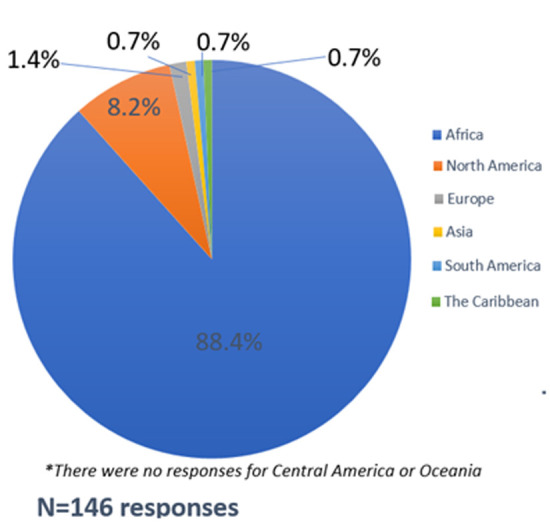
Recent approvals of long-acting (LA) antiretroviral treatment (ART) support an innovative alternative to daily oral pills that can improve adherence and treatment outcomes among adolescents and youth (AY) with HIV. We solicited stakeholder feedback on the implementation of LA ART for AY in low-and middle-income countries (LMICs) through a consensus-building forum at the 2022 International Workshop on HIV and Adolescence. We used the nominal group technique to generate, record, discuss, vote on, and rank perceived barriers and facilitators to implementing LA ART for AY. All in-person attendees were invited to participate and were assigned to six groups, each representing an intentional mix of AY, clinicians, researchers, program implementers, and policymakers. We collected self-reported de-identified demographics and group rankings of barriers and facilitators. Responses were coded and categorized using the social-ecological model's five levels of influence. One hundred and thirty-seven (137) Workshop delegates (67.9% male, 27.7% female; 0.7% non-binary, and 46.7% less than 35 years old) participated in the group discussions. A large proportion of participants (51.9%) reported working in public health/program implementation. Most participants (88.4%) were from and/or worked in the African region. We identified 55 barriers and 48 facilitators of LA ART implementation and ranked them in social-ecological categories of public policy, community, institutional/organizational, interpersonal, and individual levels. The highest number of ranked barriers was at the institutional/organizational level. The themes of "equitable access" and "choices of ART" were cross-cutting across individual and interpersonal levels. Other cross-cutting themes were the "cost of LA ART" and the "need for funding and sustainability of LA ART programs". Proposed facilitators addressed identified barriers at each social-ecological level of influence and emphasized peer engagement. Our nominal groups identified key barriers and proposed facilitators at five different social-ecological levels, which can inform implementation science-guided design and equitable implementation of youth-centered LA ART in LMICs and globally.






 京公网安备 11010802042870号
京ICP备2023020795号-1
京公网安备 11010802042870号
京ICP备2023020795号-1

 分享
分享
 求助内容:
求助内容: 应助结果提醒方式:
 扫码关注我们
