{"title":"Spontaneous Reduction of Posterior Shoulder Dislocation Due to Electrical Injury and the Conservative Management of Associated Complications.","authors":"Naif M Alhamam","doi":"10.7759/cureus.78464","DOIUrl":null,"url":null,"abstract":"<p><p>Posterior shoulder dislocation is a rare and often missed injury, usually due to seizures, electrical shocks, or high-impact trauma. A 32-year-old man with a history of diabetes presented to the emergency department following an electric shock that threw him to the ground. He complained of right shoulder pain with limitation of movement. The initial radiographs of both shoulders did not show fracture or dislocation of either shoulder joint, and the condition was managed with an arm sling. A subsequent CT scan confirmed an irregular depression with sclerosis in the subchondral bone in the anterosuperior part of the humeral head, associated with a spontaneous reduction during the course of the electrical injury. He was managed conservatively, and the one-year follow-up showed excellent clinical results. Most shoulder injuries can be treated satisfactorily without surgery, provided there is no significant instability. This case report emphasizes the successful non-surgical treatment of this very rare posterior shoulder dislocation and highlights that careful rehabilitation, along with conservative management, is effective in ensuring significant recovery. This is further supported by evidence seen in the benefits of non-surgical procedures in similar cases.</p>","PeriodicalId":93960,"journal":{"name":"Cureus","volume":"17 2","pages":"e78464"},"PeriodicalIF":1.3000,"publicationDate":"2025-02-03","publicationTypes":"Journal Article","fieldsOfStudy":null,"isOpenAccess":false,"openAccessPdf":"https://www.ncbi.nlm.nih.gov/pmc/articles/PMC11796310/pdf/","citationCount":"0","resultStr":null,"platform":"Semanticscholar","paperid":null,"PeriodicalName":"Cureus","FirstCategoryId":"1085","ListUrlMain":"https://doi.org/10.7759/cureus.78464","RegionNum":0,"RegionCategory":null,"ArticlePicture":[],"TitleCN":null,"AbstractTextCN":null,"PMCID":null,"EPubDate":"2025/2/1 0:00:00","PubModel":"eCollection","JCR":"Q3","JCRName":"MEDICINE, GENERAL & INTERNAL","Score":null,"Total":0}
引用次数: 0
Abstract
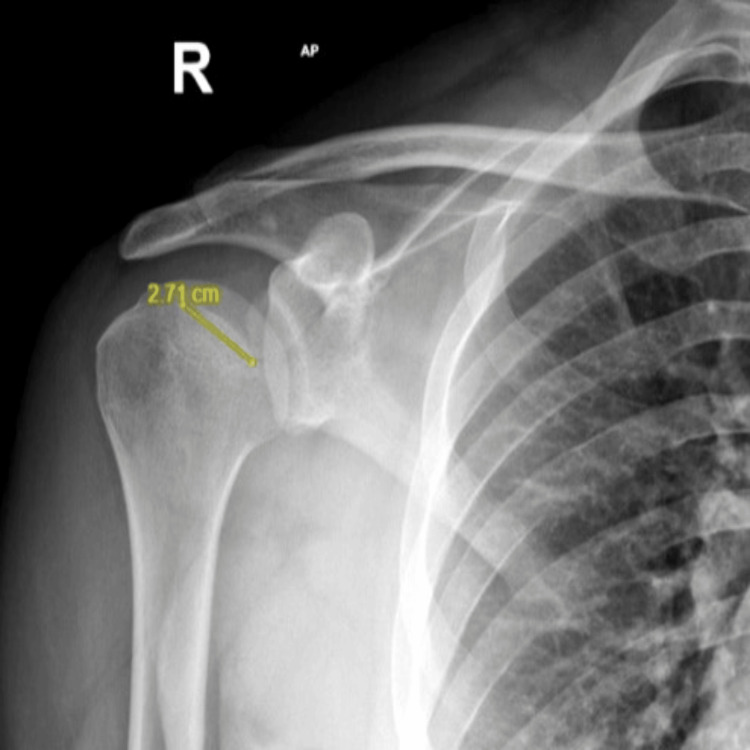
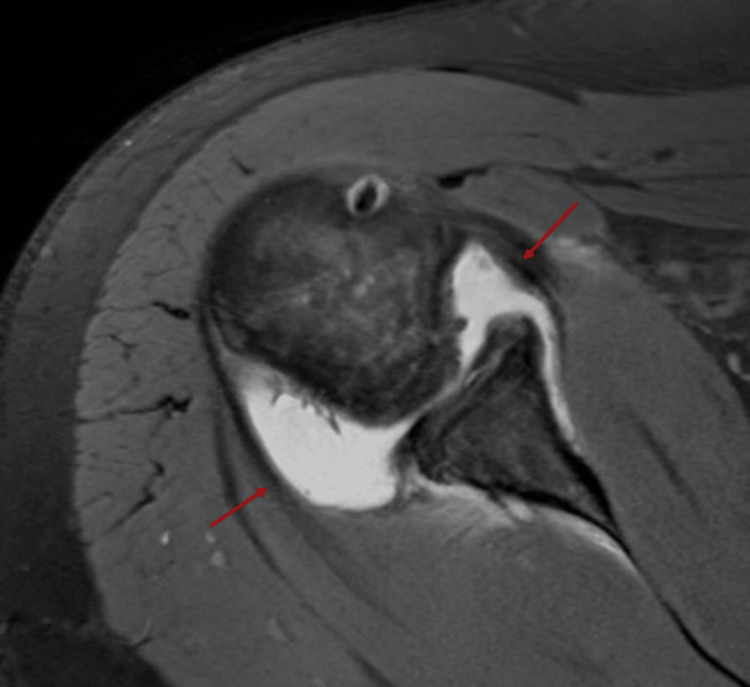
Posterior shoulder dislocation is a rare and often missed injury, usually due to seizures, electrical shocks, or high-impact trauma. A 32-year-old man with a history of diabetes presented to the emergency department following an electric shock that threw him to the ground. He complained of right shoulder pain with limitation of movement. The initial radiographs of both shoulders did not show fracture or dislocation of either shoulder joint, and the condition was managed with an arm sling. A subsequent CT scan confirmed an irregular depression with sclerosis in the subchondral bone in the anterosuperior part of the humeral head, associated with a spontaneous reduction during the course of the electrical injury. He was managed conservatively, and the one-year follow-up showed excellent clinical results. Most shoulder injuries can be treated satisfactorily without surgery, provided there is no significant instability. This case report emphasizes the successful non-surgical treatment of this very rare posterior shoulder dislocation and highlights that careful rehabilitation, along with conservative management, is effective in ensuring significant recovery. This is further supported by evidence seen in the benefits of non-surgical procedures in similar cases.





 京公网安备 11010802042870号
京ICP备2023020795号-1
京公网安备 11010802042870号
京ICP备2023020795号-1

 分享
分享

 求助内容:
求助内容: 应助结果提醒方式:
 扫码关注我们
