Fernando Bessone, Geraldine L Hillotte, Norberto Tamagnone, Daiana Arnedillo, Marcelo G Roma
{"title":"Ursodeoxycholic Acid for the Management of Drug-induced Liver Injury: Role of Hepatoprotective and Anti-cholestatic Mechanisms.","authors":"Fernando Bessone, Geraldine L Hillotte, Norberto Tamagnone, Daiana Arnedillo, Marcelo G Roma","doi":"10.14218/JCTH.2024.00325","DOIUrl":null,"url":null,"abstract":"<p><p>Drug-induced liver injury (DILI) is a harmful reaction to medications, herbs, and dietary supplements that results in liver dysfunction. Based on the distinct clinical patterns of liver damage, DILI can be categorized into hepatocellular, cholestatic, and mixed types. Hepatocellular DILI is linked to inflammation, apoptosis, and necrosis, while cholestatic DILI is commonly associated with bile plugs and, in rare cases, ductopenia. Ursodeoxycholic acid (UDCA) is the therapeutic agent most widely used for the treatment of cholestatic hepatopathies of diverse etiologies and has been mainly used as a supportive treatment in cholestatic DILI. In this review, we presented a more structured and systematic framework for the potential application of this hepatoprotective agent across a broader range of DILI scenarios. A MEDLINE search of the literature from 1995 to the present retrieved 41 preliminary clinical studies suggesting that UDCA may offer curative and preventive benefits for hepatocellular DILI as well. This aligns with preclinical studies in rodents, showing beneficial effects of UDCA in experimental DILI irrespective of the clinical patterns of injury involved. This could be due to the broad range of potentially beneficial effects of UDCA, which may address the various types of liver damage with different causes and mechanisms seen in all forms of DILI. UDCA's beneficial properties include anticholestatic, antioxidant, anti-inflammatory, anti-apoptotic, anti-necrotic, mitochondrial protective, endoplasmic reticulum stress-relieving, and immunomodulatory effects. Controlled studies with systematic use of standardized causality assessments are eagerly awaited to properly validate the use of UDCA in DILI. Meanwhile, we hope this article helps clarify and systematize the use of this versatile and safe hepatoprotective medication for different types of liver toxicity.</p>","PeriodicalId":15484,"journal":{"name":"Journal of Clinical and Translational Hepatology","volume":"13 2","pages":"162-168"},"PeriodicalIF":4.2000,"publicationDate":"2025-02-28","publicationTypes":"Journal Article","fieldsOfStudy":null,"isOpenAccess":false,"openAccessPdf":"https://www.ncbi.nlm.nih.gov/pmc/articles/PMC11797819/pdf/","citationCount":"0","resultStr":null,"platform":"Semanticscholar","paperid":null,"PeriodicalName":"Journal of Clinical and Translational Hepatology","FirstCategoryId":"3","ListUrlMain":"https://doi.org/10.14218/JCTH.2024.00325","RegionNum":3,"RegionCategory":"医学","ArticlePicture":[],"TitleCN":null,"AbstractTextCN":null,"PMCID":null,"EPubDate":"2025/1/21 0:00:00","PubModel":"Epub","JCR":"Q2","JCRName":"GASTROENTEROLOGY & HEPATOLOGY","Score":null,"Total":0}
引用次数: 0
Abstract
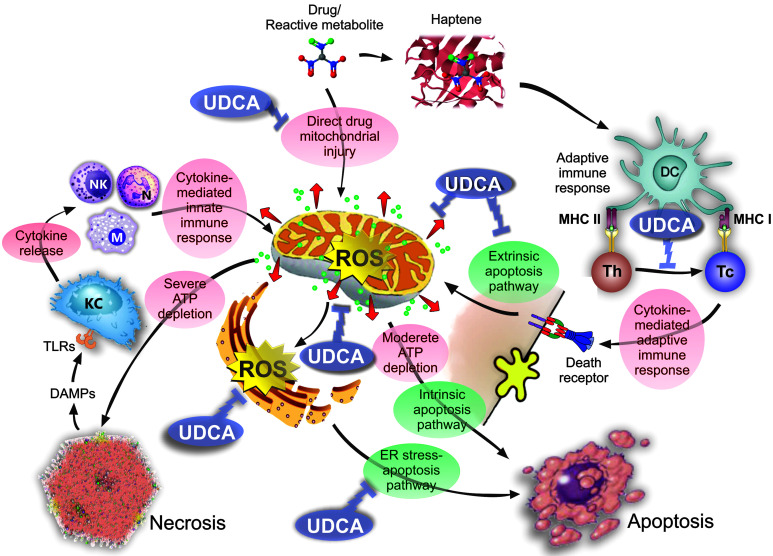
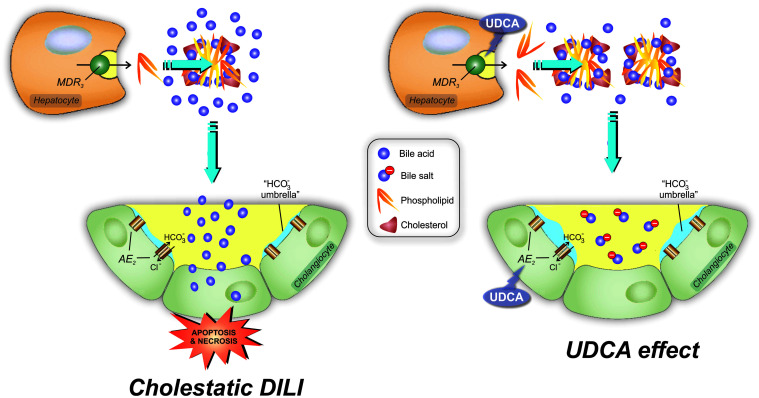
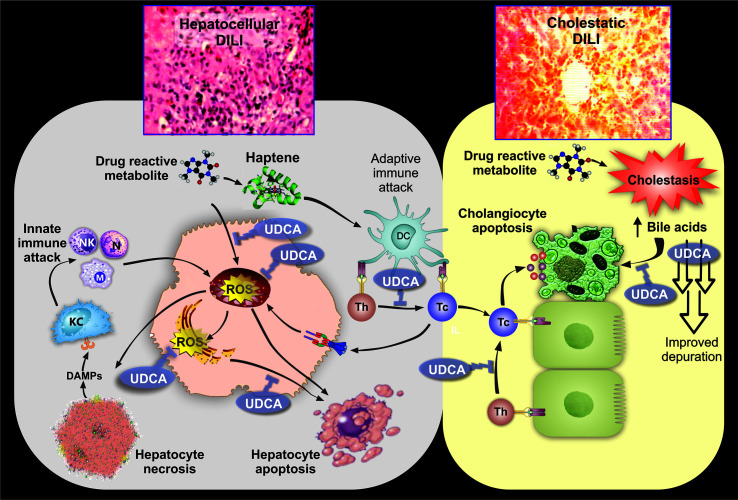
Drug-induced liver injury (DILI) is a harmful reaction to medications, herbs, and dietary supplements that results in liver dysfunction. Based on the distinct clinical patterns of liver damage, DILI can be categorized into hepatocellular, cholestatic, and mixed types. Hepatocellular DILI is linked to inflammation, apoptosis, and necrosis, while cholestatic DILI is commonly associated with bile plugs and, in rare cases, ductopenia. Ursodeoxycholic acid (UDCA) is the therapeutic agent most widely used for the treatment of cholestatic hepatopathies of diverse etiologies and has been mainly used as a supportive treatment in cholestatic DILI. In this review, we presented a more structured and systematic framework for the potential application of this hepatoprotective agent across a broader range of DILI scenarios. A MEDLINE search of the literature from 1995 to the present retrieved 41 preliminary clinical studies suggesting that UDCA may offer curative and preventive benefits for hepatocellular DILI as well. This aligns with preclinical studies in rodents, showing beneficial effects of UDCA in experimental DILI irrespective of the clinical patterns of injury involved. This could be due to the broad range of potentially beneficial effects of UDCA, which may address the various types of liver damage with different causes and mechanisms seen in all forms of DILI. UDCA's beneficial properties include anticholestatic, antioxidant, anti-inflammatory, anti-apoptotic, anti-necrotic, mitochondrial protective, endoplasmic reticulum stress-relieving, and immunomodulatory effects. Controlled studies with systematic use of standardized causality assessments are eagerly awaited to properly validate the use of UDCA in DILI. Meanwhile, we hope this article helps clarify and systematize the use of this versatile and safe hepatoprotective medication for different types of liver toxicity.



 京公网安备 11010802042870号
京ICP备2023020795号-1
京公网安备 11010802042870号
京ICP备2023020795号-1

 分享
分享
 求助内容:
求助内容: 应助结果提醒方式:
 扫码关注我们
