Ahmed M Elmarakby, Shaimaa F K Habib, Ibrahim M Alkhaldy, Rahaf M AlJasser, Labib Mohamed Labib Elsebaey
{"title":"Comparative study for assessment of two different minimally invasive caries removal techniques.","authors":"Ahmed M Elmarakby, Shaimaa F K Habib, Ibrahim M Alkhaldy, Rahaf M AlJasser, Labib Mohamed Labib Elsebaey","doi":"10.1186/s12903-025-05537-x","DOIUrl":null,"url":null,"abstract":"<p><strong>Background: </strong>Conventional method of using carbide burs for caries removal has long been shown to be quite successful. Nevertheless, it has some disadvantages, including excessive dentin removal, and patient discomfort.</p><p><strong>Objective: </strong>The aim of this study was to compare and assess time consumption and the caries removal effectiveness of Smart prep bur II and Brix 3000 in addition to carbide bur (as a control group).</p><p><strong>Materials and methodology: </strong>60 newly extracted carious human permanent premolars were collected from patients between 14 and 24 years old. Teeth were extracted for orthodontic reasons. Caries should be deep but without pulp involvement and all teeth have only one surface caries (mesial or distal class II carious lesions). Samples have been collected, cleaned and stored in distilled water until starting the experiment. Teeth were divided into two groups in addition to third group that represent a control group (n = 20). Infected carious dentin for each group was removed using Smart prep bur II (polymer bur) or Brix 3000 (caries dissolving enzymes). Conventional carbide bur was used to remove carious dentin in the control group. Two parameters were assessed: time consumption and caries removal efficacy. Cavities were inspected by stereomicroscopy and caries removal was categorized after application of caries detector dye.</p><p><strong>Results: </strong>Regarding the amount of time needed for soft caries removal and the efficacy of total amount removed of infected dentine, there was no statistically significant difference (P ˂ 0.001) found between the two minimally invasive groups. While for carbide bur group, recorded values were considered statistically significant (P > 0.001) when compared to the two minimally invasive groups.</p><p><strong>Conclusion: </strong>within the limitation of this in-vitro study, both Smart Prep bur II and BRIX 3000 are efficient methods for caries removal by minimally invasive approach. However, both are less effective and time-consuming methods when compared to conventional carbide bur.</p>","PeriodicalId":9072,"journal":{"name":"BMC Oral Health","volume":"25 1","pages":"196"},"PeriodicalIF":3.1000,"publicationDate":"2025-02-08","publicationTypes":"Journal Article","fieldsOfStudy":null,"isOpenAccess":false,"openAccessPdf":"https://www.ncbi.nlm.nih.gov/pmc/articles/PMC11806575/pdf/","citationCount":"0","resultStr":null,"platform":"Semanticscholar","paperid":null,"PeriodicalName":"BMC Oral Health","FirstCategoryId":"3","ListUrlMain":"https://doi.org/10.1186/s12903-025-05537-x","RegionNum":2,"RegionCategory":"医学","ArticlePicture":[],"TitleCN":null,"AbstractTextCN":null,"PMCID":null,"EPubDate":"","PubModel":"","JCR":"Q1","JCRName":"DENTISTRY, ORAL SURGERY & MEDICINE","Score":null,"Total":0}
引用次数: 0
Abstract
Background: Conventional method of using carbide burs for caries removal has long been shown to be quite successful. Nevertheless, it has some disadvantages, including excessive dentin removal, and patient discomfort.
Objective: The aim of this study was to compare and assess time consumption and the caries removal effectiveness of Smart prep bur II and Brix 3000 in addition to carbide bur (as a control group).
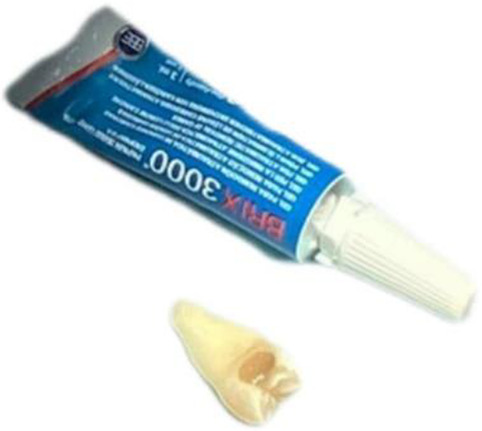
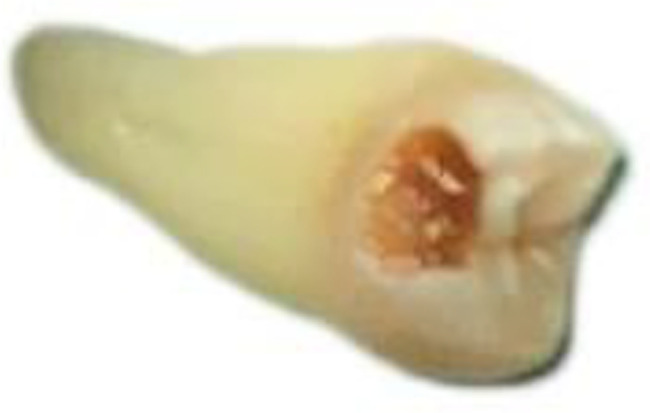
Materials and methodology: 60 newly extracted carious human permanent premolars were collected from patients between 14 and 24 years old. Teeth were extracted for orthodontic reasons. Caries should be deep but without pulp involvement and all teeth have only one surface caries (mesial or distal class II carious lesions). Samples have been collected, cleaned and stored in distilled water until starting the experiment. Teeth were divided into two groups in addition to third group that represent a control group (n = 20). Infected carious dentin for each group was removed using Smart prep bur II (polymer bur) or Brix 3000 (caries dissolving enzymes). Conventional carbide bur was used to remove carious dentin in the control group. Two parameters were assessed: time consumption and caries removal efficacy. Cavities were inspected by stereomicroscopy and caries removal was categorized after application of caries detector dye.
Results: Regarding the amount of time needed for soft caries removal and the efficacy of total amount removed of infected dentine, there was no statistically significant difference (P ˂ 0.001) found between the two minimally invasive groups. While for carbide bur group, recorded values were considered statistically significant (P > 0.001) when compared to the two minimally invasive groups.
Conclusion: within the limitation of this in-vitro study, both Smart Prep bur II and BRIX 3000 are efficient methods for caries removal by minimally invasive approach. However, both are less effective and time-consuming methods when compared to conventional carbide bur.
期刊介绍:
BMC Oral Health is an open access, peer-reviewed journal that considers articles on all aspects of the prevention, diagnosis and management of disorders of the mouth, teeth and gums, as well as related molecular genetics, pathophysiology, and epidemiology.




 京公网安备 11010802042870号
京ICP备2023020795号-1
京公网安备 11010802042870号
京ICP备2023020795号-1

 分享
分享
 求助内容:
求助内容: 应助结果提醒方式:
 扫码关注我们
