{"title":"Impact of magnetic resonance imaging-defined sarcopenia on prognosis in patients with locally advanced nasopharyngeal carcinoma.","authors":"Yuanling Yang, Yang Gao, Yingyi Luo, Weiyi Liu, Peizhen Xie, Lixuan Huang, Zisan Zeng","doi":"10.1007/s12672-025-01925-5","DOIUrl":null,"url":null,"abstract":"<p><strong>Objective: </strong>To investigate the impact of sarcopenia assessed by pretherapy magnetic resonance imaging (MRI) of the third cervical vertebra (C3) on the survival of patients with locally advanced nasopharyngeal carcinoma (LANPC).</p><p><strong>Methods: </strong>We analyzed the clinical information of 478 patients with LANPC who underwent radiotherapy between July 2016 and June 2019. Sarcopenia was evaluated using the skeletal muscle mass index, which was determined based on an MRI of the C3. The cutoff values for sarcopenia were determined using receiver operating characteristic curves. The thresholds were < 12.83 cm<sup>2</sup>/m<sup>2</sup> for male and < 11.15 cm<sup>2</sup>/m<sup>2</sup> for female. Comparisons between patients with and without sarcopenia were conducted using the chi-squared test. The Kaplan-Meier method was applied to plot survival curves, which were then assessed using the log-rank test. Survival factors were identified using univariate and multivariate analyses.</p><p><strong>Results: </strong>The 5-year overall survival (OS) rate was 75.3%, with a median follow-up period of 59 months. Patients with sarcopenia (181/478) had a lower OS than those without sarcopenia (70.7% vs 78.1%, hazard ratio = 1.87, 95% confidence interval: 1.26-2.77, P < 0.01). Sarcopenia was elevated in patients with advanced T-stage tumors and a low body mass index. Univariate and multivariate analyses showed that sarcopenia, age, sex, T stage, and N stage were significant variables that affected the OS of patients with LANPC (P < 0.05).</p><p><strong>Conclusions: </strong>MRI-based sarcopenia is significantly correlated with the OS of patients with LANPC. This finding highlights the importance of evaluating sarcopenia before treatment, as it can guide personalized treatment programs, thereby enhancing patient prognosis.</p>","PeriodicalId":11148,"journal":{"name":"Discover. Oncology","volume":"16 1","pages":"141"},"PeriodicalIF":2.9000,"publicationDate":"2025-02-09","publicationTypes":"Journal Article","fieldsOfStudy":null,"isOpenAccess":false,"openAccessPdf":"https://www.ncbi.nlm.nih.gov/pmc/articles/PMC11807948/pdf/","citationCount":"0","resultStr":null,"platform":"Semanticscholar","paperid":null,"PeriodicalName":"Discover. Oncology","FirstCategoryId":"3","ListUrlMain":"https://doi.org/10.1007/s12672-025-01925-5","RegionNum":4,"RegionCategory":"医学","ArticlePicture":[],"TitleCN":null,"AbstractTextCN":null,"PMCID":null,"EPubDate":"","PubModel":"","JCR":"Q3","JCRName":"ENDOCRINOLOGY & METABOLISM","Score":null,"Total":0}
引用次数: 0
Abstract
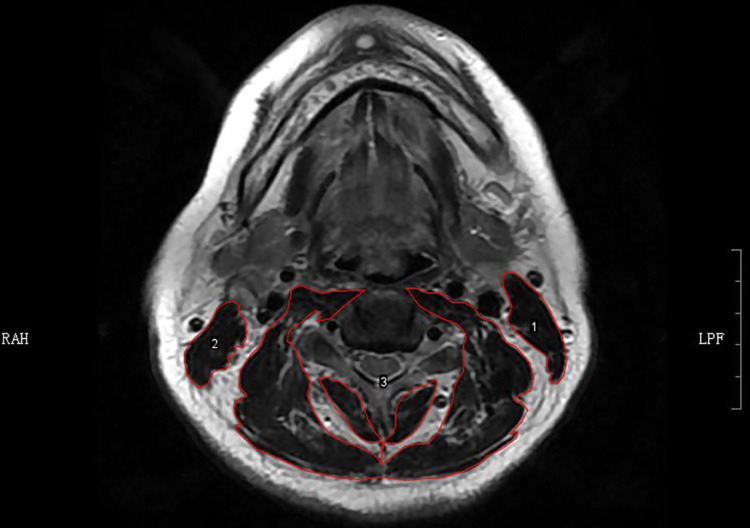
Objective: To investigate the impact of sarcopenia assessed by pretherapy magnetic resonance imaging (MRI) of the third cervical vertebra (C3) on the survival of patients with locally advanced nasopharyngeal carcinoma (LANPC).
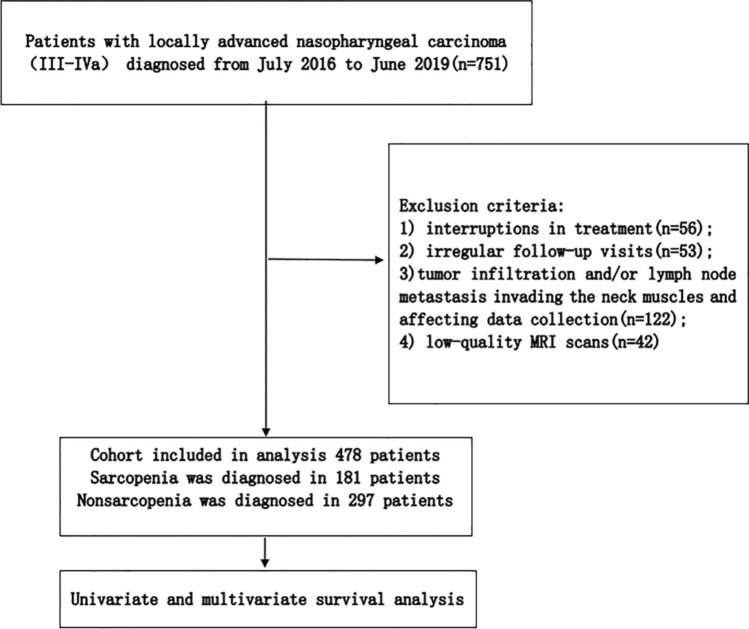
Methods: We analyzed the clinical information of 478 patients with LANPC who underwent radiotherapy between July 2016 and June 2019. Sarcopenia was evaluated using the skeletal muscle mass index, which was determined based on an MRI of the C3. The cutoff values for sarcopenia were determined using receiver operating characteristic curves. The thresholds were < 12.83 cm2/m2 for male and < 11.15 cm2/m2 for female. Comparisons between patients with and without sarcopenia were conducted using the chi-squared test. The Kaplan-Meier method was applied to plot survival curves, which were then assessed using the log-rank test. Survival factors were identified using univariate and multivariate analyses.
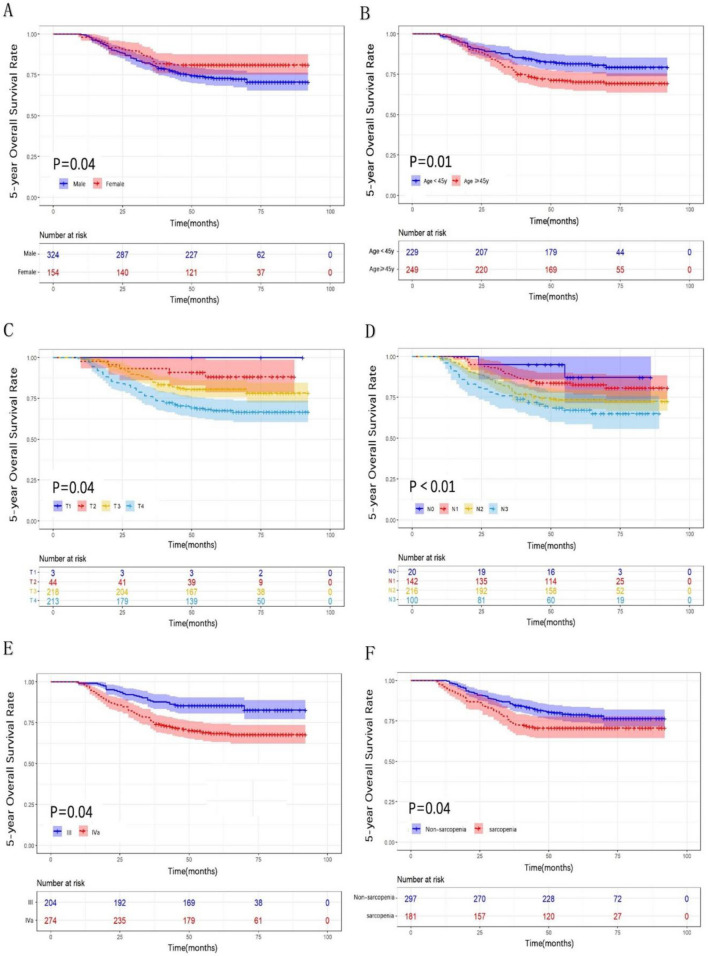
Results: The 5-year overall survival (OS) rate was 75.3%, with a median follow-up period of 59 months. Patients with sarcopenia (181/478) had a lower OS than those without sarcopenia (70.7% vs 78.1%, hazard ratio = 1.87, 95% confidence interval: 1.26-2.77, P < 0.01). Sarcopenia was elevated in patients with advanced T-stage tumors and a low body mass index. Univariate and multivariate analyses showed that sarcopenia, age, sex, T stage, and N stage were significant variables that affected the OS of patients with LANPC (P < 0.05).
Conclusions: MRI-based sarcopenia is significantly correlated with the OS of patients with LANPC. This finding highlights the importance of evaluating sarcopenia before treatment, as it can guide personalized treatment programs, thereby enhancing patient prognosis.
目的:探讨经治疗前第三颈椎(C3)磁共振成像(MRI)评估的肌少症对局部晚期鼻咽癌(LANPC)患者生存的影响。方法:对2016年7月至2019年6月期间接受放疗的478例LANPC患者的临床资料进行分析。使用骨骼肌质量指数评估肌肉减少症,骨骼肌质量指数是基于C3的MRI确定的。使用受试者工作特征曲线确定肌肉减少症的截止值。阈值为男性2/m2,女性2/m2。采用卡方检验对患有和未患有肌肉减少症的患者进行比较。应用Kaplan-Meier法绘制生存曲线,然后使用log-rank检验对其进行评估。通过单因素和多因素分析确定生存因素。结果:5年总生存率(OS)为75.3%,中位随访59个月。肌少症患者(181/478)的OS低于无肌少症患者(70.7% vs 78.1%,风险比= 1.87,95%可信区间:1.26-2.77,P)结论:基于mri的肌少症与LANPC患者的OS显著相关。这一发现强调了在治疗前评估肌肉减少症的重要性,因为它可以指导个性化的治疗方案,从而提高患者的预后。




 京公网安备 11010802042870号
京ICP备2023020795号-1
京公网安备 11010802042870号
京ICP备2023020795号-1

 分享
分享
 求助内容:
求助内容: 应助结果提醒方式:
 扫码关注我们
