Carrie D Johnston, Alina P S Pang, Eugenia L Siegler, Charlene Thomas, Chelsie O Burchett, Mia Crowley, Rochelle O'Brien, Lishomwa C Ndhlovu, Marshall J Glesby, Michael J Corley
{"title":"Sex differences in epigenetic ageing for older people living with HIV.","authors":"Carrie D Johnston, Alina P S Pang, Eugenia L Siegler, Charlene Thomas, Chelsie O Burchett, Mia Crowley, Rochelle O'Brien, Lishomwa C Ndhlovu, Marshall J Glesby, Michael J Corley","doi":"10.1016/j.ebiom.2025.105588","DOIUrl":null,"url":null,"abstract":"<p><strong>Background: </strong>HIV-1 infection impacts biological ageing, and epigenetic clocks highlight epigenetic age acceleration in people with HIV. Despite evidence indicating sex differences in clinical, immunological, and virological measures, females have been underrepresented in most HIV epigenetic studies. Hence, we generated a more representative epigenetic dataset to examine sex differences in epigenetic ageing and relationships to clinical phenotypes and proteomics.</p><p><strong>Methods: </strong>We calculated first, second, and third-generation epigenetic ages using DNA methylation data in an observational cohort of 52 females and 106 males with HIV age 50 and over. We profiled plasma biomarkers with Olink high-throughput proteomics to test associations with epigenetic age acceleration. Survival was ascertained over 5 years.</p><p><strong>Findings: </strong>Epigenetic age acceleration measured by three principal-component based chronological epigenetic age clocks (p = 0.0029, 0.021, 0.010) and one epigenetic mortality risk clock was significantly lower in females living with HIV compared to males (p = 0.0011). Additionally, sex was significantly associated with epigenetic biomarker scores for proportion of naïve CD4+ T cells (p = 0.0006), physical fitness including DNAmGait (p = 0.0010), DNAmGrip (p < 0.0001), and DNAmV02 max (p < 0.0001). We found epigenetic age acceleration associated with plasma proteomic markers involved in inflammation, senescence, immune regulation, kidney function, and tissue homoeostasis (p < 0.0001). Higher epigenetic frailty risk scores were associated with lower CD4 T cell counts (p = 0.0072) and lower CD4/CD8 ratio (p = 0.0017). Slower gait (p = 0.0017), greater frailty (p = 0.0074), and history of smoking (p = 0.042) were associated with increased DNAmFitAge. Risk of death was increased in females with PCPhenoAge acceleration over a 5-year timespan compared to men with PCPhenoAge acceleration (p = 0.03).</p><p><strong>Interpretation: </strong>These results highlight the importance of studying sex-specific differences in epigenetic ageing biomarkers for HIV-related geroscience research.</p><p><strong>Funding: </strong>National Institute on Aging (K23AG072960), National Center for Advancing Translational Sciences (UL1TR000457), National Institute of Mental Health (R21 MH115821).</p>","PeriodicalId":11494,"journal":{"name":"EBioMedicine","volume":"113 ","pages":"105588"},"PeriodicalIF":10.8000,"publicationDate":"2025-03-01","publicationTypes":"Journal Article","fieldsOfStudy":null,"isOpenAccess":false,"openAccessPdf":"https://www.ncbi.nlm.nih.gov/pmc/articles/PMC11849644/pdf/","citationCount":"0","resultStr":null,"platform":"Semanticscholar","paperid":null,"PeriodicalName":"EBioMedicine","FirstCategoryId":"3","ListUrlMain":"https://doi.org/10.1016/j.ebiom.2025.105588","RegionNum":1,"RegionCategory":"医学","ArticlePicture":[],"TitleCN":null,"AbstractTextCN":null,"PMCID":null,"EPubDate":"2025/2/8 0:00:00","PubModel":"Epub","JCR":"Q1","JCRName":"MEDICINE, RESEARCH & EXPERIMENTAL","Score":null,"Total":0}
引用次数: 0
Abstract
Background: HIV-1 infection impacts biological ageing, and epigenetic clocks highlight epigenetic age acceleration in people with HIV. Despite evidence indicating sex differences in clinical, immunological, and virological measures, females have been underrepresented in most HIV epigenetic studies. Hence, we generated a more representative epigenetic dataset to examine sex differences in epigenetic ageing and relationships to clinical phenotypes and proteomics.
Methods: We calculated first, second, and third-generation epigenetic ages using DNA methylation data in an observational cohort of 52 females and 106 males with HIV age 50 and over. We profiled plasma biomarkers with Olink high-throughput proteomics to test associations with epigenetic age acceleration. Survival was ascertained over 5 years.
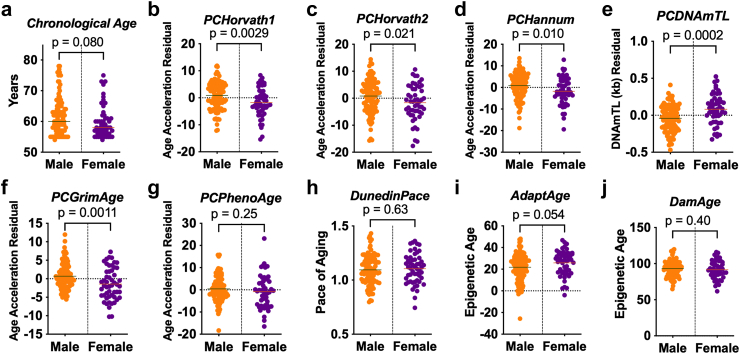
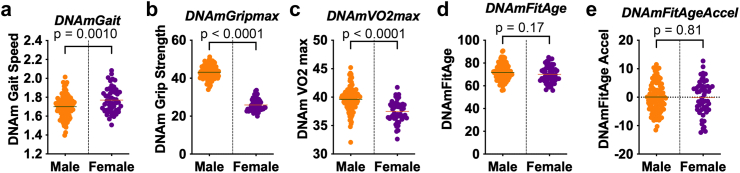
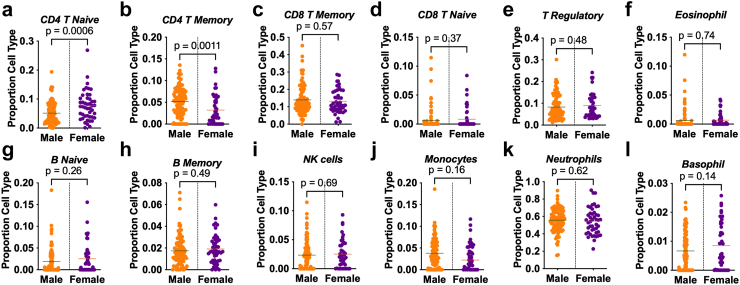
Findings: Epigenetic age acceleration measured by three principal-component based chronological epigenetic age clocks (p = 0.0029, 0.021, 0.010) and one epigenetic mortality risk clock was significantly lower in females living with HIV compared to males (p = 0.0011). Additionally, sex was significantly associated with epigenetic biomarker scores for proportion of naïve CD4+ T cells (p = 0.0006), physical fitness including DNAmGait (p = 0.0010), DNAmGrip (p < 0.0001), and DNAmV02 max (p < 0.0001). We found epigenetic age acceleration associated with plasma proteomic markers involved in inflammation, senescence, immune regulation, kidney function, and tissue homoeostasis (p < 0.0001). Higher epigenetic frailty risk scores were associated with lower CD4 T cell counts (p = 0.0072) and lower CD4/CD8 ratio (p = 0.0017). Slower gait (p = 0.0017), greater frailty (p = 0.0074), and history of smoking (p = 0.042) were associated with increased DNAmFitAge. Risk of death was increased in females with PCPhenoAge acceleration over a 5-year timespan compared to men with PCPhenoAge acceleration (p = 0.03).
Interpretation: These results highlight the importance of studying sex-specific differences in epigenetic ageing biomarkers for HIV-related geroscience research.
Funding: National Institute on Aging (K23AG072960), National Center for Advancing Translational Sciences (UL1TR000457), National Institute of Mental Health (R21 MH115821).
EBioMedicineBiochemistry, Genetics and Molecular Biology-General Biochemistry,Genetics and Molecular Biology
CiteScore
17.70
自引率
0.90%
发文量
579
审稿时长
5 weeks
期刊介绍:
eBioMedicine is a comprehensive biomedical research journal that covers a wide range of studies that are relevant to human health. Our focus is on original research that explores the fundamental factors influencing human health and disease, including the discovery of new therapeutic targets and treatments, the identification of biomarkers and diagnostic tools, and the investigation and modification of disease pathways and mechanisms. We welcome studies from any biomedical discipline that contribute to our understanding of disease and aim to improve human health.



 京公网安备 11010802042870号
京ICP备2023020795号-1
京公网安备 11010802042870号
京ICP备2023020795号-1

 分享
分享
 求助内容:
求助内容: 应助结果提醒方式:
 扫码关注我们
