Tianye Wang , Hongyu Liu , Meng Li , Zao Ji , Xinyuan Zhang , Nan Wang , Ying Chen , Jin Sun , Funan Liu
{"title":"Microneedle-based nanodrugs for tumor immunotherapy","authors":"Tianye Wang , Hongyu Liu , Meng Li , Zao Ji , Xinyuan Zhang , Nan Wang , Ying Chen , Jin Sun , Funan Liu","doi":"10.1016/j.jconrel.2025.02.003","DOIUrl":null,"url":null,"abstract":"<div><div>Microneedles have emerged as a promising and effective method for delivering therapeutic drugs and immunobiologics to treat various diseases. It is widely recognized that immune therapy has limited efficacy in solid tumors due to physical barriers and the immunosuppressive tumor microenvironment. Microneedle-based nanodrugs (NDMNs) offer a novel approach to overcome these limitations. These tiny needles are designed to load a variety of inorganic and organic nanoparticles, antigen vaccines, gene drugs, oncolytic viruses, and more. Utilizing microneedle arrays, NDMNs can effectively penetrate the skin barrier, delivering drugs precisely to the tumor site or immunoactive regions within the skin. Additionally, by designing and optimizing the microneedle structure, shape, and functionality, NDMNs enable precise drug release and efficient penetration, thereby enhancing the efficacy of tumor immunotherapy. In this review, we comprehensively discuss the pivotal role of NDMNs in cancer immunotherapy, summarizing innovative microneedle design strategies, mechanisms of immune activation, and delivery strategies of various nanodrugs. Furthermore, we explore the current clinical realities, limitations, and future prospects of NDMNs in tumor immunotherapy.</div></div>","PeriodicalId":15450,"journal":{"name":"Journal of Controlled Release","volume":"380 ","pages":"Pages 539-562"},"PeriodicalIF":11.5000,"publicationDate":"2025-04-10","publicationTypes":"Journal Article","fieldsOfStudy":null,"isOpenAccess":false,"openAccessPdf":"","citationCount":"0","resultStr":null,"platform":"Semanticscholar","paperid":null,"PeriodicalName":"Journal of Controlled Release","FirstCategoryId":"3","ListUrlMain":"https://www.sciencedirect.com/science/article/pii/S0168365925001087","RegionNum":1,"RegionCategory":"医学","ArticlePicture":[],"TitleCN":null,"AbstractTextCN":null,"PMCID":null,"EPubDate":"2025/2/13 0:00:00","PubModel":"Epub","JCR":"Q1","JCRName":"CHEMISTRY, MULTIDISCIPLINARY","Score":null,"Total":0}
引用次数: 0
Abstract
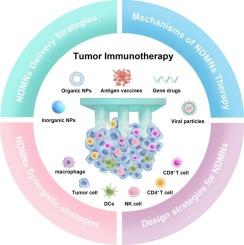
Microneedles have emerged as a promising and effective method for delivering therapeutic drugs and immunobiologics to treat various diseases. It is widely recognized that immune therapy has limited efficacy in solid tumors due to physical barriers and the immunosuppressive tumor microenvironment. Microneedle-based nanodrugs (NDMNs) offer a novel approach to overcome these limitations. These tiny needles are designed to load a variety of inorganic and organic nanoparticles, antigen vaccines, gene drugs, oncolytic viruses, and more. Utilizing microneedle arrays, NDMNs can effectively penetrate the skin barrier, delivering drugs precisely to the tumor site or immunoactive regions within the skin. Additionally, by designing and optimizing the microneedle structure, shape, and functionality, NDMNs enable precise drug release and efficient penetration, thereby enhancing the efficacy of tumor immunotherapy. In this review, we comprehensively discuss the pivotal role of NDMNs in cancer immunotherapy, summarizing innovative microneedle design strategies, mechanisms of immune activation, and delivery strategies of various nanodrugs. Furthermore, we explore the current clinical realities, limitations, and future prospects of NDMNs in tumor immunotherapy.
期刊介绍:
The Journal of Controlled Release (JCR) proudly serves as the Official Journal of the Controlled Release Society and the Japan Society of Drug Delivery System.
Dedicated to the broad field of delivery science and technology, JCR publishes high-quality research articles covering drug delivery systems and all facets of formulations. This includes the physicochemical and biological properties of drugs, design and characterization of dosage forms, release mechanisms, in vivo testing, and formulation research and development across pharmaceutical, diagnostic, agricultural, environmental, cosmetic, and food industries.
Priority is given to manuscripts that contribute to the fundamental understanding of principles or demonstrate the advantages of novel technologies in terms of safety and efficacy over current clinical standards. JCR strives to be a leading platform for advancements in delivery science and technology.




 京公网安备 11010802042870号
京ICP备2023020795号-1
京公网安备 11010802042870号
京ICP备2023020795号-1

 分享
分享
 求助内容:
求助内容: 应助结果提醒方式:
 扫码关注我们
