Emi Sawada, Toru Yamamoto, Naotaka Kishimoto, Dai Ooishi, Hiroyuki Sasakura, Kosei Takeuchi, Kenji Seo
{"title":"Creating Alternative Afferent Input to Facilitate the Regeneration of Injured Primary Afferent Neurons.","authors":"Emi Sawada, Toru Yamamoto, Naotaka Kishimoto, Dai Ooishi, Hiroyuki Sasakura, Kosei Takeuchi, Kenji Seo","doi":"10.7759/cureus.78708","DOIUrl":null,"url":null,"abstract":"<p><p>The trigeminal spinal tract nucleus receives primary afferent input from the orofacial region, serving as a relay between peripheral terminals and secondary neurons. The trigeminal nerve is divided into ophthalmic, maxillary, and mandibular. While it is known that primary afferent terminals synapse with secondary neurons, the interaction between different primary terminals remains unclear. Recent studies have shown that trigeminal neurons with lost input can be activated through electrical stimulation of other afferent terminals. Therefore, we examined the possibility of inducing neural activity using synaptic organizers to promote circuit reorganization. To assess the regeneration of the injured inferior alveolar nerve (third division of the trigeminal nerve), the potential involvement of input from the infraorbital nerve (second division of the trigeminal nerve) in the regeneration of the injured inferior alveolar nerve (third division of the trigeminal nerve) was investigated. Intact and injured groups were created for the second and third divisions to facilitate comparative analysis. A synapse organizer was applied to establish input between the primary afferent terminals of these divisions. This study aimed to determine if central connections between different terminals can activate trigeminal neurons with lost input, ultimately promoting peripheral nerve regeneration. In this research, male C57BL/6J mice (seven to nine weeks old) (total n=40) underwent transection of the inferior alveolar nerve. They were divided into three groups: intact (n=10), injured (saline control) (n=10), and synapse organizer (n=10). In addition, the mice were divided into two groups: one group underwent inferior alveolar nerve transection only (II, intact; III, injured, n=5), and the other group underwent transection of both the infraorbital and inferior alveolar nerves (II, injured; III, injured, n=5), followed by local administration of a synapse organizer. Regeneration was assessed using immunostaining, sensory tests, and retrograde tracing. Regeneration was confirmed by retrograde tracing and functional recovery of sensory thresholds in the skin of the mental region. These findings align with previous observations that infraorbital nerve transection reduced regeneration activity, suggesting that infraorbital input triggered regeneration in the mandibular nerve. Thus, the results propose a novel therapeutic approach where mandibular nerve injury can be treated by stimulating the infraorbital nerve immediately after injury, enhancing peripheral nerve regeneration.</p>","PeriodicalId":93960,"journal":{"name":"Cureus","volume":"17 2","pages":"e78708"},"PeriodicalIF":1.3000,"publicationDate":"2025-02-07","publicationTypes":"Journal Article","fieldsOfStudy":null,"isOpenAccess":false,"openAccessPdf":"https://www.ncbi.nlm.nih.gov/pmc/articles/PMC11805595/pdf/","citationCount":"0","resultStr":null,"platform":"Semanticscholar","paperid":null,"PeriodicalName":"Cureus","FirstCategoryId":"1085","ListUrlMain":"https://doi.org/10.7759/cureus.78708","RegionNum":0,"RegionCategory":null,"ArticlePicture":[],"TitleCN":null,"AbstractTextCN":null,"PMCID":null,"EPubDate":"2025/2/1 0:00:00","PubModel":"eCollection","JCR":"Q3","JCRName":"MEDICINE, GENERAL & INTERNAL","Score":null,"Total":0}
引用次数: 0
Abstract
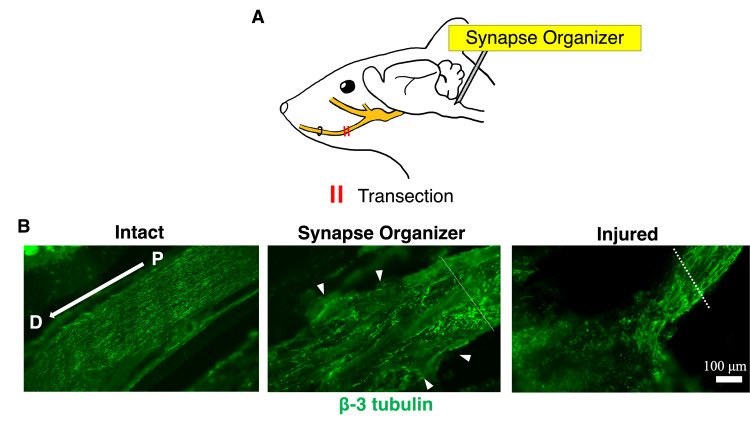
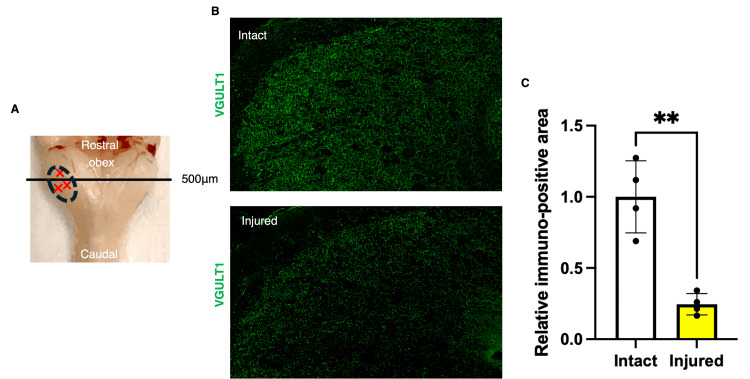
The trigeminal spinal tract nucleus receives primary afferent input from the orofacial region, serving as a relay between peripheral terminals and secondary neurons. The trigeminal nerve is divided into ophthalmic, maxillary, and mandibular. While it is known that primary afferent terminals synapse with secondary neurons, the interaction between different primary terminals remains unclear. Recent studies have shown that trigeminal neurons with lost input can be activated through electrical stimulation of other afferent terminals. Therefore, we examined the possibility of inducing neural activity using synaptic organizers to promote circuit reorganization. To assess the regeneration of the injured inferior alveolar nerve (third division of the trigeminal nerve), the potential involvement of input from the infraorbital nerve (second division of the trigeminal nerve) in the regeneration of the injured inferior alveolar nerve (third division of the trigeminal nerve) was investigated. Intact and injured groups were created for the second and third divisions to facilitate comparative analysis. A synapse organizer was applied to establish input between the primary afferent terminals of these divisions. This study aimed to determine if central connections between different terminals can activate trigeminal neurons with lost input, ultimately promoting peripheral nerve regeneration. In this research, male C57BL/6J mice (seven to nine weeks old) (total n=40) underwent transection of the inferior alveolar nerve. They were divided into three groups: intact (n=10), injured (saline control) (n=10), and synapse organizer (n=10). In addition, the mice were divided into two groups: one group underwent inferior alveolar nerve transection only (II, intact; III, injured, n=5), and the other group underwent transection of both the infraorbital and inferior alveolar nerves (II, injured; III, injured, n=5), followed by local administration of a synapse organizer. Regeneration was assessed using immunostaining, sensory tests, and retrograde tracing. Regeneration was confirmed by retrograde tracing and functional recovery of sensory thresholds in the skin of the mental region. These findings align with previous observations that infraorbital nerve transection reduced regeneration activity, suggesting that infraorbital input triggered regeneration in the mandibular nerve. Thus, the results propose a novel therapeutic approach where mandibular nerve injury can be treated by stimulating the infraorbital nerve immediately after injury, enhancing peripheral nerve regeneration.




 京公网安备 11010802042870号
京ICP备2023020795号-1
京公网安备 11010802042870号
京ICP备2023020795号-1

 分享
分享

 求助内容:
求助内容: 应助结果提醒方式:
 扫码关注我们
