{"title":"A Screening Tool to Predict Sepsis in Patients With Suspected Infection in the Emergency Department.","authors":"Yasufumi Oi, Fumihiro Ogawa, Hiroshi Honzawa, Takeru Abe, Shouhei Imaki, Ichiro Takeuchi","doi":"10.7759/cureus.78728","DOIUrl":null,"url":null,"abstract":"<p><p>Background and objective Sepsis is a life-threatening condition associated with high morbidity and mortality, and hence early recognition and treatment are crucial. The 2016 Sepsis-3 guidelines introduced the quick Sequential Organ Failure Assessment (qSOFA), but its low sensitivity limits early detection. The 2021 Surviving Sepsis Campaign Guidelines (SSCG) discourage relying solely on qSOFA and recommend additional tools such as the systemic inflammatory response syndrome (SIRS) score, the National Early Warning Score (NEWS), and the Modified Early Warning Score (MEWS) along with lactate measurement. This study assessed whether combining qSOFA with quantitative capillary refill time (Q-CRT) or lactate levels enhances early sepsis diagnosis in emergency departments. Methods This retrospective, multi-facility observational study was conducted at two hospitals in Yokohama, Japan. Patients with suspected infections who underwent Q-CRT measurement were included. Q-CRT was measured using a pulse oximeter-based device that records the time taken for blood flow to return to 90% after compression. Receiver operating characteristic (ROC) curves determined the area under the curve (AUC), sensitivity, and specificity. Statistical significance was set at p<0.05. Results Of the 357 patients who underwent Q-CRT measurement, 75 (21%) were suspected of having an infection, with 48 (64%) classified as having sepsis with organ dysfunction. Patients in the sepsis group had higher age, heart rate, lactate level, creatinine level, NEWS, MEWS, and Sequential Organ Failure Assessment (SOFA) scores compared to those without organ dysfunction. Among individual tools, the qSOFA, NEWS, and MEWS scores showed high AUCs (>0.8), while Q-CRT and lactate levels demonstrated moderate predictive accuracy with AUCs exceeding 0.7. The SIRS score had the lowest predictive ability, with an AUC of approximately 0.6. Combining qSOFA with Q-CRT or lactate levels significantly improved sensitivity and specificity. The qSOFA+Q-CRT combination resulted in an AUC of 0.821, sensitivity of 83.3%, and specificity of 81.4%, while the qSOFA+lactate combination yielded an AUC of 0.844, sensitivity of 87.5%, and specificity of 81.4%. These combinations exceeded 80% in both sensitivity and specificity, unlike the SIRS-based combinations, which showed limited improvement and specificity below 40%. While the qSOFA score alone demonstrated limited sensitivity, combining it with Q-CRT or lactate levels enhanced its predictive performance for early sepsis detection. This approach improved sensitivity without compromising specificity. The increase in sensitivity and specificity is likely due to Q-CRT and lactate identifying sepsis cases not detected by qSOFA, thereby making the combined approach more reliable for clinical use. Lactate levels are well-established markers associated with sepsis severity, and Q-CRT offers a non-invasive means of assessing peripheral perfusion. Conclusions Combining qSOFA with Q-CRT or lactate levels significantly improves early sepsis detection by enhancing both sensitivity and specificity. These combinations offer superior diagnostic accuracy compared to standalone tools, supporting their potential integration into clinical protocols for better patient outcomes. Further prospective studies are needed to validate these findings across diverse clinical settings.</p>","PeriodicalId":93960,"journal":{"name":"Cureus","volume":"17 2","pages":"e78728"},"PeriodicalIF":1.3000,"publicationDate":"2025-02-08","publicationTypes":"Journal Article","fieldsOfStudy":null,"isOpenAccess":false,"openAccessPdf":"https://www.ncbi.nlm.nih.gov/pmc/articles/PMC11806647/pdf/","citationCount":"0","resultStr":null,"platform":"Semanticscholar","paperid":null,"PeriodicalName":"Cureus","FirstCategoryId":"1085","ListUrlMain":"https://doi.org/10.7759/cureus.78728","RegionNum":0,"RegionCategory":null,"ArticlePicture":[],"TitleCN":null,"AbstractTextCN":null,"PMCID":null,"EPubDate":"2025/2/1 0:00:00","PubModel":"eCollection","JCR":"Q3","JCRName":"MEDICINE, GENERAL & INTERNAL","Score":null,"Total":0}
引用次数: 0
Abstract
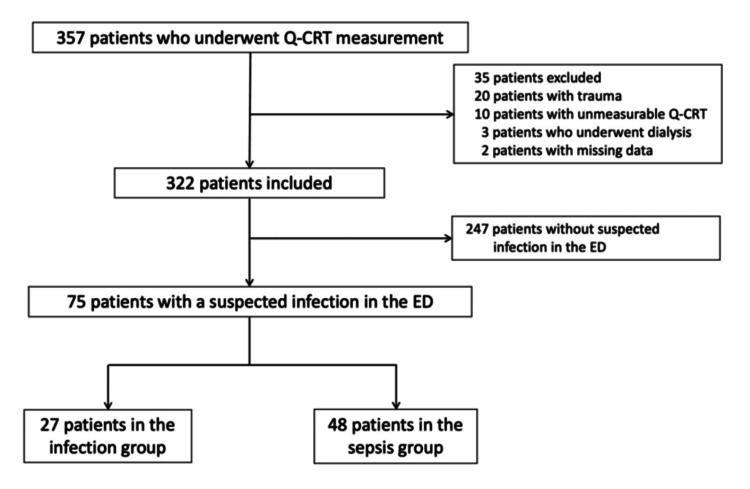
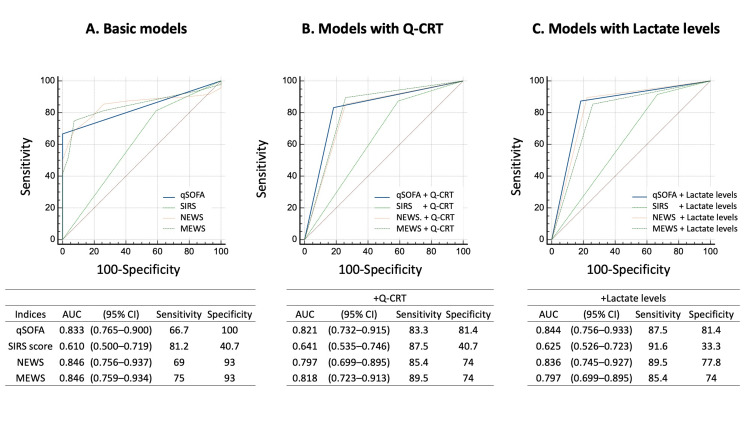
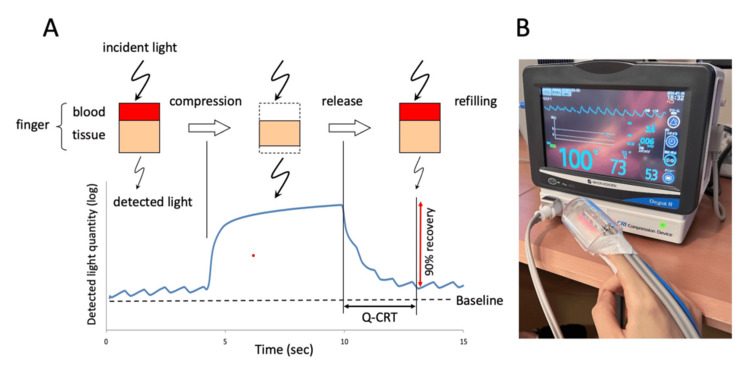
Background and objective Sepsis is a life-threatening condition associated with high morbidity and mortality, and hence early recognition and treatment are crucial. The 2016 Sepsis-3 guidelines introduced the quick Sequential Organ Failure Assessment (qSOFA), but its low sensitivity limits early detection. The 2021 Surviving Sepsis Campaign Guidelines (SSCG) discourage relying solely on qSOFA and recommend additional tools such as the systemic inflammatory response syndrome (SIRS) score, the National Early Warning Score (NEWS), and the Modified Early Warning Score (MEWS) along with lactate measurement. This study assessed whether combining qSOFA with quantitative capillary refill time (Q-CRT) or lactate levels enhances early sepsis diagnosis in emergency departments. Methods This retrospective, multi-facility observational study was conducted at two hospitals in Yokohama, Japan. Patients with suspected infections who underwent Q-CRT measurement were included. Q-CRT was measured using a pulse oximeter-based device that records the time taken for blood flow to return to 90% after compression. Receiver operating characteristic (ROC) curves determined the area under the curve (AUC), sensitivity, and specificity. Statistical significance was set at p<0.05. Results Of the 357 patients who underwent Q-CRT measurement, 75 (21%) were suspected of having an infection, with 48 (64%) classified as having sepsis with organ dysfunction. Patients in the sepsis group had higher age, heart rate, lactate level, creatinine level, NEWS, MEWS, and Sequential Organ Failure Assessment (SOFA) scores compared to those without organ dysfunction. Among individual tools, the qSOFA, NEWS, and MEWS scores showed high AUCs (>0.8), while Q-CRT and lactate levels demonstrated moderate predictive accuracy with AUCs exceeding 0.7. The SIRS score had the lowest predictive ability, with an AUC of approximately 0.6. Combining qSOFA with Q-CRT or lactate levels significantly improved sensitivity and specificity. The qSOFA+Q-CRT combination resulted in an AUC of 0.821, sensitivity of 83.3%, and specificity of 81.4%, while the qSOFA+lactate combination yielded an AUC of 0.844, sensitivity of 87.5%, and specificity of 81.4%. These combinations exceeded 80% in both sensitivity and specificity, unlike the SIRS-based combinations, which showed limited improvement and specificity below 40%. While the qSOFA score alone demonstrated limited sensitivity, combining it with Q-CRT or lactate levels enhanced its predictive performance for early sepsis detection. This approach improved sensitivity without compromising specificity. The increase in sensitivity and specificity is likely due to Q-CRT and lactate identifying sepsis cases not detected by qSOFA, thereby making the combined approach more reliable for clinical use. Lactate levels are well-established markers associated with sepsis severity, and Q-CRT offers a non-invasive means of assessing peripheral perfusion. Conclusions Combining qSOFA with Q-CRT or lactate levels significantly improves early sepsis detection by enhancing both sensitivity and specificity. These combinations offer superior diagnostic accuracy compared to standalone tools, supporting their potential integration into clinical protocols for better patient outcomes. Further prospective studies are needed to validate these findings across diverse clinical settings.



 京公网安备 11010802042870号
京ICP备2023020795号-1
京公网安备 11010802042870号
京ICP备2023020795号-1

 分享
分享

 求助内容:
求助内容: 应助结果提醒方式:
 扫码关注我们
