Tülin Burhanoğlu, Zehra Seda Halbutoğulları, Gulseren Turhal, Asuman Demiroglu-Zergeroglu
{"title":"Evaluation of the anticancer effects of hydroxycinnamic acid isomers on breast cancer stem cells.","authors":"Tülin Burhanoğlu, Zehra Seda Halbutoğulları, Gulseren Turhal, Asuman Demiroglu-Zergeroglu","doi":"10.1007/s12032-025-02618-3","DOIUrl":null,"url":null,"abstract":"<p><p>Research on breast cancer stem cells (BCSCs) is crucial for improving our understanding of their roles in tumor resistance, metastasis, and relapse. This study investigated the anti-cancer effects of two isomers of hydroxycinnamic acids (HCA): para-coumaric acid (PCA) and ortho-coumaric acid (OCA) on breast cancer stem cells (BCSCs). The isolated and characterized stem cells contained CD44 + /CD24 surface markers, exhibited high levels of aldehyde dehydrogenase activity, and were able to form mammospheres. The evaluation of HCAs on stem cell proliferation, cell cycle, and apoptosis was conducted by comparing them with MCF-7, the luminal breast cancer cell line. The viability and immunoblot analyses demonstrated that HCA applications resulted in a dose-dependent decrease in the number of viable cells and inhibited phosphorylation of Extracellular regulated kinases 1/2 (ERK1/2). These findings were supported by the detection of suppressed colony formation and delayed wound-healing in HCA-exposed cells. E-cadherin expression increased in OCA-treated cells. Additionally, the arrest of G1/S phase progression and the downregulation of Cyclin D1 expression exhibited that OCA and PCA-induced cytostatic effects in BSCS cells. After treatment, the increased Annexin-V/7-AAD staining, along with elevated expression of caspase-3/7 and a decreased Bcl-2/Bax ratio, indicated apoptosis mediated by the activation of Janus kinase (JNK) and p38 Mitogen-activated kinase (p38 MAPK). In conclusion, both OCA and PCA exhibit anti-carcinogenic potential on BCSCs; However, OCA has a stronger effect and is becoming a promising candidate for further research.</p>","PeriodicalId":18433,"journal":{"name":"Medical Oncology","volume":"42 3","pages":"73"},"PeriodicalIF":3.5000,"publicationDate":"2025-02-11","publicationTypes":"Journal Article","fieldsOfStudy":null,"isOpenAccess":false,"openAccessPdf":"https://www.ncbi.nlm.nih.gov/pmc/articles/PMC11814044/pdf/","citationCount":"0","resultStr":null,"platform":"Semanticscholar","paperid":null,"PeriodicalName":"Medical Oncology","FirstCategoryId":"3","ListUrlMain":"https://doi.org/10.1007/s12032-025-02618-3","RegionNum":4,"RegionCategory":"医学","ArticlePicture":[],"TitleCN":null,"AbstractTextCN":null,"PMCID":null,"EPubDate":"","PubModel":"","JCR":"Q2","JCRName":"ONCOLOGY","Score":null,"Total":0}
引用次数: 0
Abstract
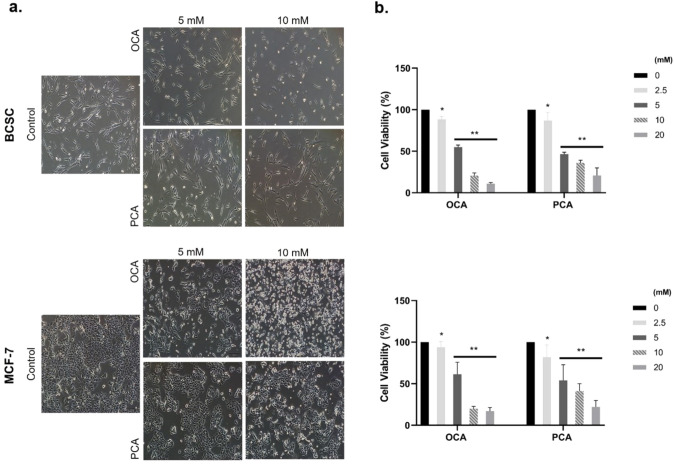
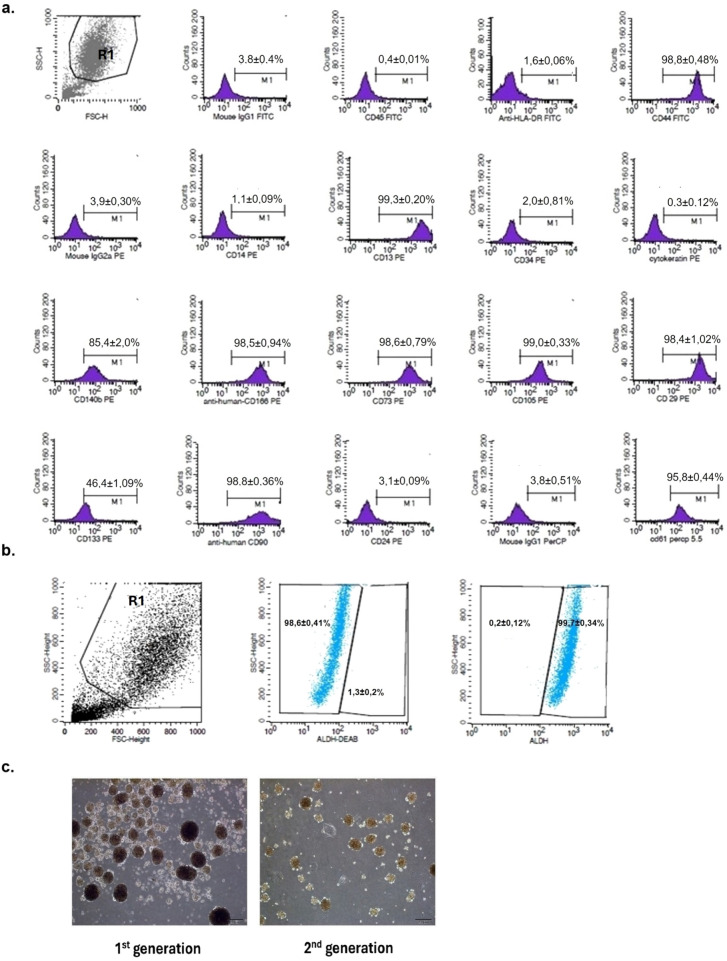
Research on breast cancer stem cells (BCSCs) is crucial for improving our understanding of their roles in tumor resistance, metastasis, and relapse. This study investigated the anti-cancer effects of two isomers of hydroxycinnamic acids (HCA): para-coumaric acid (PCA) and ortho-coumaric acid (OCA) on breast cancer stem cells (BCSCs). The isolated and characterized stem cells contained CD44 + /CD24 surface markers, exhibited high levels of aldehyde dehydrogenase activity, and were able to form mammospheres. The evaluation of HCAs on stem cell proliferation, cell cycle, and apoptosis was conducted by comparing them with MCF-7, the luminal breast cancer cell line. The viability and immunoblot analyses demonstrated that HCA applications resulted in a dose-dependent decrease in the number of viable cells and inhibited phosphorylation of Extracellular regulated kinases 1/2 (ERK1/2). These findings were supported by the detection of suppressed colony formation and delayed wound-healing in HCA-exposed cells. E-cadherin expression increased in OCA-treated cells. Additionally, the arrest of G1/S phase progression and the downregulation of Cyclin D1 expression exhibited that OCA and PCA-induced cytostatic effects in BSCS cells. After treatment, the increased Annexin-V/7-AAD staining, along with elevated expression of caspase-3/7 and a decreased Bcl-2/Bax ratio, indicated apoptosis mediated by the activation of Janus kinase (JNK) and p38 Mitogen-activated kinase (p38 MAPK). In conclusion, both OCA and PCA exhibit anti-carcinogenic potential on BCSCs; However, OCA has a stronger effect and is becoming a promising candidate for further research.
期刊介绍:
Medical Oncology (MO) communicates the results of clinical and experimental research in oncology and hematology, particularly experimental therapeutics within the fields of immunotherapy and chemotherapy. It also provides state-of-the-art reviews on clinical and experimental therapies. Topics covered include immunobiology, pathogenesis, and treatment of malignant tumors.




 京公网安备 11010802042870号
京ICP备2023020795号-1
京公网安备 11010802042870号
京ICP备2023020795号-1

 分享
分享
 求助内容:
求助内容: 应助结果提醒方式:
 扫码关注我们
