Wen-Teh Chang, Ran Atzmon, Monica S Vel, Kenneth M Lin, Geoffrey D Abrams, Seth L Sherman
{"title":"No Difference in Chondrocyte Viability Using Manual Versus Custom-Cutting Technique for Matrix-Induced Autologous Chondrocyte Implantation.","authors":"Wen-Teh Chang, Ran Atzmon, Monica S Vel, Kenneth M Lin, Geoffrey D Abrams, Seth L Sherman","doi":"10.1177/23259671241308855","DOIUrl":null,"url":null,"abstract":"<p><strong>Background: </strong>Matrix-induced autologous chondrocyte implantation (MACI) was developed for knee cartilage restoration involving seeding autologous chondrocytes onto a collagen membrane. Maintaining chondrocyte viability and achieving proper membrane size and contour are crucial for successful outcomes. Scissor cutting (Sc) has traditionally been used to shape the membrane, but recently, custom cutting (CC) have gained popularity for their enhanced preparation efficiency.</p><p><strong>Purpose: </strong>To determine the difference in chondrocyte viability using the Sc versus CC methods.</p><p><strong>Study design: </strong>Controlled laboratory study.</p><p><strong>Methods: </strong>Using Sc and CC methods, 15 mm-diameter circular specimens were cut from 5 residual membranes. Membranes were stained, and confocal microscopy was used to visualize live/dead cells. Three zones were defined: the impact zone (the outermost zone at the cut edge), the central zone (the least manipulated zone), and the adjacent zone (the intermediate zone between the central and impact zones). For each circular specimen, the following measurements were recorded: the dimension of the impact zone, cell viability (percentage of live cells among total) for each zone, and the total number of cells within each zone (as cell density ×10<sup>5</sup>/cm<sup>2</sup>).</p><p><strong>Results: </strong>The width of the impact zone (mean ± standard error) was 355 ± 31 μm and 342 ± 24 μm for CC and Sc, respectively, and the impact zone occupied approximately 10% of the specimen. With both cutting techniques, cell viability was significantly lower in the impact zone (mean ± standard error: CC, 36.42% ± 3.85%; Sc, 40.94% ± 2.85%) compared with the adjacent zone (CC, 77.69% ± 2.97%; Sc, 74.17% ± 2.8%). The cell density from all zones varied from 5.84 ± 0.26 to 6.49 ± 0.34 × 10<sup>5</sup>/cm<sup>2</sup>, with no significant difference in cell viability in the impact zones between the cutting methods.</p><p><strong>Conclusion: </strong>Both cutting techniques led to a significant reduction in cell viability in the impact zone compared with other zones of the MACI specimen. There was no significant difference in chondrocyte viability or cell density for membranes cut by Sc or CC.</p><p><strong>Clinical relevance: </strong>This evaluation of the newly introduced CC method on the chondrocyte viability of the MACI membrane will enable surgeons to make a more informed decision regarding cutting techniques.</p>","PeriodicalId":19646,"journal":{"name":"Orthopaedic Journal of Sports Medicine","volume":"13 2","pages":"23259671241308855"},"PeriodicalIF":2.5000,"publicationDate":"2025-02-06","publicationTypes":"Journal Article","fieldsOfStudy":null,"isOpenAccess":false,"openAccessPdf":"https://www.ncbi.nlm.nih.gov/pmc/articles/PMC11808760/pdf/","citationCount":"0","resultStr":null,"platform":"Semanticscholar","paperid":null,"PeriodicalName":"Orthopaedic Journal of Sports Medicine","FirstCategoryId":"3","ListUrlMain":"https://doi.org/10.1177/23259671241308855","RegionNum":3,"RegionCategory":"医学","ArticlePicture":[],"TitleCN":null,"AbstractTextCN":null,"PMCID":null,"EPubDate":"2025/2/1 0:00:00","PubModel":"eCollection","JCR":"Q2","JCRName":"ORTHOPEDICS","Score":null,"Total":0}
引用次数: 0
Abstract
Background: Matrix-induced autologous chondrocyte implantation (MACI) was developed for knee cartilage restoration involving seeding autologous chondrocytes onto a collagen membrane. Maintaining chondrocyte viability and achieving proper membrane size and contour are crucial for successful outcomes. Scissor cutting (Sc) has traditionally been used to shape the membrane, but recently, custom cutting (CC) have gained popularity for their enhanced preparation efficiency.
Purpose: To determine the difference in chondrocyte viability using the Sc versus CC methods.
Study design: Controlled laboratory study.
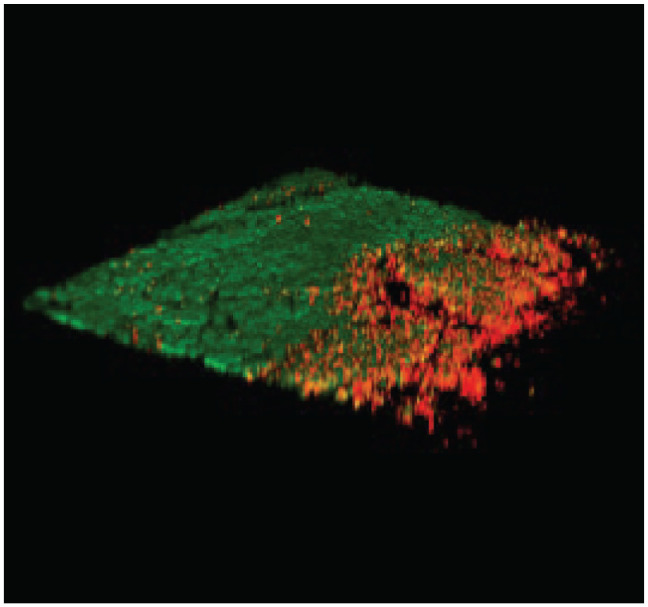
Methods: Using Sc and CC methods, 15 mm-diameter circular specimens were cut from 5 residual membranes. Membranes were stained, and confocal microscopy was used to visualize live/dead cells. Three zones were defined: the impact zone (the outermost zone at the cut edge), the central zone (the least manipulated zone), and the adjacent zone (the intermediate zone between the central and impact zones). For each circular specimen, the following measurements were recorded: the dimension of the impact zone, cell viability (percentage of live cells among total) for each zone, and the total number of cells within each zone (as cell density ×105/cm2).
Results: The width of the impact zone (mean ± standard error) was 355 ± 31 μm and 342 ± 24 μm for CC and Sc, respectively, and the impact zone occupied approximately 10% of the specimen. With both cutting techniques, cell viability was significantly lower in the impact zone (mean ± standard error: CC, 36.42% ± 3.85%; Sc, 40.94% ± 2.85%) compared with the adjacent zone (CC, 77.69% ± 2.97%; Sc, 74.17% ± 2.8%). The cell density from all zones varied from 5.84 ± 0.26 to 6.49 ± 0.34 × 10⁵/cm2, with no significant difference in cell viability in the impact zones between the cutting methods.
Conclusion: Both cutting techniques led to a significant reduction in cell viability in the impact zone compared with other zones of the MACI specimen. There was no significant difference in chondrocyte viability or cell density for membranes cut by Sc or CC.
Clinical relevance: This evaluation of the newly introduced CC method on the chondrocyte viability of the MACI membrane will enable surgeons to make a more informed decision regarding cutting techniques.
期刊介绍:
The Orthopaedic Journal of Sports Medicine (OJSM), developed by the American Orthopaedic Society for Sports Medicine (AOSSM), is a global, peer-reviewed, open access journal that combines the interests of researchers and clinical practitioners across orthopaedic sports medicine, arthroscopy, and knee arthroplasty.
Topics include original research in the areas of:
-Orthopaedic Sports Medicine, including surgical and nonsurgical treatment of orthopaedic sports injuries
-Arthroscopic Surgery (Shoulder/Elbow/Wrist/Hip/Knee/Ankle/Foot)
-Relevant translational research
-Sports traumatology/epidemiology
-Knee and shoulder arthroplasty
The OJSM also publishes relevant systematic reviews and meta-analyses.
This journal is a member of the Committee on Publication Ethics (COPE).





 京公网安备 11010802042870号
京ICP备2023020795号-1
京公网安备 11010802042870号
京ICP备2023020795号-1

 分享
分享
 求助内容:
求助内容: 应助结果提醒方式:
 扫码关注我们
