The interactions between monocarboxylate transporter genes MCT1, MCT2, and MCT4 and the kinetics of blood lactate production and removal after high-intensity efforts in elite males: a cross-sectional study.
Ewelina Maculewicz, Andrzej Mastalerz, Aleksandra Garbacz, Anna Mróz, Petr Stastny, Miroslav Petr, Dominik Kolinger, Pavlina Vostatková, Aleksandra Bojarczuk
{"title":"The interactions between monocarboxylate transporter genes MCT1, MCT2, and MCT4 and the kinetics of blood lactate production and removal after high-intensity efforts in elite males: a cross-sectional study.","authors":"Ewelina Maculewicz, Andrzej Mastalerz, Aleksandra Garbacz, Anna Mróz, Petr Stastny, Miroslav Petr, Dominik Kolinger, Pavlina Vostatková, Aleksandra Bojarczuk","doi":"10.1186/s12864-025-11307-4","DOIUrl":null,"url":null,"abstract":"<p><strong>Background: </strong>This cross-sectional study investigated the relationship between genetic variations in monocarboxylate transporter genes and blood lactate production and removal after high-intensity efforts in humans. The study was conducted to explore how genetic variations in the MCT1, MCT2, and MCT4 genes influenced lactate dynamics and to advance the field of sports genetics by pinpointing critical genetic markers that can enhance athletic performance and recovery.</p><p><strong>Methods: </strong>337 male athletes from Poland and the Czech Republic underwent two intermittent all-out Wingate tests. Before the tests, DNA samples were taken from each participant, and SNP (single nucleotide polymorphism) analysis was carried out. Two intermittent all-out tests were implemented, and lactate concentrations were assessed before and after these tests.</p><p><strong>Results: </strong>Sprinters more frequently exhibited the haplotype TAC in the MCT2 gene, which was associated with an increase in the difference between maximum lactate and final lactate concentration. Additionally, this haplotype was linked to higher maximum lactate concentration and was more frequently observed in sprinters. The genotypic interactions AG/T- and GGxT- (MCT1 rs3789592 x MCT4 rs11323780), TTxTT (MCT1 rs12028967 x MCT2 rs3763979), and MCT1 rs7556664 x MCT4 rs11323780 were all associated with an increase in the difference between maximum lactate concentration and final lactate concentration. Conversely, the AGxGG (MCT1 rs3789592 x MCT2 rs995343) interaction was linked to a decrease in this difference. The relationship between maximum lactate concentration and genotypic interactions can be observed as follows: when ATxTT (MCT2 rs3763980 x MCT4 rs11323780) or CTxCT (MCT1 rs10857983 x MCT2 rs3763979) genotypic combinations are present, it leads to a decrease in maximum lactate concentration. Similarly, the combination of CTxCT (MCT1 rs4301628 x MCT2 rs3763979), CT x TT (MCT1 rs4301628 x MCT4 rs11323780), and CTxTT (MCT1 rs4301628 x MCT2 rs3763979) results in decreased maximum lactate concentration.</p><p><strong>Conclusions: </strong>The TAC haplotype (rs3763980, rs995343, rs3763979) in the MCT2 gene is associated with altered lactate clearance in sprinters, potentially affecting performance and recovery by elevating post-exercise lactate concentrations. While MCT4 rs11323780 is also identified as a significant variant in lactate metabolism, suggesting its role as a biomarker for sprinting performance, further investigation is necessary to clarify underlying mechanisms and consider additional factors. Based on elite male athletes from Poland and the Czech Republic, the study may not generalize to all sprinters or diverse athletic populations. Although genetic variants show promise as biomarkers for sprinting success, athletic performance is influenced by a complex interplay of genetics, environment, and training extending beyond MCT genes.</p>","PeriodicalId":9030,"journal":{"name":"BMC Genomics","volume":"26 1","pages":"133"},"PeriodicalIF":3.7000,"publicationDate":"2025-02-11","publicationTypes":"Journal Article","fieldsOfStudy":null,"isOpenAccess":false,"openAccessPdf":"https://www.ncbi.nlm.nih.gov/pmc/articles/PMC11817040/pdf/","citationCount":"0","resultStr":null,"platform":"Semanticscholar","paperid":null,"PeriodicalName":"BMC Genomics","FirstCategoryId":"99","ListUrlMain":"https://doi.org/10.1186/s12864-025-11307-4","RegionNum":2,"RegionCategory":"生物学","ArticlePicture":[],"TitleCN":null,"AbstractTextCN":null,"PMCID":null,"EPubDate":"","PubModel":"","JCR":"Q2","JCRName":"BIOTECHNOLOGY & APPLIED MICROBIOLOGY","Score":null,"Total":0}
引用次数: 0
Abstract
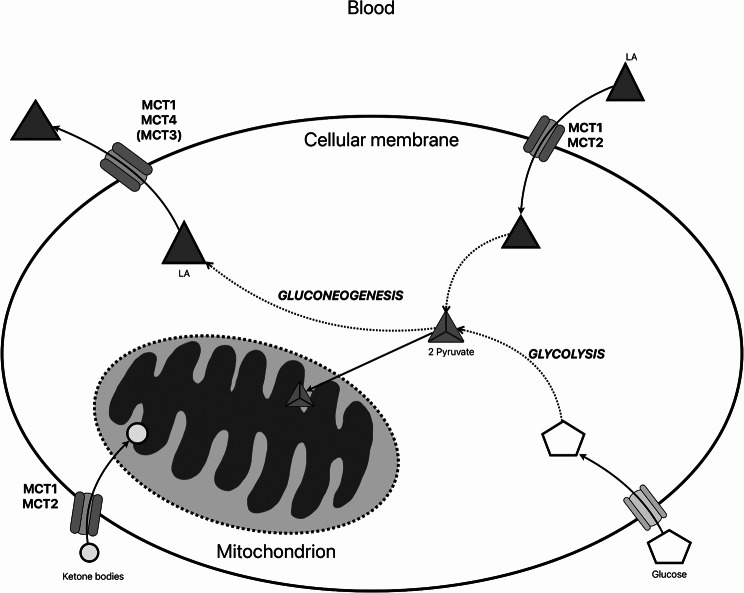
Background: This cross-sectional study investigated the relationship between genetic variations in monocarboxylate transporter genes and blood lactate production and removal after high-intensity efforts in humans. The study was conducted to explore how genetic variations in the MCT1, MCT2, and MCT4 genes influenced lactate dynamics and to advance the field of sports genetics by pinpointing critical genetic markers that can enhance athletic performance and recovery.
Methods: 337 male athletes from Poland and the Czech Republic underwent two intermittent all-out Wingate tests. Before the tests, DNA samples were taken from each participant, and SNP (single nucleotide polymorphism) analysis was carried out. Two intermittent all-out tests were implemented, and lactate concentrations were assessed before and after these tests.
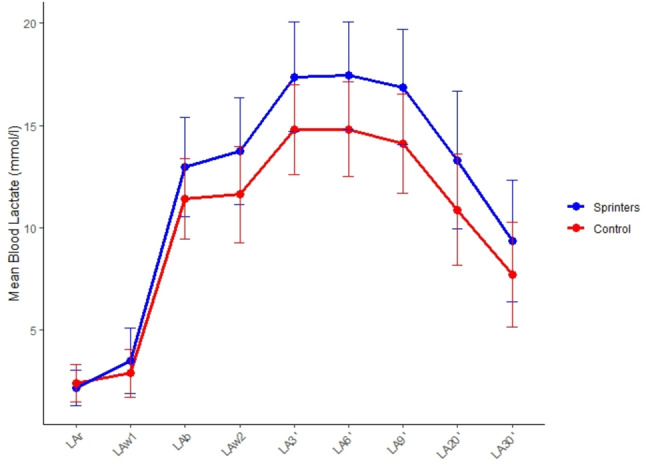
Results: Sprinters more frequently exhibited the haplotype TAC in the MCT2 gene, which was associated with an increase in the difference between maximum lactate and final lactate concentration. Additionally, this haplotype was linked to higher maximum lactate concentration and was more frequently observed in sprinters. The genotypic interactions AG/T- and GGxT- (MCT1 rs3789592 x MCT4 rs11323780), TTxTT (MCT1 rs12028967 x MCT2 rs3763979), and MCT1 rs7556664 x MCT4 rs11323780 were all associated with an increase in the difference between maximum lactate concentration and final lactate concentration. Conversely, the AGxGG (MCT1 rs3789592 x MCT2 rs995343) interaction was linked to a decrease in this difference. The relationship between maximum lactate concentration and genotypic interactions can be observed as follows: when ATxTT (MCT2 rs3763980 x MCT4 rs11323780) or CTxCT (MCT1 rs10857983 x MCT2 rs3763979) genotypic combinations are present, it leads to a decrease in maximum lactate concentration. Similarly, the combination of CTxCT (MCT1 rs4301628 x MCT2 rs3763979), CT x TT (MCT1 rs4301628 x MCT4 rs11323780), and CTxTT (MCT1 rs4301628 x MCT2 rs3763979) results in decreased maximum lactate concentration.
Conclusions: The TAC haplotype (rs3763980, rs995343, rs3763979) in the MCT2 gene is associated with altered lactate clearance in sprinters, potentially affecting performance and recovery by elevating post-exercise lactate concentrations. While MCT4 rs11323780 is also identified as a significant variant in lactate metabolism, suggesting its role as a biomarker for sprinting performance, further investigation is necessary to clarify underlying mechanisms and consider additional factors. Based on elite male athletes from Poland and the Czech Republic, the study may not generalize to all sprinters or diverse athletic populations. Although genetic variants show promise as biomarkers for sprinting success, athletic performance is influenced by a complex interplay of genetics, environment, and training extending beyond MCT genes.
期刊介绍:
BMC Genomics is an open access, peer-reviewed journal that considers articles on all aspects of genome-scale analysis, functional genomics, and proteomics.
BMC Genomics is part of the BMC series which publishes subject-specific journals focused on the needs of individual research communities across all areas of biology and medicine. We offer an efficient, fair and friendly peer review service, and are committed to publishing all sound science, provided that there is some advance in knowledge presented by the work.




 京公网安备 11010802042870号
京ICP备2023020795号-1
京公网安备 11010802042870号
京ICP备2023020795号-1

 分享
分享
 求助内容:
求助内容: 应助结果提醒方式:
 扫码关注我们
