Robyn Rexwinkel, Nicolaas Koen Vermeijden, Judith Zeevenhooven, Johannes Kelder, Michael Groeneweg, Thalia Hummel, Joery Goede, Herbert van Wering, Janneke Stapelbroek, Marc Benninga, Arine Vlieger
{"title":"The low FODMAP diet in adolescents functional abdominal in a non-guided setting: a prospective multicenter cohort study.","authors":"Robyn Rexwinkel, Nicolaas Koen Vermeijden, Judith Zeevenhooven, Johannes Kelder, Michael Groeneweg, Thalia Hummel, Joery Goede, Herbert van Wering, Janneke Stapelbroek, Marc Benninga, Arine Vlieger","doi":"10.1007/s00431-025-05999-9","DOIUrl":null,"url":null,"abstract":"<p><p>The purpose of this study is to evaluate the efficacy of a diet low in fermentable oligosaccharides, disaccharides, monosaccharides, and polyols (FODMAPs) in adolescents with irritable bowel syndrome (IBS) and functional abdominal pain-not otherwise specified (FAP-NOS) in a non-guided setting, resembling clinical practice. This prospective multicenter cohort study conducted in 13 centers included patients aged 12-18 years diagnosed with IBS or FAP-NOS. Patients received educational material on FODMAPs, including extensive lists of high and low FODMAP foods and additional online information. They were instructed to replace high FODMAP foods with low FODMAP alternatives for the duration of 4 weeks. No dietician was consulted. The primary end point was the proportion of patients with treatment success (≥ 30% reduction of abdominal pain intensity) at 4 weeks. The key secondary outcome was adequate relief of IBS/FAP-NOS symptoms. Of the 325 included patients, 81 patients (24.9%) achieved treatment success (≥ 30% reduction of abdominal pain intensity) after 4 weeks, with higher rates in patients with IBS (29.3%) than FAP-NOS (16.8%, OR 2.16 (1.04-4.48)). Adequate relief was reported in 51 patients (15.7%). There was a significant decrease in abdominal pain intensity (2.2 (1.1) vs. 2.5 (1.0), P < 0.001), daily bloating (2.4 (2.1) vs. 2.8 (2.3), P < 0.001), and flatulence (2.4 (2.1) vs. 2.8 (2.3), P = 0.001). Adverse events were mild and infrequent.</p><p><strong>Conclusion: </strong>The low FODMAP diet in a non-guided setting, mimicking clinical practice, yielded treatment success in almost 30% adolescents with IBS and 17% in FAP-NOS, suggesting it may not be the first treatment option for these patients.</p><p><strong>Trial registration: </strong>EUCTR2015-003293-32-NL.</p><p><strong>What is known: </strong>• Irritable bowel syndrome (IBS) and functional abdominal pain-not otherwise specified (FAP-NOS) are common disorders in children which negatively impact quality of life. • While a diet low in fermentable oligosaccharides, disaccharides, monosaccharides, and polyols (FODMAPs) has demonstrated effectiveness in adult IBS, its efficacy in pediatric IBS and FAP-NOS remains uncertain. • Clinical application of the low FODMAP diet often occurs without dietician consultation, contrary to controlled trial settings.</p><p><strong>What is new: </strong>• The low FODMAP diet, without dietician guidance, resulted in treatment success in almost 30% of adolescents with IBS and only 17% with FAP-NOS. • With only 15.7% of participants achieving adequate relief of IBS/FAP-NOS symptoms, the non-guided low FODMAP diet may not be the first treatment option for pediatric IBS and FAP-NOS.</p>","PeriodicalId":11997,"journal":{"name":"European Journal of Pediatrics","volume":"184 2","pages":"189"},"PeriodicalIF":2.6000,"publicationDate":"2025-02-11","publicationTypes":"Journal Article","fieldsOfStudy":null,"isOpenAccess":false,"openAccessPdf":"https://www.ncbi.nlm.nih.gov/pmc/articles/PMC11814023/pdf/","citationCount":"0","resultStr":null,"platform":"Semanticscholar","paperid":null,"PeriodicalName":"European Journal of Pediatrics","FirstCategoryId":"3","ListUrlMain":"https://doi.org/10.1007/s00431-025-05999-9","RegionNum":3,"RegionCategory":"医学","ArticlePicture":[],"TitleCN":null,"AbstractTextCN":null,"PMCID":null,"EPubDate":"","PubModel":"","JCR":"Q1","JCRName":"PEDIATRICS","Score":null,"Total":0}
引用次数: 0
Abstract
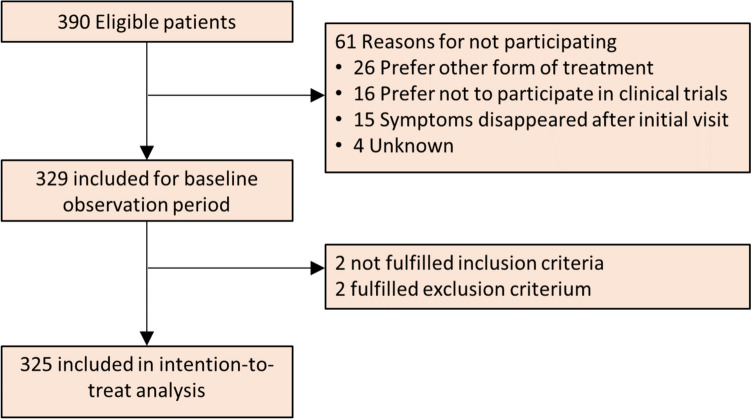
The purpose of this study is to evaluate the efficacy of a diet low in fermentable oligosaccharides, disaccharides, monosaccharides, and polyols (FODMAPs) in adolescents with irritable bowel syndrome (IBS) and functional abdominal pain-not otherwise specified (FAP-NOS) in a non-guided setting, resembling clinical practice. This prospective multicenter cohort study conducted in 13 centers included patients aged 12-18 years diagnosed with IBS or FAP-NOS. Patients received educational material on FODMAPs, including extensive lists of high and low FODMAP foods and additional online information. They were instructed to replace high FODMAP foods with low FODMAP alternatives for the duration of 4 weeks. No dietician was consulted. The primary end point was the proportion of patients with treatment success (≥ 30% reduction of abdominal pain intensity) at 4 weeks. The key secondary outcome was adequate relief of IBS/FAP-NOS symptoms. Of the 325 included patients, 81 patients (24.9%) achieved treatment success (≥ 30% reduction of abdominal pain intensity) after 4 weeks, with higher rates in patients with IBS (29.3%) than FAP-NOS (16.8%, OR 2.16 (1.04-4.48)). Adequate relief was reported in 51 patients (15.7%). There was a significant decrease in abdominal pain intensity (2.2 (1.1) vs. 2.5 (1.0), P < 0.001), daily bloating (2.4 (2.1) vs. 2.8 (2.3), P < 0.001), and flatulence (2.4 (2.1) vs. 2.8 (2.3), P = 0.001). Adverse events were mild and infrequent.
Conclusion: The low FODMAP diet in a non-guided setting, mimicking clinical practice, yielded treatment success in almost 30% adolescents with IBS and 17% in FAP-NOS, suggesting it may not be the first treatment option for these patients.
Trial registration: EUCTR2015-003293-32-NL.
What is known: • Irritable bowel syndrome (IBS) and functional abdominal pain-not otherwise specified (FAP-NOS) are common disorders in children which negatively impact quality of life. • While a diet low in fermentable oligosaccharides, disaccharides, monosaccharides, and polyols (FODMAPs) has demonstrated effectiveness in adult IBS, its efficacy in pediatric IBS and FAP-NOS remains uncertain. • Clinical application of the low FODMAP diet often occurs without dietician consultation, contrary to controlled trial settings.
What is new: • The low FODMAP diet, without dietician guidance, resulted in treatment success in almost 30% of adolescents with IBS and only 17% with FAP-NOS. • With only 15.7% of participants achieving adequate relief of IBS/FAP-NOS symptoms, the non-guided low FODMAP diet may not be the first treatment option for pediatric IBS and FAP-NOS.
本研究的目的是评估低可发酵低聚糖、双糖、单糖和多元醇(FODMAPs)饮食对患有肠易激综合征(IBS)和功能性腹痛(FAP-NOS)的青少年的疗效,在非引导环境下,类似于临床实践。这项前瞻性多中心队列研究在13个中心进行,包括12-18岁诊断为IBS或FAP-NOS的患者。患者收到了关于FODMAP的教育材料,包括FODMAP高值和低值食物的广泛列表以及其他在线信息。他们被要求用低FODMAP替代品代替高FODMAP食物,持续4周。没有咨询营养师。主要终点是4周时治疗成功(腹痛强度减轻≥30%)的患者比例。关键的次要结局是IBS/FAP-NOS症状的充分缓解。在纳入的325例患者中,81例(24.9%)患者在4周后获得治疗成功(腹痛强度减轻≥30%),IBS患者的成功率(29.3%)高于FAP-NOS (16.8%, OR 2.16(1.04-4.48))。51例(15.7%)患者有充分缓解。结论:低FODMAP饮食在模拟临床实践的无指导环境下,对近30%的青少年IBS患者和17%的FAP-NOS患者产生了治疗成功,这表明它可能不是这些患者的第一治疗选择。试验注册:EUCTR2015-003293-32-NL。•肠易激综合征(IBS)和功能性腹痛(FAP-NOS)是儿童常见的疾病,会对生活质量产生负面影响。•虽然低发酵低聚糖、双糖、单糖和多元醇(FODMAPs)饮食已被证明对成人肠易激综合征有效,但其对儿童肠易激综合征和FAP-NOS的疗效仍不确定。•低FODMAP饮食的临床应用通常在没有营养师咨询的情况下进行,与对照试验设置相反。新发现:•在没有营养师指导的情况下,低FODMAP饮食导致近30%的IBS青少年患者治疗成功,而只有17%的FAP-NOS患者治疗成功。•只有15.7%的参与者获得了IBS/FAP-NOS症状的充分缓解,无指导的低FODMAP饮食可能不是儿童IBS和FAP-NOS的首选治疗选择。
期刊介绍:
The European Journal of Pediatrics (EJPE) is a leading peer-reviewed medical journal which covers the entire field of pediatrics. The editors encourage authors to submit original articles, reviews, short communications, and correspondence on all relevant themes and topics.
EJPE is particularly committed to the publication of articles on important new clinical research that will have an immediate impact on clinical pediatric practice. The editorial office very much welcomes ideas for publications, whether individual articles or article series, that fit this goal and is always willing to address inquiries from authors regarding potential submissions. Invited review articles on clinical pediatrics that provide comprehensive coverage of a subject of importance are also regularly commissioned.
The short publication time reflects both the commitment of the editors and publishers and their passion for new developments in the field of pediatrics.
EJPE is active on social media (@EurJPediatrics) and we invite you to participate.
EJPE is the official journal of the European Academy of Paediatrics (EAP) and publishes guidelines and statements in cooperation with the EAP.



 京公网安备 11010802042870号
京ICP备2023020795号-1
京公网安备 11010802042870号
京ICP备2023020795号-1

 分享
分享
 求助内容:
求助内容: 应助结果提醒方式:
 扫码关注我们
