Atlegang Mashilo, Itumeleng Mompati, Refilwe Ramakatane, Didintle Sebitloane, Naledi Sibi, Philippa C Matthews, Cornel Van Rooyen, Dominique Goedhals, Sabeehah Vawda
{"title":"Knowledge, attitudes and practices to hepatitis B among South African primary healthcare staff.","authors":"Atlegang Mashilo, Itumeleng Mompati, Refilwe Ramakatane, Didintle Sebitloane, Naledi Sibi, Philippa C Matthews, Cornel Van Rooyen, Dominique Goedhals, Sabeehah Vawda","doi":"10.4102/phcfm.v17i1.4646","DOIUrl":null,"url":null,"abstract":"<p><strong>Background: </strong> Hepatitis B virus (HBV), a significant cause of liver disease globally, is recognised as a 2030 elimination target by the World Health Organization (WHO). Healthcare workers (HCWs) require appropriate HBV knowledge to identify, manage and prevent HBV.</p><p><strong>Aim: </strong> We investigated the knowledge, attitude and practices (KAP) pertaining to HBV among HCWs to establish insights into awareness and inform the delivery of training.</p><p><strong>Setting: </strong> The study was conducted among HCWs of 18 primary healthcare facilities in Bloemfontein, Free State province, South Africa.</p><p><strong>Methods: </strong> Data were collected via anonymous, self-applied, 28-question-questionnaires in English. Data were captured on a Microsoft Excel spreadsheet and analysed by a biostatistician, using Statistical Analyses Software (SAS 9.4).</p><p><strong>Results: </strong> The response rate was 88% (88/100), and median participant age was 44 years. Participants were mostly female (83%), professional nurses (65%) with more than 8 years of experience (60%). Median scores were 83% for epidemiology and transmission, 50% for clinical picture, 44% for laboratory diagnosis, 40% for management and 40% for prevention. No difference was noted based on number of years of experience.</p><p><strong>Conclusion: </strong> Considerable gaps in KAP to HBV were noted among primary HCWs in Bloemfontein. Larger studies are needed to ascertain the KAP towards HBV among South African HCWs, to identify areas for enhanced training.Contribution: Hepatitis B virus, an important cause of liver disease in Africa, is poorly identified and managed. Our study highlights the need to strengthen HCW education to ensure individuals are appropriately diagnosed, managed and educated on preventative measures, to reduce the burden of disease.</p>","PeriodicalId":47037,"journal":{"name":"African Journal of Primary Health Care & Family Medicine","volume":"17 1","pages":"e1-e8"},"PeriodicalIF":1.7000,"publicationDate":"2025-01-22","publicationTypes":"Journal Article","fieldsOfStudy":null,"isOpenAccess":false,"openAccessPdf":"https://www.ncbi.nlm.nih.gov/pmc/articles/PMC11830872/pdf/","citationCount":"0","resultStr":null,"platform":"Semanticscholar","paperid":null,"PeriodicalName":"African Journal of Primary Health Care & Family Medicine","FirstCategoryId":"1085","ListUrlMain":"https://doi.org/10.4102/phcfm.v17i1.4646","RegionNum":0,"RegionCategory":null,"ArticlePicture":[],"TitleCN":null,"AbstractTextCN":null,"PMCID":null,"EPubDate":"","PubModel":"","JCR":"Q4","JCRName":"PRIMARY HEALTH CARE","Score":null,"Total":0}
引用次数: 0
Abstract
Background: Hepatitis B virus (HBV), a significant cause of liver disease globally, is recognised as a 2030 elimination target by the World Health Organization (WHO). Healthcare workers (HCWs) require appropriate HBV knowledge to identify, manage and prevent HBV.
Aim: We investigated the knowledge, attitude and practices (KAP) pertaining to HBV among HCWs to establish insights into awareness and inform the delivery of training.
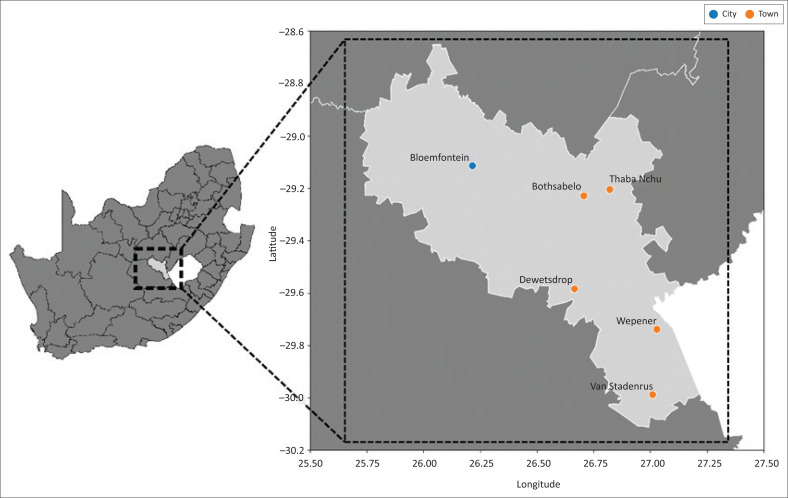
Setting: The study was conducted among HCWs of 18 primary healthcare facilities in Bloemfontein, Free State province, South Africa.
Methods: Data were collected via anonymous, self-applied, 28-question-questionnaires in English. Data were captured on a Microsoft Excel spreadsheet and analysed by a biostatistician, using Statistical Analyses Software (SAS 9.4).
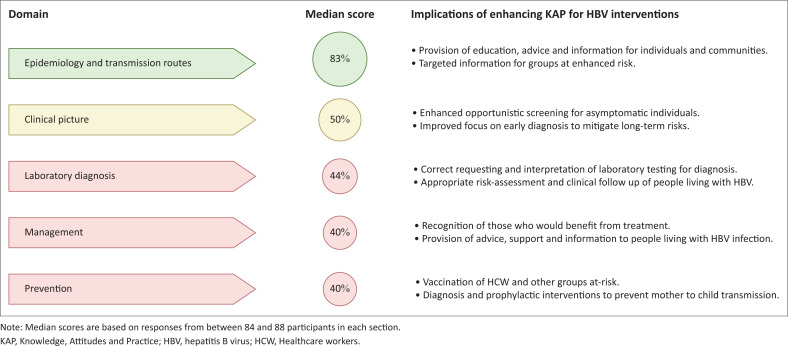
Results: The response rate was 88% (88/100), and median participant age was 44 years. Participants were mostly female (83%), professional nurses (65%) with more than 8 years of experience (60%). Median scores were 83% for epidemiology and transmission, 50% for clinical picture, 44% for laboratory diagnosis, 40% for management and 40% for prevention. No difference was noted based on number of years of experience.
Conclusion: Considerable gaps in KAP to HBV were noted among primary HCWs in Bloemfontein. Larger studies are needed to ascertain the KAP towards HBV among South African HCWs, to identify areas for enhanced training.Contribution: Hepatitis B virus, an important cause of liver disease in Africa, is poorly identified and managed. Our study highlights the need to strengthen HCW education to ensure individuals are appropriately diagnosed, managed and educated on preventative measures, to reduce the burden of disease.




 京公网安备 11010802042870号
京ICP备2023020795号-1
京公网安备 11010802042870号
京ICP备2023020795号-1

 分享
分享
 求助内容:
求助内容: 应助结果提醒方式:
 扫码关注我们
