Aster De Vadder, Lotte Lemloh, Bartolomeo Bo, Lennart Hale, Neil Patel, Andreas Mueller, Florian Kipfmueller
{"title":"Bosentan as adjunctive therapy in neonates with congenital diaphragmatic hernia-associated pulmonary hypertension: a case series.","authors":"Aster De Vadder, Lotte Lemloh, Bartolomeo Bo, Lennart Hale, Neil Patel, Andreas Mueller, Florian Kipfmueller","doi":"10.1007/s00431-025-06019-6","DOIUrl":null,"url":null,"abstract":"<p><p>Congenital diaphragmatic hernia (CDH)-associated pulmonary hypertension (PH) is associated with high morbidity and mortality. Pulmonary vasodilative management is challenging and some patients with CDH are unresponsive to inhaled nitric oxide or sildenafil. Bosentan, an enterally-administered endothelin-1 receptor antagonist, reducing pulmonary vascular resistance may play a role in the treatment of CDH-PH. The aim is to evaluate the efficacy and safety of bosentan as an adjunctive therapy for CDH-PH. We report a case series of all CDH neonates who received oral bosentan as an adjunctive therapy for treatment of PH between 2013 and 2021 at our institution. Bosentan was administered at a median enteral dose of 2 mg/kg/day. Main outcomes were improved PH severity on echocardiography, oxygenation, and respiratory support after starting bosentan. Patients were compared according to improvement in PH after 1 week of treatment (responder vs. non-responder). Fifty CDH neonates received oral adjunctive bosentan therapy. Survival to discharge was 58%. Improved PH was observed in 54 and 72% of patients after 1 and 2 weeks respectively (p < 0.001). Respiratory status ameliorated significantly after 2 weeks compared to baseline, with a reduction of ECMO treatment from 30 to 0% and an increase in patients receiving non-invasive or no respiratory support from 18 to 40%. Oxygenation did not improve over 2 weeks, possibly biased by the changes in the respiratory status and other contributing factors to the pathophysiology of CDH.</p><p><strong>Conclusion: </strong>Bosentan is effective in the treatment of neonates with CDH-PH and was associated with improved PH severity and respiratory status. Adverse effects were minimal and consistent with previous studies.</p><p><strong>What is known: </strong>• CDH neonates frequently suffer from pulmonary hypertension with inconclusive evidence regarding the benefit of pulmonary vasodilator treatment. • Increased endothelin-1 plasma levels have been associated with poor outcome in CDH neonates, however, there is minimal data on the use of endothelin receptor blockers, such as bosnetan, in this population.</p><p><strong>What is new: </strong>• This case series of 50 CDH neonates receiving bosentan demonstrates an improvement in PH severity based on echocardiographic assessment in 54% within one week of treatment. • Respiratory support modus (i.e. ECMO, mechanical ventilation, CPAP) improved significantly within two weeks of bosentan treatment in responders and non-responders.</p>","PeriodicalId":11997,"journal":{"name":"European Journal of Pediatrics","volume":"184 3","pages":"198"},"PeriodicalIF":2.6000,"publicationDate":"2025-02-13","publicationTypes":"Journal Article","fieldsOfStudy":null,"isOpenAccess":false,"openAccessPdf":"https://www.ncbi.nlm.nih.gov/pmc/articles/PMC11825598/pdf/","citationCount":"0","resultStr":null,"platform":"Semanticscholar","paperid":null,"PeriodicalName":"European Journal of Pediatrics","FirstCategoryId":"3","ListUrlMain":"https://doi.org/10.1007/s00431-025-06019-6","RegionNum":3,"RegionCategory":"医学","ArticlePicture":[],"TitleCN":null,"AbstractTextCN":null,"PMCID":null,"EPubDate":"","PubModel":"","JCR":"Q1","JCRName":"PEDIATRICS","Score":null,"Total":0}
引用次数: 0
Abstract
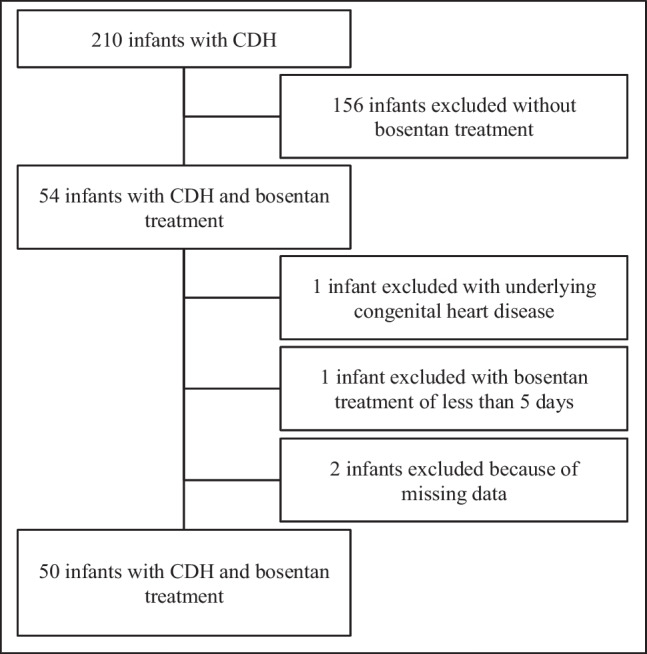
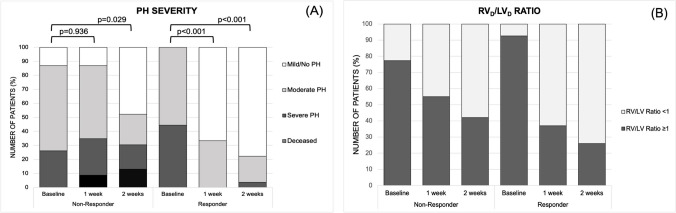
Congenital diaphragmatic hernia (CDH)-associated pulmonary hypertension (PH) is associated with high morbidity and mortality. Pulmonary vasodilative management is challenging and some patients with CDH are unresponsive to inhaled nitric oxide or sildenafil. Bosentan, an enterally-administered endothelin-1 receptor antagonist, reducing pulmonary vascular resistance may play a role in the treatment of CDH-PH. The aim is to evaluate the efficacy and safety of bosentan as an adjunctive therapy for CDH-PH. We report a case series of all CDH neonates who received oral bosentan as an adjunctive therapy for treatment of PH between 2013 and 2021 at our institution. Bosentan was administered at a median enteral dose of 2 mg/kg/day. Main outcomes were improved PH severity on echocardiography, oxygenation, and respiratory support after starting bosentan. Patients were compared according to improvement in PH after 1 week of treatment (responder vs. non-responder). Fifty CDH neonates received oral adjunctive bosentan therapy. Survival to discharge was 58%. Improved PH was observed in 54 and 72% of patients after 1 and 2 weeks respectively (p < 0.001). Respiratory status ameliorated significantly after 2 weeks compared to baseline, with a reduction of ECMO treatment from 30 to 0% and an increase in patients receiving non-invasive or no respiratory support from 18 to 40%. Oxygenation did not improve over 2 weeks, possibly biased by the changes in the respiratory status and other contributing factors to the pathophysiology of CDH.
Conclusion: Bosentan is effective in the treatment of neonates with CDH-PH and was associated with improved PH severity and respiratory status. Adverse effects were minimal and consistent with previous studies.
What is known: • CDH neonates frequently suffer from pulmonary hypertension with inconclusive evidence regarding the benefit of pulmonary vasodilator treatment. • Increased endothelin-1 plasma levels have been associated with poor outcome in CDH neonates, however, there is minimal data on the use of endothelin receptor blockers, such as bosnetan, in this population.
What is new: • This case series of 50 CDH neonates receiving bosentan demonstrates an improvement in PH severity based on echocardiographic assessment in 54% within one week of treatment. • Respiratory support modus (i.e. ECMO, mechanical ventilation, CPAP) improved significantly within two weeks of bosentan treatment in responders and non-responders.
期刊介绍:
The European Journal of Pediatrics (EJPE) is a leading peer-reviewed medical journal which covers the entire field of pediatrics. The editors encourage authors to submit original articles, reviews, short communications, and correspondence on all relevant themes and topics.
EJPE is particularly committed to the publication of articles on important new clinical research that will have an immediate impact on clinical pediatric practice. The editorial office very much welcomes ideas for publications, whether individual articles or article series, that fit this goal and is always willing to address inquiries from authors regarding potential submissions. Invited review articles on clinical pediatrics that provide comprehensive coverage of a subject of importance are also regularly commissioned.
The short publication time reflects both the commitment of the editors and publishers and their passion for new developments in the field of pediatrics.
EJPE is active on social media (@EurJPediatrics) and we invite you to participate.
EJPE is the official journal of the European Academy of Paediatrics (EAP) and publishes guidelines and statements in cooperation with the EAP.




 京公网安备 11010802042870号
京ICP备2023020795号-1
京公网安备 11010802042870号
京ICP备2023020795号-1

 分享
分享
 求助内容:
求助内容: 应助结果提醒方式:
 扫码关注我们
