{"title":"Efficacy of intranasal sedation for pediatric dental procedures: a systematic review and meta-analysis.","authors":"Kavitha Swaminathan, Sushmita Shan, Monika Sri Ss, Apathsakayan Renugalakshmi, Ramanathan Ravi, Selvakumar Haridoss","doi":"10.17245/jdapm.2025.25.1.1","DOIUrl":null,"url":null,"abstract":"<p><p>Dental fear and anxiety management in children is considered one of the biggest challenges in pediatric dentistry. Intranasal sedation is a promising technique for managing unco-operative pediatric patients with rapid onset, ease of administration, and minimal invasiveness. We aimed to review the efficacy, onset time, duration, and behavioral success of intranasal sedation agents in pediatric dental procedures and identify the most effective regimens for clinical practice. This systematic review followed the PRISMA 2020 guidelines and included randomized controlled trials (RCTs) assessing intranasal sedation in children undergoing dental procedures. Primary outcomes were onset time, duration of sedation, and sedation success rates. The inclusion criteria were applied through search in six databases. Risk of bias was evaluated using the Cochrane RoB 2 tool. Meta-analyses were carried out using RevMan software, where pooled odds ratios and weighted mean differences were calculated on efficacy outcomes. Eighteen RCTs fulfilled the inclusion criteria, where intranasal agents such as midazolam, ketamine, dexmedetomidine, and their combinations were used. Meta analyses demonstrated intranasal sedation generally has a faster onset (moderate heterogeneity, I<sup>2</sup> = 40%) and is associated with greater success rates for achieving sedation than other methods. A combination of midazolam with ketamine or dexmedetomidine provided better results for both onset and behavioral success. The duration of sedation appears equivalent to oral or intravenous routes. Overall risk of bias was moderate due to blinding and selective reporting concerns. Midazolam, especially when combined with ketamine or dexmedetomidine, yielded promising results in relation to rapid onset and success of sedation. However, further large-scale RCTs are necessary to standardize dosing protocols and ensure that these findings are validated and optimized for clinical applications.</p>","PeriodicalId":94330,"journal":{"name":"Journal of dental anesthesia and pain medicine","volume":"25 1","pages":"1-13"},"PeriodicalIF":1.2000,"publicationDate":"2025-02-01","publicationTypes":"Journal Article","fieldsOfStudy":null,"isOpenAccess":false,"openAccessPdf":"https://www.ncbi.nlm.nih.gov/pmc/articles/PMC11811517/pdf/","citationCount":"0","resultStr":null,"platform":"Semanticscholar","paperid":null,"PeriodicalName":"Journal of dental anesthesia and pain medicine","FirstCategoryId":"1085","ListUrlMain":"https://doi.org/10.17245/jdapm.2025.25.1.1","RegionNum":0,"RegionCategory":null,"ArticlePicture":[],"TitleCN":null,"AbstractTextCN":null,"PMCID":null,"EPubDate":"2025/1/22 0:00:00","PubModel":"Epub","JCR":"","JCRName":"","Score":null,"Total":0}
引用次数: 0
Abstract
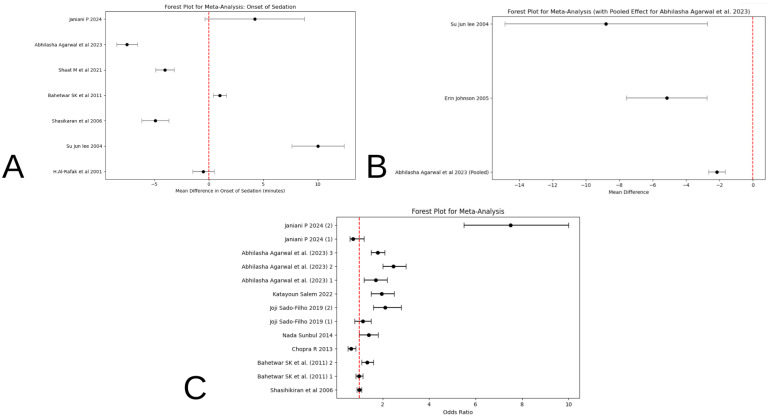
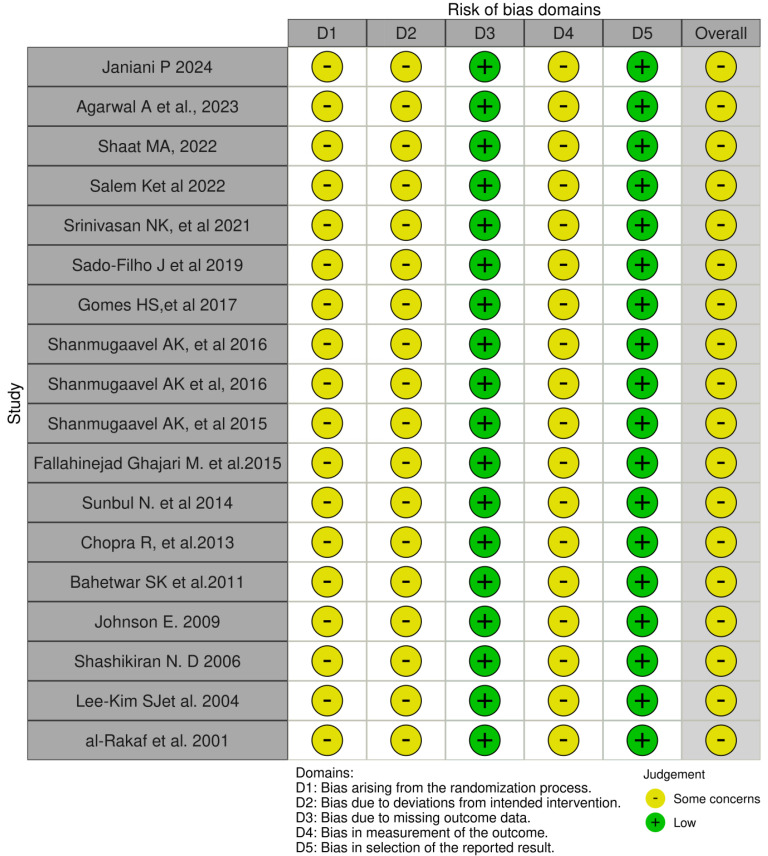
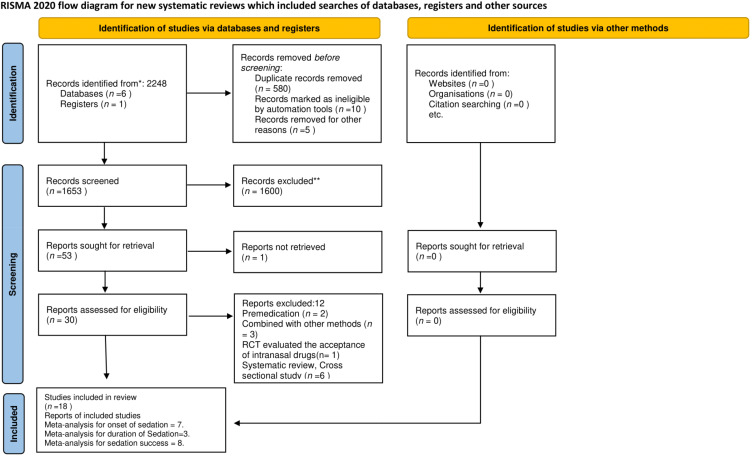
Dental fear and anxiety management in children is considered one of the biggest challenges in pediatric dentistry. Intranasal sedation is a promising technique for managing unco-operative pediatric patients with rapid onset, ease of administration, and minimal invasiveness. We aimed to review the efficacy, onset time, duration, and behavioral success of intranasal sedation agents in pediatric dental procedures and identify the most effective regimens for clinical practice. This systematic review followed the PRISMA 2020 guidelines and included randomized controlled trials (RCTs) assessing intranasal sedation in children undergoing dental procedures. Primary outcomes were onset time, duration of sedation, and sedation success rates. The inclusion criteria were applied through search in six databases. Risk of bias was evaluated using the Cochrane RoB 2 tool. Meta-analyses were carried out using RevMan software, where pooled odds ratios and weighted mean differences were calculated on efficacy outcomes. Eighteen RCTs fulfilled the inclusion criteria, where intranasal agents such as midazolam, ketamine, dexmedetomidine, and their combinations were used. Meta analyses demonstrated intranasal sedation generally has a faster onset (moderate heterogeneity, I2 = 40%) and is associated with greater success rates for achieving sedation than other methods. A combination of midazolam with ketamine or dexmedetomidine provided better results for both onset and behavioral success. The duration of sedation appears equivalent to oral or intravenous routes. Overall risk of bias was moderate due to blinding and selective reporting concerns. Midazolam, especially when combined with ketamine or dexmedetomidine, yielded promising results in relation to rapid onset and success of sedation. However, further large-scale RCTs are necessary to standardize dosing protocols and ensure that these findings are validated and optimized for clinical applications.




 京公网安备 11010802042870号
京ICP备2023020795号-1
京公网安备 11010802042870号
京ICP备2023020795号-1

 分享
分享

 求助内容:
求助内容: 应助结果提醒方式:
 扫码关注我们
