Identification of urinary metabolites correlated with tacrolimus levels through high-precision liquid chromatography-mass spectrometry and machine learning algorithms in kidney transplant patients.
Dan Burghelea, Tudor Moisoiu, Cristina Ivan, Alina Elec, Adriana Munteanu, Raluca Tabrea, Oana Antal, Teodor Paul Kacso, Carmen Socaciu, Florin Ioan Elec, Ina Maria Kacso
{"title":"Identification of urinary metabolites correlated with tacrolimus levels through high-precision liquid chromatography-mass spectrometry and machine learning algorithms in kidney transplant patients.","authors":"Dan Burghelea, Tudor Moisoiu, Cristina Ivan, Alina Elec, Adriana Munteanu, Raluca Tabrea, Oana Antal, Teodor Paul Kacso, Carmen Socaciu, Florin Ioan Elec, Ina Maria Kacso","doi":"10.15386/mpr-2805","DOIUrl":null,"url":null,"abstract":"<p><strong>Background and aim: </strong>Tacrolimus, a widely used immunosuppressive drug in kidney transplant recipients, exhibits a narrow therapeutic window necessitating careful monitoring of its concentration to balance efficacy and minimize dose-related toxic effects. Although essential, this approach is not optimal, and tacrolinemia, even in the therapeutic interval, might be associated with toxicity and rejection within range. This study aimed to identify specific urinary metabolites associated with tacrolimus levels in kidney transplant patients using a combination of serum high-precision liquid chromatography-mass spectrometry (HPLC-MS) and machine learning algorithms.</p><p><strong>Methods: </strong>A cohort of 42 kidney transplant patients, comprising 19 individuals with high tacrolimus levels (>8 ng/mL) and 23 individuals with low tacrolimus levels (<5 ng/mL), were included in the analysis. Urinary samples were subjected to HPLC-MS analysis, enabling comprehensive metabolite profiling across the study cohort. Additionally, tacrolimus concentrations were quantified using established clinical assays.</p><p><strong>Results: </strong>Through an extensive analysis of the HPLC-MS data, a panel of five metabolites were identified that exhibited a significant correlation with tacrolimus levels (Valeryl carnitine, Glycyl-tyrosine, Adrenosterone, LPC 18:3 and 6-methylprednisolone). Machine learning algorithms were then employed to develop a predictive model utilizing the identified metabolites as features. The logistic regression model achieved an area under the curve of 0.810, indicating good discriminatory power and classification accuracy of 0.690.</p><p><strong>Conclusions: </strong>This study demonstrates the potential of integrating HPLC-MS metabolomics with machine learning algorithms to identify urinary metabolites associated with tacrolimus levels. The identified metabolites are promising biomarkers for monitoring tacrolimus therapy, aiding in dose optimization and personalized treatment approaches.</p>","PeriodicalId":18438,"journal":{"name":"Medicine and Pharmacy Reports","volume":"98 1","pages":"125-134"},"PeriodicalIF":0.0000,"publicationDate":"2025-01-01","publicationTypes":"Journal Article","fieldsOfStudy":null,"isOpenAccess":false,"openAccessPdf":"https://www.ncbi.nlm.nih.gov/pmc/articles/PMC11817595/pdf/","citationCount":"0","resultStr":null,"platform":"Semanticscholar","paperid":null,"PeriodicalName":"Medicine and Pharmacy Reports","FirstCategoryId":"1085","ListUrlMain":"https://doi.org/10.15386/mpr-2805","RegionNum":0,"RegionCategory":null,"ArticlePicture":[],"TitleCN":null,"AbstractTextCN":null,"PMCID":null,"EPubDate":"2025/1/31 0:00:00","PubModel":"Epub","JCR":"Q2","JCRName":"Medicine","Score":null,"Total":0}
引用次数: 0
Abstract
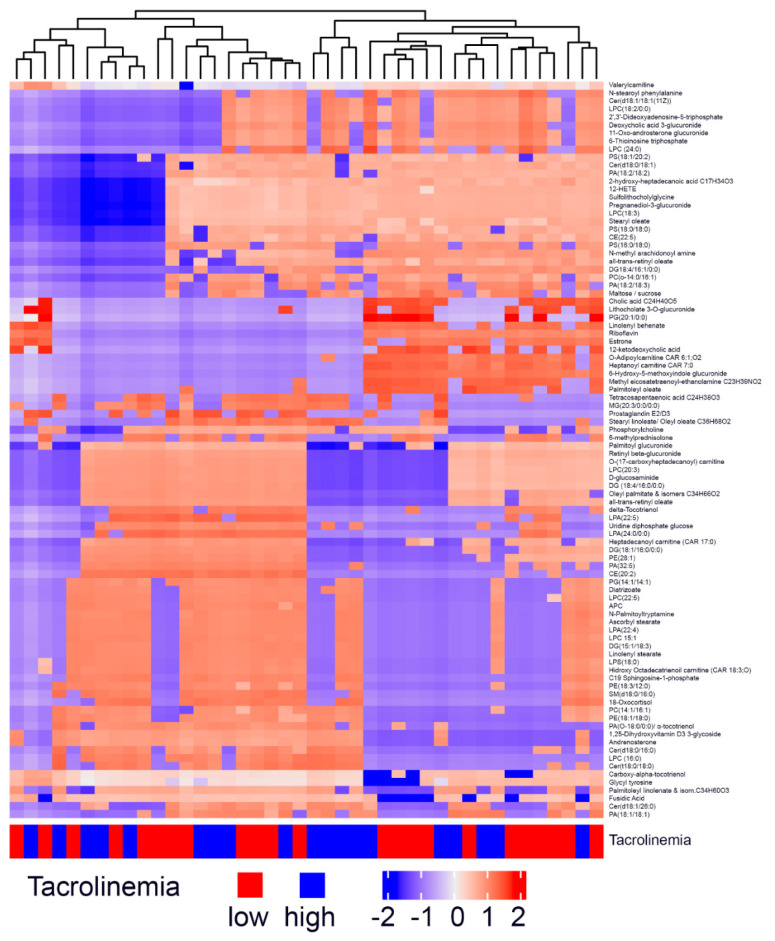
Background and aim: Tacrolimus, a widely used immunosuppressive drug in kidney transplant recipients, exhibits a narrow therapeutic window necessitating careful monitoring of its concentration to balance efficacy and minimize dose-related toxic effects. Although essential, this approach is not optimal, and tacrolinemia, even in the therapeutic interval, might be associated with toxicity and rejection within range. This study aimed to identify specific urinary metabolites associated with tacrolimus levels in kidney transplant patients using a combination of serum high-precision liquid chromatography-mass spectrometry (HPLC-MS) and machine learning algorithms.
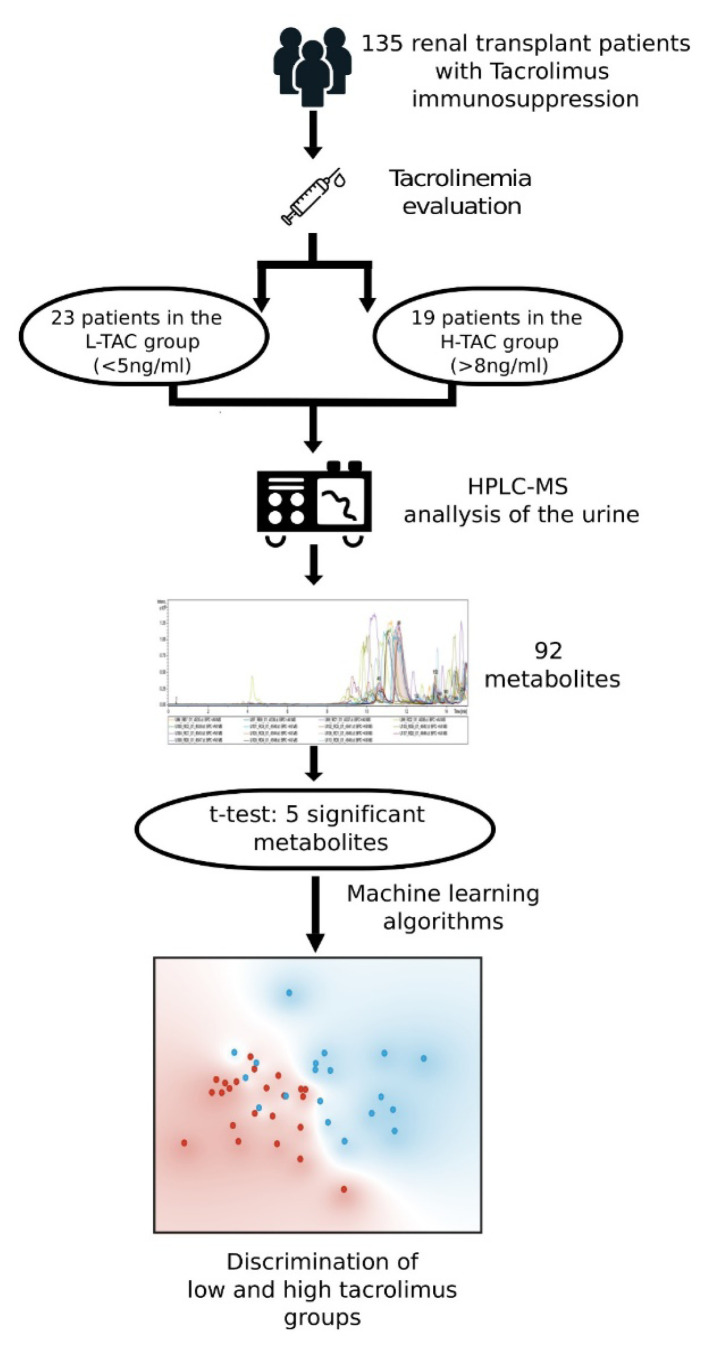
Methods: A cohort of 42 kidney transplant patients, comprising 19 individuals with high tacrolimus levels (>8 ng/mL) and 23 individuals with low tacrolimus levels (<5 ng/mL), were included in the analysis. Urinary samples were subjected to HPLC-MS analysis, enabling comprehensive metabolite profiling across the study cohort. Additionally, tacrolimus concentrations were quantified using established clinical assays.
Results: Through an extensive analysis of the HPLC-MS data, a panel of five metabolites were identified that exhibited a significant correlation with tacrolimus levels (Valeryl carnitine, Glycyl-tyrosine, Adrenosterone, LPC 18:3 and 6-methylprednisolone). Machine learning algorithms were then employed to develop a predictive model utilizing the identified metabolites as features. The logistic regression model achieved an area under the curve of 0.810, indicating good discriminatory power and classification accuracy of 0.690.
Conclusions: This study demonstrates the potential of integrating HPLC-MS metabolomics with machine learning algorithms to identify urinary metabolites associated with tacrolimus levels. The identified metabolites are promising biomarkers for monitoring tacrolimus therapy, aiding in dose optimization and personalized treatment approaches.





 京公网安备 11010802042870号
京ICP备2023020795号-1
京公网安备 11010802042870号
京ICP备2023020795号-1

 分享
分享
 求助内容:
求助内容: 应助结果提醒方式:
 扫码关注我们
