Development and feasibility study of a Culturally Tailored Asthma intervention using a mixed-method approach at the primary school level in Malaysia: Challenged by the COVID-19 pandemic.
Siti Nurkamilla Ramdzan, Ee Ming Khoo, Steve Cunningham, Jayakayatri Jeevajothi Nathan, Nursyuhada Sukri, Hilary Pinnock
{"title":"Development and feasibility study of a Culturally Tailored Asthma intervention using a mixed-method approach at the primary school level in Malaysia: Challenged by the COVID-19 pandemic.","authors":"Siti Nurkamilla Ramdzan, Ee Ming Khoo, Steve Cunningham, Jayakayatri Jeevajothi Nathan, Nursyuhada Sukri, Hilary Pinnock","doi":"10.51866/oa.675","DOIUrl":null,"url":null,"abstract":"<p><strong>Introduction: </strong>The World Health Organization recommends incorporating asthma programmes into national school health services, although this recommendation is rarely implemented.</p><p><strong>Methods: </strong>In Malaysia, we developed a multi-level primary school asthma programme incorporating educational sessions for children with asthma and their parents, raising awareness within the whole school community and training school staff to provide first-aid asthma management. The programme was adapted for delivery during the COVID-19 pandemic, and a mixed-method feasibility study was conducted in October 2020.</p><p><strong>Results: </strong>We identified 34 children with asthma, who comprised 3.7% of the school population. Only 14/34 (41.2%) children with asthma and 4/14 (28.5%) of their parents attended the remote sessions. The in-person session for school staff was attended by 55/62 (88.7%), among whom 86.0% rated the session as good/excellent.</p><p><strong>Conclusion: </strong>The school-based intervention was feasible and received good feedback, despite the COVID-19 pandemic forcing remote delivery. Stakeholder engagement is essential in the development and feasibility of a school-based asthma programme.</p>","PeriodicalId":40017,"journal":{"name":"Malaysian Family Physician","volume":"20 ","pages":"5"},"PeriodicalIF":0.0000,"publicationDate":"2025-01-27","publicationTypes":"Journal Article","fieldsOfStudy":null,"isOpenAccess":false,"openAccessPdf":"https://www.ncbi.nlm.nih.gov/pmc/articles/PMC11821276/pdf/","citationCount":"0","resultStr":null,"platform":"Semanticscholar","paperid":null,"PeriodicalName":"Malaysian Family Physician","FirstCategoryId":"1085","ListUrlMain":"https://doi.org/10.51866/oa.675","RegionNum":0,"RegionCategory":null,"ArticlePicture":[],"TitleCN":null,"AbstractTextCN":null,"PMCID":null,"EPubDate":"2025/1/1 0:00:00","PubModel":"eCollection","JCR":"Q3","JCRName":"Nursing","Score":null,"Total":0}
引用次数: 0
Abstract
Introduction: The World Health Organization recommends incorporating asthma programmes into national school health services, although this recommendation is rarely implemented.
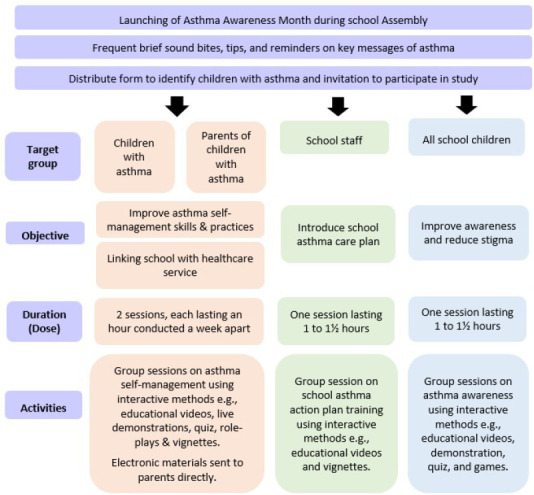
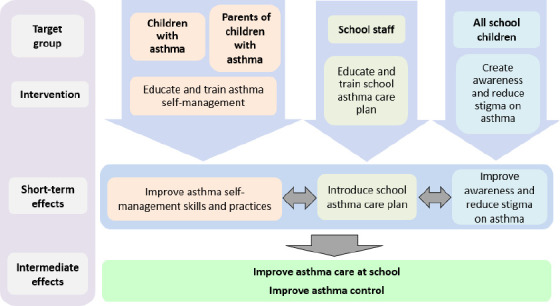
Methods: In Malaysia, we developed a multi-level primary school asthma programme incorporating educational sessions for children with asthma and their parents, raising awareness within the whole school community and training school staff to provide first-aid asthma management. The programme was adapted for delivery during the COVID-19 pandemic, and a mixed-method feasibility study was conducted in October 2020.
Results: We identified 34 children with asthma, who comprised 3.7% of the school population. Only 14/34 (41.2%) children with asthma and 4/14 (28.5%) of their parents attended the remote sessions. The in-person session for school staff was attended by 55/62 (88.7%), among whom 86.0% rated the session as good/excellent.
Conclusion: The school-based intervention was feasible and received good feedback, despite the COVID-19 pandemic forcing remote delivery. Stakeholder engagement is essential in the development and feasibility of a school-based asthma programme.
期刊介绍:
The Malaysian Family Physician is the official journal of the Academy of Family Physicians of Malaysia. It is published three times a year. Circulation: The journal is distributed free of charge to all members of the Academy of Family Physicians of Malaysia. Complimentary copies are also sent to other organizations that are members of the World Organization of Family Doctors (WONCA).




 京公网安备 11010802042870号
京ICP备2023020795号-1
京公网安备 11010802042870号
京ICP备2023020795号-1

 分享
分享
 求助内容:
求助内容: 应助结果提醒方式:
 扫码关注我们
