András Zóka, Márton Gönczi, Róbert Steinhauser, Gabriella Bekő
{"title":"[Serological diagnostic options in invasive fungal infections].","authors":"András Zóka, Márton Gönczi, Róbert Steinhauser, Gabriella Bekő","doi":"10.1556/650.2025.33231","DOIUrl":null,"url":null,"abstract":"<p><p>The early diagnosis of invasive fungal infections (including Candida spp., Aspergillus spp., Pneumocystis jirovecii, Cryptococcus spp.) and their differentiation from non-invasive colonization is an important but seldom easy task. The measurement of fungal cell wall compounds (glucans and mannans) in body fluids (primarily sera) can provide us with useful information without putting more invasive burden on the patient. Galactomannan antigens of the Aspergillus cell wall are detected by classical serological methods. 1,3-β-D-glucans are fundamental compounds of the cell walls of almost all fungi with the exceptions of Zygomycetes and Cryptococcus spp. The coagulation or modified, but principally similar biochemical cascade of the Atlantic horseshoe crab lyzed amoebocytes became the standard method for their detection, that is a process beyond classical serology (as it lacks an antigen-antibody bond). Numerous new or improved methods and test kits have become available in the market for the measurement of both galactomannan and 1,3-β-D-glucans since the latest updates of the European and American diagnostic guidelines. We believe that summarizing the recent changes in diagnostic utilities for the Hungarian medical community might prove helpful in making a more informed and conscious diagnostic choice. In our work, we also aim to cover the possible additional antigen- and antibody-based test options that may be relevant in temperate climates. Orv Hetil. 2024; 166(7): 243–252.</p>","PeriodicalId":19911,"journal":{"name":"Orvosi hetilap","volume":"166 7","pages":"243-252"},"PeriodicalIF":0.9000,"publicationDate":"2025-02-16","publicationTypes":"Journal Article","fieldsOfStudy":null,"isOpenAccess":false,"openAccessPdf":"","citationCount":"0","resultStr":null,"platform":"Semanticscholar","paperid":null,"PeriodicalName":"Orvosi hetilap","FirstCategoryId":"3","ListUrlMain":"https://doi.org/10.1556/650.2025.33231","RegionNum":4,"RegionCategory":"医学","ArticlePicture":[],"TitleCN":null,"AbstractTextCN":null,"PMCID":null,"EPubDate":"","PubModel":"","JCR":"Q3","JCRName":"MEDICINE, GENERAL & INTERNAL","Score":null,"Total":0}
引用次数: 0
Abstract
The early diagnosis of invasive fungal infections (including Candida spp., Aspergillus spp., Pneumocystis jirovecii, Cryptococcus spp.) and their differentiation from non-invasive colonization is an important but seldom easy task. The measurement of fungal cell wall compounds (glucans and mannans) in body fluids (primarily sera) can provide us with useful information without putting more invasive burden on the patient. Galactomannan antigens of the Aspergillus cell wall are detected by classical serological methods. 1,3-β-D-glucans are fundamental compounds of the cell walls of almost all fungi with the exceptions of Zygomycetes and Cryptococcus spp. The coagulation or modified, but principally similar biochemical cascade of the Atlantic horseshoe crab lyzed amoebocytes became the standard method for their detection, that is a process beyond classical serology (as it lacks an antigen-antibody bond). Numerous new or improved methods and test kits have become available in the market for the measurement of both galactomannan and 1,3-β-D-glucans since the latest updates of the European and American diagnostic guidelines. We believe that summarizing the recent changes in diagnostic utilities for the Hungarian medical community might prove helpful in making a more informed and conscious diagnostic choice. In our work, we also aim to cover the possible additional antigen- and antibody-based test options that may be relevant in temperate climates. Orv Hetil. 2024; 166(7): 243–252.
侵袭性真菌感染(包括念珠菌、曲霉菌、吉氏肺囊虫、隐球菌)的早期诊断及其与非侵袭性定植的鉴别是一项重要但不容易的任务。体液(主要是血清)中真菌细胞壁化合物(葡聚糖和甘露聚糖)的测量可以为我们提供有用的信息,而不会给患者带来更多的侵入性负担。用经典的血清学方法检测曲霉细胞壁的半乳甘露聚糖抗原。1,3-β- d -葡聚糖是几乎所有真菌细胞壁的基本化合物,除了接合菌和隐球菌。大西洋马蹄蟹溶解变形虫细胞的凝血或修饰的生化级联成为检测它们的标准方法,这是一个超越经典血清学的过程(因为它缺乏抗原-抗体结合)。自从欧洲和美国诊断指南的最新更新以来,市场上已经有许多新的或改进的方法和测试试剂盒可用于半乳甘露聚糖和1,3-β- d -葡聚糖的测量。我们认为,总结匈牙利医学界最近在诊断工具方面的变化,可能有助于作出更明智和有意识的诊断选择。在我们的工作中,我们还旨在涵盖可能与温带气候相关的其他基于抗原和抗体的检测选择。奥夫·海泰尔。2024;166(7): 243 - 252。
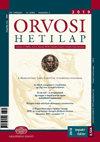
期刊介绍:
The journal publishes original and review papers in the fields of experimental and clinical medicine. It covers epidemiology, diagnostics, therapy and the prevention of human diseases as well as papers of medical history.
Orvosi Hetilap is the oldest, still in-print, Hungarian publication and also the one-and-only weekly published scientific journal in Hungary.
The strategy of the journal is based on the Curatorium of the Lajos Markusovszky Foundation and on the National and International Editorial Board. The 150 year-old journal is part of the Hungarian Cultural Heritage.



 京公网安备 11010802042870号
京ICP备2023020795号-1
京公网安备 11010802042870号
京ICP备2023020795号-1

 分享
分享
 求助内容:
求助内容: 应助结果提醒方式:
 扫码关注我们
