Role of 18 FDG PET/CT in Detecting Primary Tumors in Patients with Carcinoma of Unknown Primary: Single-Center Cross-Sectional Study from 2017 to 2023 (Extension Study).
Nosheen Fatima, Mina Laiq, Muhammad Rafay, Sara Muhammad Azam, Maseeh Uz Zaman
{"title":"Role of <sup>18</sup> FDG PET/CT in Detecting Primary Tumors in Patients with Carcinoma of Unknown Primary: Single-Center Cross-Sectional Study from 2017 to 2023 (Extension Study).","authors":"Nosheen Fatima, Mina Laiq, Muhammad Rafay, Sara Muhammad Azam, Maseeh Uz Zaman","doi":"10.1055/s-0044-1795101","DOIUrl":null,"url":null,"abstract":"<p><p><b>Background</b> Carcinoma of unknown primary (CUP) is a diverse group of cancers in which the primary tumor site remains occult despite detailed investigations. This is an extension of a published parent study with a smaller cohort, to further validate the published facts of detection efficiency of 18F-fluorodeoxyglucose positron emission tomography/computed tomography ( <sup>18</sup> FDG PET/CT) in patients with CUP over a larger sample from 2017 to 2023. <b>Methods</b> Patients with CUP referred for <sup>18</sup> FDG PET/CT scan for detection of primary sites during the study period were recruited. <sup>18</sup> FDG PET/CT scan was acquired using a standardized protocol, and patients with suspected primary sites underwent biopsies. Scan findings and biopsy results were analyzed to find the detection rate, sensitivity, area under the curve (AUC), and positive predictive value (PPV). As no biopsy was performed in cases with negative scan, these cases were considered false negatives (FNs). <b>Results</b> Total 230 patients with CUP were included with similar demographic trend (mean age: 58 ± 14 years; 63% male and 37% female; mean body mass index: 26.82 ± 5.4 kg/m <sup>2</sup> ); 138/230 (60 vs. 74% in parent study) patients were found to have a hypermetabolic focus suggestive of primary tumor sites and subjected to biopsy which turned out positive in 127/138 (true positive [TP]: 92 vs. 76% in parent study) and negative in 11/138 (true negative [TN]: 8 vs. 24% in parent study). Sensitivity and PPV of <sup>18</sup> FDG PET/CT were 58 and 92%, respectively (68 and 76%, respectively, in parent study). The remaining 92/230 (40%) patients with negative <sup>18</sup> FDG PET/CT for primary focus did not have biopsy. No significant demographic difference was seen in patients with TP and FN studies ( <i>p</i> > 0.05). Receiver operating characteristics (ROC) curve revealed fair diagnostic strength of <sup>18</sup> FDG PET/CT for detecting unknown primary (AUC 0.710; <i>p</i> ≤ 0.05; standard error = 0.0167; confidence interval: 0.647-0.768; vs. nonsignificant in parent study). <b>Conclusion</b> We conclude that this extension study with a larger cohort compared with the parent study has found a similar detection efficiency of <sup>18</sup> FDG PET/CT for identifying primary tumor in patients with CUP (58 vs. 57%) but with better PPV and sensitivity. Upfront use of <sup>18</sup> FDG PET/CT in CUP could preclude the use of many futile diagnostic procedures. Furthermore, the use of tumor-specific PET tracers, higher resolution scanners, and acquiring delayed images in patients with negative <sup>18</sup> FDG study could reduce FN results in patients with CUP.</p>","PeriodicalId":23742,"journal":{"name":"World Journal of Nuclear Medicine","volume":"24 1","pages":"57-63"},"PeriodicalIF":0.9000,"publicationDate":"2024-11-19","publicationTypes":"Journal Article","fieldsOfStudy":null,"isOpenAccess":false,"openAccessPdf":"https://www.ncbi.nlm.nih.gov/pmc/articles/PMC11828639/pdf/","citationCount":"0","resultStr":null,"platform":"Semanticscholar","paperid":null,"PeriodicalName":"World Journal of Nuclear Medicine","FirstCategoryId":"1085","ListUrlMain":"https://doi.org/10.1055/s-0044-1795101","RegionNum":0,"RegionCategory":null,"ArticlePicture":[],"TitleCN":null,"AbstractTextCN":null,"PMCID":null,"EPubDate":"2025/3/1 0:00:00","PubModel":"eCollection","JCR":"Q4","JCRName":"RADIOLOGY, NUCLEAR MEDICINE & MEDICAL IMAGING","Score":null,"Total":0}
引用次数: 0
Abstract
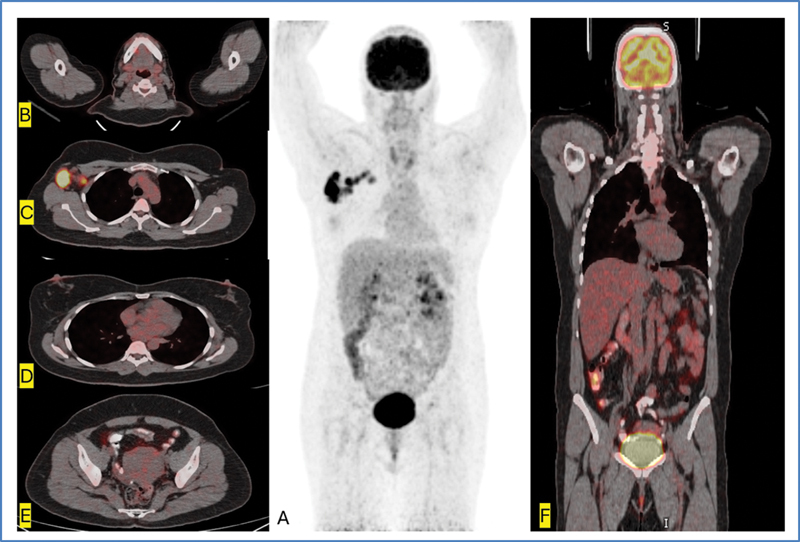
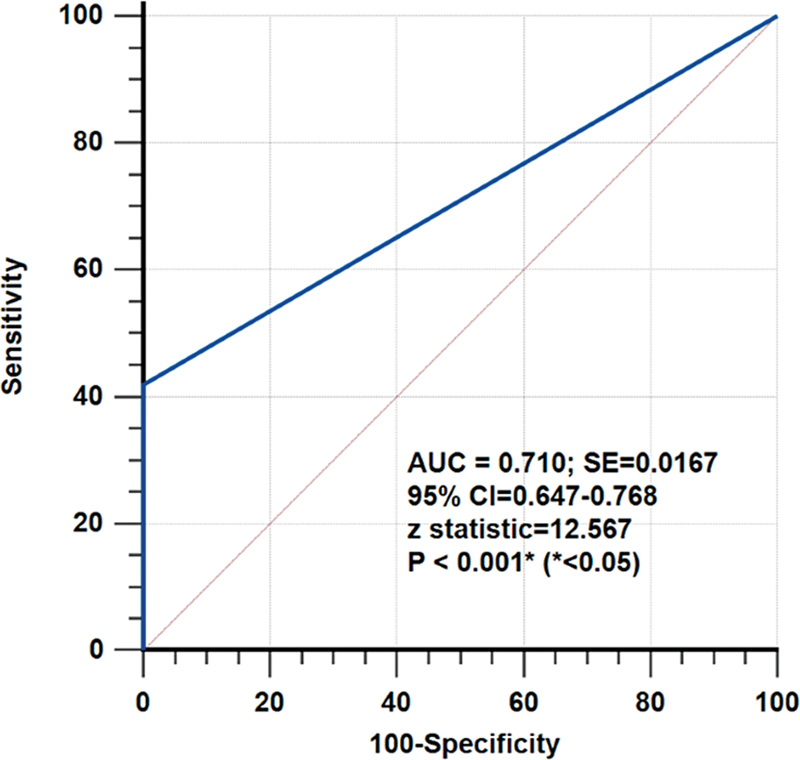
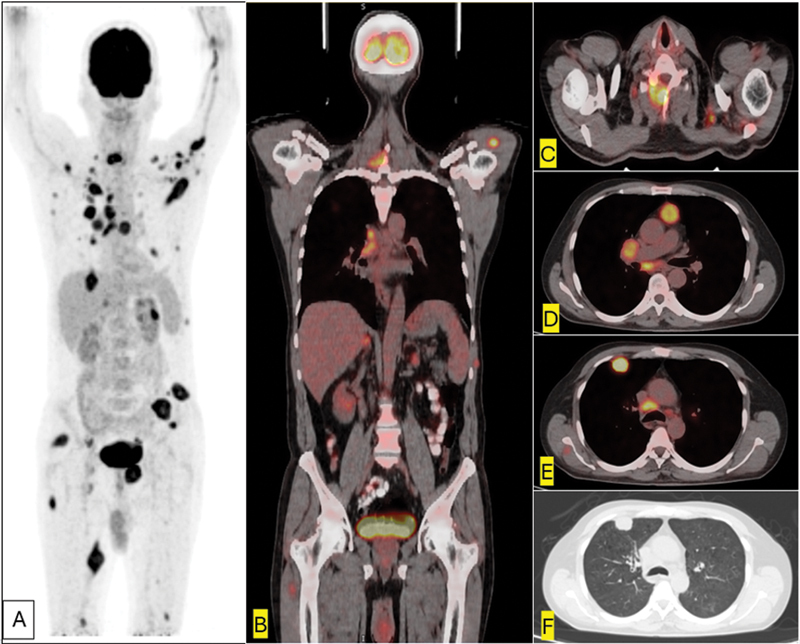
Background Carcinoma of unknown primary (CUP) is a diverse group of cancers in which the primary tumor site remains occult despite detailed investigations. This is an extension of a published parent study with a smaller cohort, to further validate the published facts of detection efficiency of 18F-fluorodeoxyglucose positron emission tomography/computed tomography ( 18 FDG PET/CT) in patients with CUP over a larger sample from 2017 to 2023. Methods Patients with CUP referred for 18 FDG PET/CT scan for detection of primary sites during the study period were recruited. 18 FDG PET/CT scan was acquired using a standardized protocol, and patients with suspected primary sites underwent biopsies. Scan findings and biopsy results were analyzed to find the detection rate, sensitivity, area under the curve (AUC), and positive predictive value (PPV). As no biopsy was performed in cases with negative scan, these cases were considered false negatives (FNs). Results Total 230 patients with CUP were included with similar demographic trend (mean age: 58 ± 14 years; 63% male and 37% female; mean body mass index: 26.82 ± 5.4 kg/m 2 ); 138/230 (60 vs. 74% in parent study) patients were found to have a hypermetabolic focus suggestive of primary tumor sites and subjected to biopsy which turned out positive in 127/138 (true positive [TP]: 92 vs. 76% in parent study) and negative in 11/138 (true negative [TN]: 8 vs. 24% in parent study). Sensitivity and PPV of 18 FDG PET/CT were 58 and 92%, respectively (68 and 76%, respectively, in parent study). The remaining 92/230 (40%) patients with negative 18 FDG PET/CT for primary focus did not have biopsy. No significant demographic difference was seen in patients with TP and FN studies ( p > 0.05). Receiver operating characteristics (ROC) curve revealed fair diagnostic strength of 18 FDG PET/CT for detecting unknown primary (AUC 0.710; p ≤ 0.05; standard error = 0.0167; confidence interval: 0.647-0.768; vs. nonsignificant in parent study). Conclusion We conclude that this extension study with a larger cohort compared with the parent study has found a similar detection efficiency of 18 FDG PET/CT for identifying primary tumor in patients with CUP (58 vs. 57%) but with better PPV and sensitivity. Upfront use of 18 FDG PET/CT in CUP could preclude the use of many futile diagnostic procedures. Furthermore, the use of tumor-specific PET tracers, higher resolution scanners, and acquiring delayed images in patients with negative 18 FDG study could reduce FN results in patients with CUP.




 京公网安备 11010802042870号
京ICP备2023020795号-1
京公网安备 11010802042870号
京ICP备2023020795号-1

 分享
分享
 求助内容:
求助内容: 应助结果提醒方式:
 扫码关注我们
