Severe Vertebrobasilar Vasospasm After Iatrogenic Rupture of a Posterior Fossa Epidermoid Cyst: A Case Report of a Rare Complication Managed With Endovascular Intervention.
Steven B Housley, Wady T Jacoby, Zoe Farkash, Andre Monteiro, Jaims Lim, Jason M Davies, Elad I Levy
{"title":"Severe Vertebrobasilar Vasospasm After Iatrogenic Rupture of a Posterior Fossa Epidermoid Cyst: A Case Report of a Rare Complication Managed With Endovascular Intervention.","authors":"Steven B Housley, Wady T Jacoby, Zoe Farkash, Andre Monteiro, Jaims Lim, Jason M Davies, Elad I Levy","doi":"10.1227/neuprac.0000000000000048","DOIUrl":null,"url":null,"abstract":"<p><strong>Background and importance: </strong>Aseptic meningitis and hydrocephalus have been reported after intracranial epidermoid cyst rupture. We present a rare case of clinically symptomatic vasospasm after iatrogenic rupture.</p><p><strong>Clinical presentation: </strong>A middle-aged woman presenting with headache, facial paresthesia, and dizziness was found to have a 5-cm posterior fossa epidermoid cyst on magnetic resonance imaging. Resection was achieved through suboccipital craniectomy and C1 laminectomy. On postoperative day (POD) 1, the patient became unresponsive. After ventriculostomy placement for developing hydrocephalus, she failed to improve. Digital subtraction angiography revealed severe vertebrobasilar vasospasm, which was treated successfully with intra-arterial verapamil and milrinone. She experienced multiple episodes of recurrent vasospasm, all successfully treated with verapamil-milrinone. After ventriculoperitoneal shunt placement on POD 31, her condition stabilized; she was discharged to a rehabilitation center on POD 38.</p><p><strong>Conclusion: </strong>This successful treatment of rare, clinically symptomatic vasospasm postiatrogenic epidermoid cyst rupture may help guide treatment in similar scenarios.</p>","PeriodicalId":74298,"journal":{"name":"Neurosurgery practice","volume":"4 3","pages":"e00048"},"PeriodicalIF":0.6000,"publicationDate":"2023-07-11","publicationTypes":"Journal Article","fieldsOfStudy":null,"isOpenAccess":false,"openAccessPdf":"https://www.ncbi.nlm.nih.gov/pmc/articles/PMC11809984/pdf/","citationCount":"0","resultStr":null,"platform":"Semanticscholar","paperid":null,"PeriodicalName":"Neurosurgery practice","FirstCategoryId":"1085","ListUrlMain":"https://doi.org/10.1227/neuprac.0000000000000048","RegionNum":0,"RegionCategory":null,"ArticlePicture":[],"TitleCN":null,"AbstractTextCN":null,"PMCID":null,"EPubDate":"2023/9/1 0:00:00","PubModel":"eCollection","JCR":"","JCRName":"","Score":null,"Total":0}
引用次数: 0
Abstract
Background and importance: Aseptic meningitis and hydrocephalus have been reported after intracranial epidermoid cyst rupture. We present a rare case of clinically symptomatic vasospasm after iatrogenic rupture.
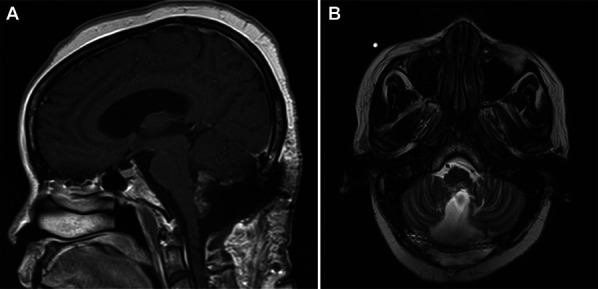
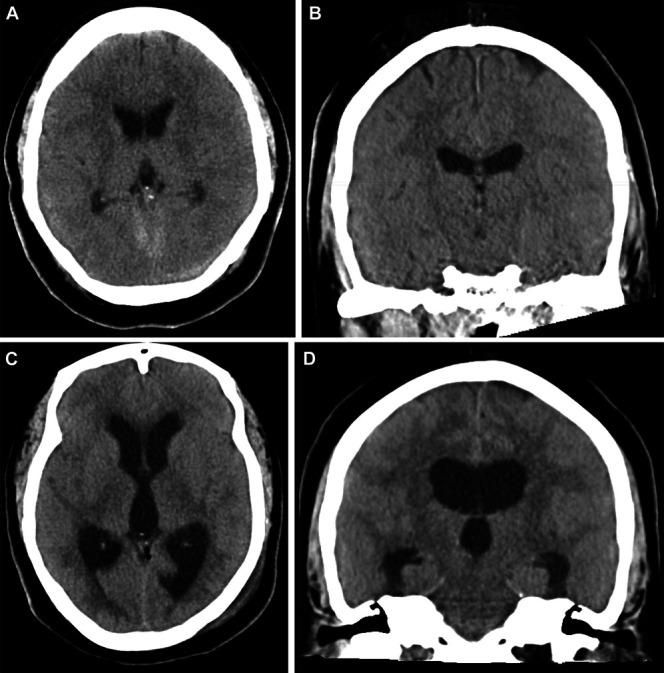
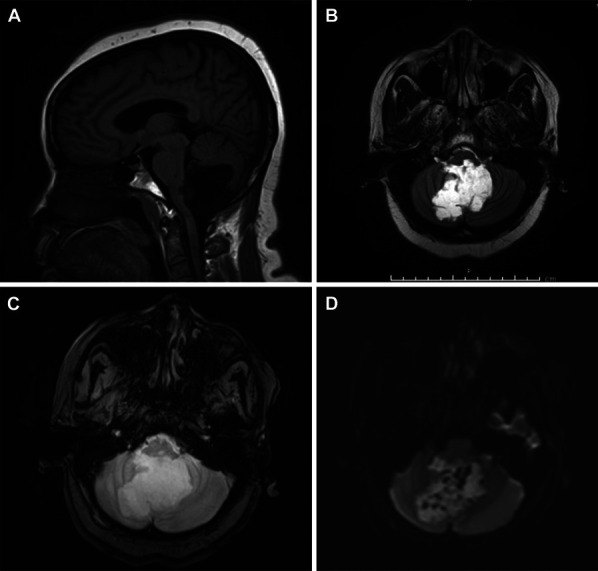
Clinical presentation: A middle-aged woman presenting with headache, facial paresthesia, and dizziness was found to have a 5-cm posterior fossa epidermoid cyst on magnetic resonance imaging. Resection was achieved through suboccipital craniectomy and C1 laminectomy. On postoperative day (POD) 1, the patient became unresponsive. After ventriculostomy placement for developing hydrocephalus, she failed to improve. Digital subtraction angiography revealed severe vertebrobasilar vasospasm, which was treated successfully with intra-arterial verapamil and milrinone. She experienced multiple episodes of recurrent vasospasm, all successfully treated with verapamil-milrinone. After ventriculoperitoneal shunt placement on POD 31, her condition stabilized; she was discharged to a rehabilitation center on POD 38.
Conclusion: This successful treatment of rare, clinically symptomatic vasospasm postiatrogenic epidermoid cyst rupture may help guide treatment in similar scenarios.



 京公网安备 11010802042870号
京ICP备2023020795号-1
京公网安备 11010802042870号
京ICP备2023020795号-1

 分享
分享

 求助内容:
求助内容: 应助结果提醒方式:
 扫码关注我们
