Jonathan R Forrest, Urmimala Chaudhuri, William R Jevnikar, Katelyn Booher, Joseph C LaPorta
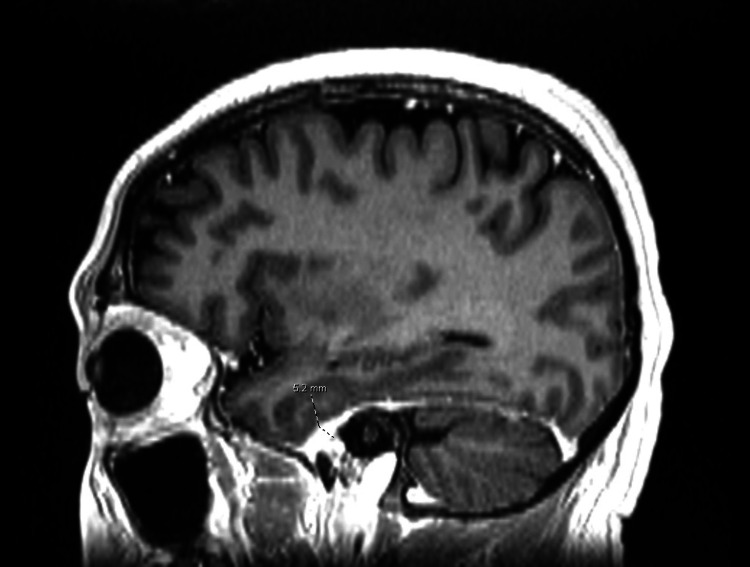
{"title":"The Thickening Dilemma: A Rare Case of Idiopathic Hypertrophic Pachymeningitis Mimicking Granulomatosis With Polyangiitis.","authors":"Jonathan R Forrest, Urmimala Chaudhuri, William R Jevnikar, Katelyn Booher, Joseph C LaPorta","doi":"10.7759/cureus.79094","DOIUrl":null,"url":null,"abstract":"<p><p>Idiopathic hypertrophic pachymeningitis (IHP) is a rare, chronic inflammatory disorder characterized by fibrotic thickening of the dura mater. The etiology of IHP is currently unknown; however, IHP often mimics other inflammatory conditions (causes of secondary hypertrophic pachymeningitis) including neurosarcoidosis, granulomatosis with polyangiitis (GPA), and IgG4-related disease. IHP manifests clinically with a spectrum of neurologic symptoms, including headache, paresthesia, cranial nerve (CN) palsies, and seizures. Here, we discuss the diagnosis and management of a patient presenting with multiple CN palsies following influenza B infection who was initially suspected to have GPA (due to positive cytoplasmic antineutrophil cytoplasmic antibody (c-ANCA), cranial polyneuropathies, and possible nasopharyngeal involvement) but was ultimately diagnosed with IHP which was evident on diagnostic imaging. The patient was managed with rituximab due to its efficacy in steroid-refractory pachymeningitis and as a precautionary for ANCA-associated disease, and corticosteroids. A 41-year-old man with hypertension, chronic otitis media requiring myringotomy with tympanostomy tube placement, and mastoiditis requiring mastoidectomy presented with dysphagia, dysarthria, and left facial weakness over the course of 10 days following an influenza B infection. Despite initial treatment with corticosteroids for inflammation, the patient developed CN polyneuropathy (CN V, VII, X, XII). Positive c-ANCA, cranial polyneuropathies, and possible nasopharyngeal involvement led to primary suspicion of GPA, so corticosteroids were initiated which improved dysarthria and dysphagia. However, subsequent steroid taper led to severe headaches. MRI then revealed smooth dural thickening and enhancement consistent with pachymeningitis. The patient was diagnosed with IHP by exclusion of all other known etiologies and MRI findings. He was treated with intravenous methylprednisolone, followed by rituximab. Despite resolution of complex neurologic symptoms, including dysphagia and CN polyneuropathies, recurrent headaches necessitated several emergency department visits, where migraine cocktails and increased prednisone provided relief. He remains under neurology care for ongoing management. Although we are currently uncertain as to the exact underlying pathophysiology responsible for his recurrent headaches, the mechanisms we propose as possibilities involve a combination of corticosteroid withdrawal (as headaches often followed steroid taper) and sequelae of IHP itself (active and chronic inflammation of the dura). Furthermore, it is currently unknown as to whether his otolaryngologic history was contributory. The case highlights the diagnosis and management of a rare case of IHP in a situation where a patient with a significant otolaryngologic history experienced intractable neurologic symptoms following a viral infection. An extensive work-up was conducted to identify the source of presentation. The patient was managed with medications that proved to be safe and beneficial to the outcome of this patient.</p>","PeriodicalId":93960,"journal":{"name":"Cureus","volume":"17 2","pages":"e79094"},"PeriodicalIF":1.3000,"publicationDate":"2025-02-16","publicationTypes":"Journal Article","fieldsOfStudy":null,"isOpenAccess":false,"openAccessPdf":"https://www.ncbi.nlm.nih.gov/pmc/articles/PMC11830402/pdf/","citationCount":"0","resultStr":null,"platform":"Semanticscholar","paperid":null,"PeriodicalName":"Cureus","FirstCategoryId":"1085","ListUrlMain":"https://doi.org/10.7759/cureus.79094","RegionNum":0,"RegionCategory":null,"ArticlePicture":[],"TitleCN":null,"AbstractTextCN":null,"PMCID":null,"EPubDate":"2025/2/1 0:00:00","PubModel":"eCollection","JCR":"Q3","JCRName":"MEDICINE, GENERAL & INTERNAL","Score":null,"Total":0}
引用次数: 0
Abstract
Idiopathic hypertrophic pachymeningitis (IHP) is a rare, chronic inflammatory disorder characterized by fibrotic thickening of the dura mater. The etiology of IHP is currently unknown; however, IHP often mimics other inflammatory conditions (causes of secondary hypertrophic pachymeningitis) including neurosarcoidosis, granulomatosis with polyangiitis (GPA), and IgG4-related disease. IHP manifests clinically with a spectrum of neurologic symptoms, including headache, paresthesia, cranial nerve (CN) palsies, and seizures. Here, we discuss the diagnosis and management of a patient presenting with multiple CN palsies following influenza B infection who was initially suspected to have GPA (due to positive cytoplasmic antineutrophil cytoplasmic antibody (c-ANCA), cranial polyneuropathies, and possible nasopharyngeal involvement) but was ultimately diagnosed with IHP which was evident on diagnostic imaging. The patient was managed with rituximab due to its efficacy in steroid-refractory pachymeningitis and as a precautionary for ANCA-associated disease, and corticosteroids. A 41-year-old man with hypertension, chronic otitis media requiring myringotomy with tympanostomy tube placement, and mastoiditis requiring mastoidectomy presented with dysphagia, dysarthria, and left facial weakness over the course of 10 days following an influenza B infection. Despite initial treatment with corticosteroids for inflammation, the patient developed CN polyneuropathy (CN V, VII, X, XII). Positive c-ANCA, cranial polyneuropathies, and possible nasopharyngeal involvement led to primary suspicion of GPA, so corticosteroids were initiated which improved dysarthria and dysphagia. However, subsequent steroid taper led to severe headaches. MRI then revealed smooth dural thickening and enhancement consistent with pachymeningitis. The patient was diagnosed with IHP by exclusion of all other known etiologies and MRI findings. He was treated with intravenous methylprednisolone, followed by rituximab. Despite resolution of complex neurologic symptoms, including dysphagia and CN polyneuropathies, recurrent headaches necessitated several emergency department visits, where migraine cocktails and increased prednisone provided relief. He remains under neurology care for ongoing management. Although we are currently uncertain as to the exact underlying pathophysiology responsible for his recurrent headaches, the mechanisms we propose as possibilities involve a combination of corticosteroid withdrawal (as headaches often followed steroid taper) and sequelae of IHP itself (active and chronic inflammation of the dura). Furthermore, it is currently unknown as to whether his otolaryngologic history was contributory. The case highlights the diagnosis and management of a rare case of IHP in a situation where a patient with a significant otolaryngologic history experienced intractable neurologic symptoms following a viral infection. An extensive work-up was conducted to identify the source of presentation. The patient was managed with medications that proved to be safe and beneficial to the outcome of this patient.




 京公网安备 11010802042870号
京ICP备2023020795号-1
京公网安备 11010802042870号
京ICP备2023020795号-1

 分享
分享

 求助内容:
求助内容: 应助结果提醒方式:
 扫码关注我们
