Rafal Typek, Michal P. Dybowski, Andrzej L. Dawidowicz
{"title":"Transformation of Cannabidiol (CBD) during its high-temperature extraction: Studies involving model systems, hemp and functional foods containing CBD","authors":"Rafal Typek, Michal P. Dybowski, Andrzej L. Dawidowicz","doi":"10.1016/j.foodchem.2025.143447","DOIUrl":null,"url":null,"abstract":"<div><div>Most approaches to plants and foodstuffs analysis involve the application of liquid extraction methods for the isolation of their components. The present paper shows and discusses the transformations that CBD may undergo during its high-temperature extraction with methanol, dichloromethane, ethyl acetate and hexane from hemp and CBD containing commercially available functional foods. According to the performed research, CBD can transform not only into cannabinoids, which are hemp metabolites (i.e. Δ8/Δ9-THC, CBN), but also into other previously unknown derivatives, the number and quantity of which depend on the type of the extrahent and the oxygen content in the extraction system. In the case of each solvent used, the CBD transformation degree is strongly affected by the humidity of the extracted hemp. The results presented in this work are important both for hemp analysis, including the research dealing with hemp metabolism, but also for functional food containing CBD.</div></div>","PeriodicalId":318,"journal":{"name":"Food Chemistry","volume":"476 ","pages":"Article 143447"},"PeriodicalIF":9.8000,"publicationDate":"2025-02-17","publicationTypes":"Journal Article","fieldsOfStudy":null,"isOpenAccess":false,"openAccessPdf":"","citationCount":"0","resultStr":null,"platform":"Semanticscholar","paperid":null,"PeriodicalName":"Food Chemistry","FirstCategoryId":"97","ListUrlMain":"https://www.sciencedirect.com/science/article/pii/S0308814625006983","RegionNum":1,"RegionCategory":"农林科学","ArticlePicture":[],"TitleCN":null,"AbstractTextCN":null,"PMCID":null,"EPubDate":"","PubModel":"","JCR":"Q1","JCRName":"CHEMISTRY, APPLIED","Score":null,"Total":0}
引用次数: 0
Abstract
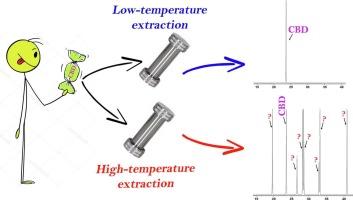
Most approaches to plants and foodstuffs analysis involve the application of liquid extraction methods for the isolation of their components. The present paper shows and discusses the transformations that CBD may undergo during its high-temperature extraction with methanol, dichloromethane, ethyl acetate and hexane from hemp and CBD containing commercially available functional foods. According to the performed research, CBD can transform not only into cannabinoids, which are hemp metabolites (i.e. Δ8/Δ9-THC, CBN), but also into other previously unknown derivatives, the number and quantity of which depend on the type of the extrahent and the oxygen content in the extraction system. In the case of each solvent used, the CBD transformation degree is strongly affected by the humidity of the extracted hemp. The results presented in this work are important both for hemp analysis, including the research dealing with hemp metabolism, but also for functional food containing CBD.
期刊介绍:
Food Chemistry publishes original research papers dealing with the advancement of the chemistry and biochemistry of foods or the analytical methods/ approach used. All papers should focus on the novelty of the research carried out.




 京公网安备 11010802042870号
京ICP备2023020795号-1
京公网安备 11010802042870号
京ICP备2023020795号-1

 分享
分享
 求助内容:
求助内容: 应助结果提醒方式:
 扫码关注我们
