TianQi Wang, Lu Sun, Meng Li, YaoZhong Zhang, Lu Huang
{"title":"Transcriptomics reveals preterm birth risk: identification and validation of key genes in monocytes.","authors":"TianQi Wang, Lu Sun, Meng Li, YaoZhong Zhang, Lu Huang","doi":"10.1186/s12884-025-07293-w","DOIUrl":null,"url":null,"abstract":"<p><strong>Background: </strong>Preterm birth (PTB) is a leading cause of neonatal mortality and long-term disability worldwide. However, the molecular mechanisms underlying PTB remain incompletely understood, and the etiology of many PTB cases is still largely unexplained. Due to their close association with PTB, monocytes serve as an ideal matrix for identifying peripheral biomarkers predictive of preterm birth risk.</p><p><strong>Objective: </strong>This study aims to identify and validate biomarkers that could predict PTB, improving clinical diagnostic accuracy and enhancing preventive measures against PTB.</p><p><strong>Methods: </strong>This study conducted a comprehensive transcriptomic analysis of monocytes obtained from PTB patients (gestational age = 28-36 weeks) and age-matched healthy controls (HC, gestational age = 37<sup>+ 1</sup>-41<sup>+ 4</sup> weeks). Blood samples were collected within 30 min of hospital admission and prior to labor initiation to ensure consistency. We further validated the findings after screening for potential biomarkers using quantitative real-time PCR (qPCR). While the sample size was relatively small, this study provides foundational evidence supporting the role of CXCL3 and IL-6 as biomarkers for PTB, laying a framework for future prospective research.</p><p><strong>Results: </strong>We identified 295 significantly differentially expressed genes compared to the control group, and Weighted Gene Co-expression Network Analysis (WGCNA) further revealed genes significantly associated with PTB. These genes are involved in immune pathways such as rheumatoid arthritis, influenza A, and the MAPK signaling pathway. Machine learning analysis and qPCR validation identified two essential genes-CXCL3 and IL-6. Based on these two genes, the diagnostic model achieved an AUC value of 1 in the discovery cohort, distinguishing PTB patients from healthy controls.</p><p><strong>Conclusion: </strong>The immune responses observed in peripheral blood mononuclear cells (PBMCs) may be closely related to the mechanisms underlying PTB. Monocyte-derived genes CXCL3 and IL-6 are promising biomarkers for predicting PTB risk, offering new diagnostic tools for clinical practice. These findings have the potential to enhance PTB prevention and management strategies.</p>","PeriodicalId":9033,"journal":{"name":"BMC Pregnancy and Childbirth","volume":"25 1","pages":"174"},"PeriodicalIF":2.7000,"publicationDate":"2025-02-17","publicationTypes":"Journal Article","fieldsOfStudy":null,"isOpenAccess":false,"openAccessPdf":"https://www.ncbi.nlm.nih.gov/pmc/articles/PMC11834648/pdf/","citationCount":"0","resultStr":null,"platform":"Semanticscholar","paperid":null,"PeriodicalName":"BMC Pregnancy and Childbirth","FirstCategoryId":"3","ListUrlMain":"https://doi.org/10.1186/s12884-025-07293-w","RegionNum":2,"RegionCategory":"医学","ArticlePicture":[],"TitleCN":null,"AbstractTextCN":null,"PMCID":null,"EPubDate":"","PubModel":"","JCR":"Q1","JCRName":"OBSTETRICS & GYNECOLOGY","Score":null,"Total":0}
引用次数: 0
Abstract
Background: Preterm birth (PTB) is a leading cause of neonatal mortality and long-term disability worldwide. However, the molecular mechanisms underlying PTB remain incompletely understood, and the etiology of many PTB cases is still largely unexplained. Due to their close association with PTB, monocytes serve as an ideal matrix for identifying peripheral biomarkers predictive of preterm birth risk.
Objective: This study aims to identify and validate biomarkers that could predict PTB, improving clinical diagnostic accuracy and enhancing preventive measures against PTB.
Methods: This study conducted a comprehensive transcriptomic analysis of monocytes obtained from PTB patients (gestational age = 28-36 weeks) and age-matched healthy controls (HC, gestational age = 37+ 1-41+ 4 weeks). Blood samples were collected within 30 min of hospital admission and prior to labor initiation to ensure consistency. We further validated the findings after screening for potential biomarkers using quantitative real-time PCR (qPCR). While the sample size was relatively small, this study provides foundational evidence supporting the role of CXCL3 and IL-6 as biomarkers for PTB, laying a framework for future prospective research.
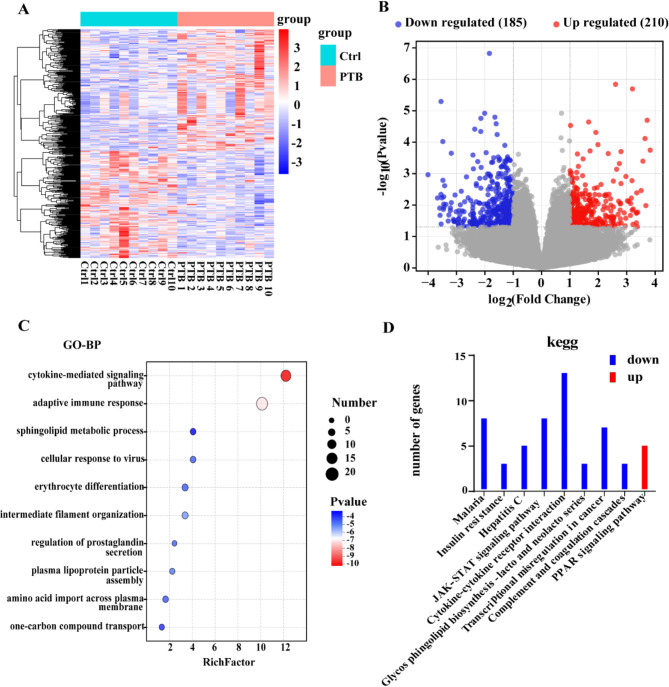
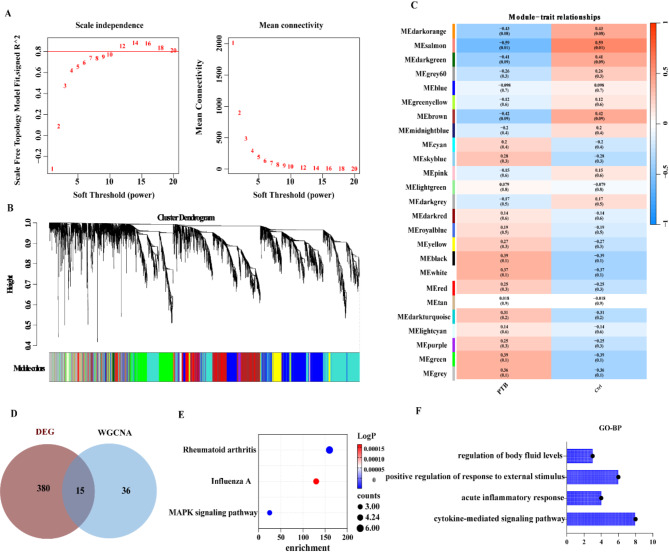
Results: We identified 295 significantly differentially expressed genes compared to the control group, and Weighted Gene Co-expression Network Analysis (WGCNA) further revealed genes significantly associated with PTB. These genes are involved in immune pathways such as rheumatoid arthritis, influenza A, and the MAPK signaling pathway. Machine learning analysis and qPCR validation identified two essential genes-CXCL3 and IL-6. Based on these two genes, the diagnostic model achieved an AUC value of 1 in the discovery cohort, distinguishing PTB patients from healthy controls.
Conclusion: The immune responses observed in peripheral blood mononuclear cells (PBMCs) may be closely related to the mechanisms underlying PTB. Monocyte-derived genes CXCL3 and IL-6 are promising biomarkers for predicting PTB risk, offering new diagnostic tools for clinical practice. These findings have the potential to enhance PTB prevention and management strategies.
期刊介绍:
BMC Pregnancy & Childbirth is an open access, peer-reviewed journal that considers articles on all aspects of pregnancy and childbirth. The journal welcomes submissions on the biomedical aspects of pregnancy, breastfeeding, labor, maternal health, maternity care, trends and sociological aspects of pregnancy and childbirth.





 京公网安备 11010802042870号
京ICP备2023020795号-1
京公网安备 11010802042870号
京ICP备2023020795号-1

 分享
分享
 求助内容:
求助内容: 应助结果提醒方式:
 扫码关注我们
