Ömer Faruk Keleş, Havva Sayhan Kaplan, Hacı Ahmet Çiçek, Onur Palabiyik, Zabit Yener
{"title":"The effects of dexmedetomidine on liver injury in rats with experimental sepsis: A histopathological and immunohistochemical study.","authors":"Ömer Faruk Keleş, Havva Sayhan Kaplan, Hacı Ahmet Çiçek, Onur Palabiyik, Zabit Yener","doi":"10.14744/tjtes.2025.55338","DOIUrl":null,"url":null,"abstract":"<p><strong>Background: </strong>In the rat sepsis model, the protective effect of dexmedetomidine (Dex) in sepsis-induced tissue injuries by reducing inflammation is still unclear, and research is ongoing to determine whether Dex modulates sepsis-induced tissue injury. To investigate the effect of Dex on liver injury in sepsis rats histopathologically and immunohistochemically.</p><p><strong>Methods: </strong>In this study, sepsis was induced in rats by 10 ml/kg E. coli injection and the protective efficacy of Dex against liver damage was investigated with histopathological and immunohistochemical findings by intraperitoneal administration of 100 mcg/kg Dex.</p><p><strong>Results: </strong>In our results, the most striking and basic morphological changes in the liver tissues of sepsis group rats were neutrophil leukocyte infiltrations in and around the vessels. In Dex-treated groups, neutrophil leucocyte infiltrations were more prominent and marked dilatations were observed in the vessels. The fact that inflammatory reactions were more prominent in the Dex-treated groups was thought to be related to the increase in vascular permeability due to Dex's vasodilation effect.</p><p><strong>Conclusion: </strong>according to the histopathological and immunohistochemical findings obtained in the present study, we conclude that Dex did not alleviate sepsis-induced liver inflammation in a rat sepsis model.</p>","PeriodicalId":94263,"journal":{"name":"Ulusal travma ve acil cerrahi dergisi = Turkish journal of trauma & emergency surgery : TJTES","volume":"31 2","pages":"112-118"},"PeriodicalIF":1.0000,"publicationDate":"2025-02-01","publicationTypes":"Journal Article","fieldsOfStudy":null,"isOpenAccess":false,"openAccessPdf":"https://www.ncbi.nlm.nih.gov/pmc/articles/PMC11843427/pdf/","citationCount":"0","resultStr":null,"platform":"Semanticscholar","paperid":null,"PeriodicalName":"Ulusal travma ve acil cerrahi dergisi = Turkish journal of trauma & emergency surgery : TJTES","FirstCategoryId":"1085","ListUrlMain":"https://doi.org/10.14744/tjtes.2025.55338","RegionNum":0,"RegionCategory":null,"ArticlePicture":[],"TitleCN":null,"AbstractTextCN":null,"PMCID":null,"EPubDate":"","PubModel":"","JCR":"","JCRName":"","Score":null,"Total":0}
引用次数: 0
Abstract
Background: In the rat sepsis model, the protective effect of dexmedetomidine (Dex) in sepsis-induced tissue injuries by reducing inflammation is still unclear, and research is ongoing to determine whether Dex modulates sepsis-induced tissue injury. To investigate the effect of Dex on liver injury in sepsis rats histopathologically and immunohistochemically.
Methods: In this study, sepsis was induced in rats by 10 ml/kg E. coli injection and the protective efficacy of Dex against liver damage was investigated with histopathological and immunohistochemical findings by intraperitoneal administration of 100 mcg/kg Dex.
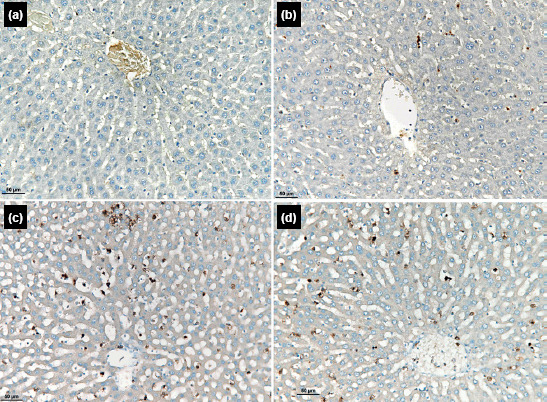
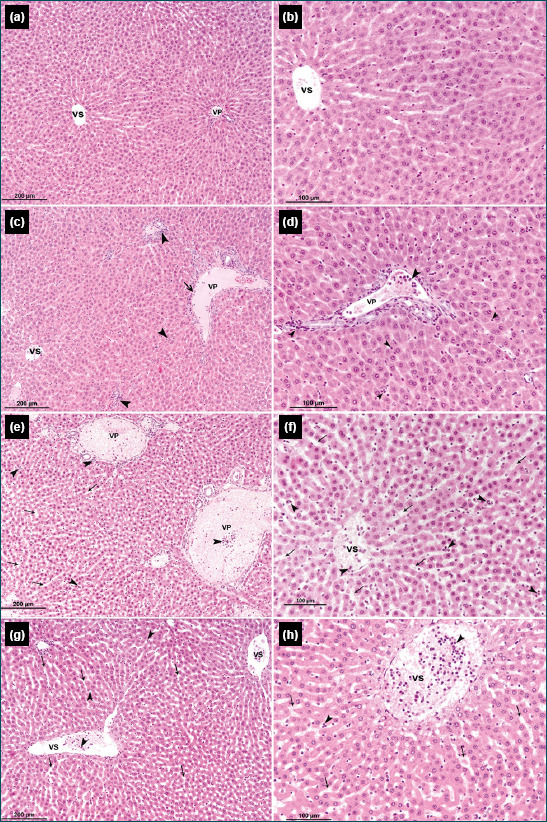
Results: In our results, the most striking and basic morphological changes in the liver tissues of sepsis group rats were neutrophil leukocyte infiltrations in and around the vessels. In Dex-treated groups, neutrophil leucocyte infiltrations were more prominent and marked dilatations were observed in the vessels. The fact that inflammatory reactions were more prominent in the Dex-treated groups was thought to be related to the increase in vascular permeability due to Dex's vasodilation effect.
Conclusion: according to the histopathological and immunohistochemical findings obtained in the present study, we conclude that Dex did not alleviate sepsis-induced liver inflammation in a rat sepsis model.



 京公网安备 11010802042870号
京ICP备2023020795号-1
京公网安备 11010802042870号
京ICP备2023020795号-1

 分享
分享

 求助内容:
求助内容: 应助结果提醒方式:
 扫码关注我们
