Mohamed Elnaggar, Joana Nunes Mansinho, Samuel J P Malkin, Joseph Whitaker, Barnaby Hunt, Divina Glah, Martina MacLellan, Samina Ali
{"title":"The Long-Term Cost-Effectiveness of Oral Semaglutide Versus Lower-Cost Liraglutide in the UK.","authors":"Mohamed Elnaggar, Joana Nunes Mansinho, Samuel J P Malkin, Joseph Whitaker, Barnaby Hunt, Divina Glah, Martina MacLellan, Samina Ali","doi":"10.1007/s13300-025-01691-1","DOIUrl":null,"url":null,"abstract":"<p><strong>Introduction: </strong>Glucagon-like peptide-1 (GLP-1) receptor agonists represent efficacious therapies for treating type 2 diabetes. Oral semaglutide is the only orally administered GLP-1 receptor agonist currently available and has been associated with reductions in glycated hemoglobin and body weight versus once-daily injectable liraglutide after 52 weeks in the PIONEER 4 clinical trial. As lower-cost liraglutide formulations have recently been developed, the present analysis evaluated the long-term cost-effectiveness of oral semaglutide 14 mg versus liraglutide 1.8 mg at lower acquisition costs in the UK.</p><p><strong>Methods: </strong>The published and validated PRIME Type 2 Diabetes Model was used to project clinical and cost outcomes over patient lifetimes. Baseline cohort characteristics, as well as treatment-specific changes in physiological parameters and hypoglycemia rates, were sourced from PIONEER 4. Patients were modeled to receive oral semaglutide or liraglutide until HbA1c exceeded 8.0% (64 mmol/mol), after which treatment was intensified to basal insulin. Annual disutilities associated with treatment administration were applied to capture the differential impact of a once-daily oral versus once-daily injectable medication on quality of life. Costs, expressed in 2022 pounds sterling (GBP), were calculated from a National Health Service (NHS) perspective. The acquisition cost of liraglutide was reduced by up to 50% at increments of 5% across a range of scenarios.</p><p><strong>Results: </strong>Oral semaglutide was associated with improved quality-adjusted life expectancy of 0.18 quality-adjusted life years versus liraglutide 1.8 mg due to a reduced incidence of diabetes-related complications and a reduced treatment-administration burden. Direct, per-person complication costs were estimated to be GBP 187 lower with oral semaglutide. Oral semaglutide remained dominant or cost-effective in the majority of scenarios, even with liraglutide price reductions of 50% applied.</p><p><strong>Conclusions: </strong>Oral semaglutide 14 mg was projected to be cost-effective versus lower-cost liraglutide 1.8 mg in the UK.</p>","PeriodicalId":11192,"journal":{"name":"Diabetes Therapy","volume":" ","pages":"613-628"},"PeriodicalIF":2.6000,"publicationDate":"2025-04-01","publicationTypes":"Journal Article","fieldsOfStudy":null,"isOpenAccess":false,"openAccessPdf":"https://www.ncbi.nlm.nih.gov/pmc/articles/PMC11926313/pdf/","citationCount":"0","resultStr":null,"platform":"Semanticscholar","paperid":null,"PeriodicalName":"Diabetes Therapy","FirstCategoryId":"3","ListUrlMain":"https://doi.org/10.1007/s13300-025-01691-1","RegionNum":3,"RegionCategory":"医学","ArticlePicture":[],"TitleCN":null,"AbstractTextCN":null,"PMCID":null,"EPubDate":"2025/2/19 0:00:00","PubModel":"Epub","JCR":"Q2","JCRName":"Medicine","Score":null,"Total":0}
引用次数: 0
Abstract
Introduction: Glucagon-like peptide-1 (GLP-1) receptor agonists represent efficacious therapies for treating type 2 diabetes. Oral semaglutide is the only orally administered GLP-1 receptor agonist currently available and has been associated with reductions in glycated hemoglobin and body weight versus once-daily injectable liraglutide after 52 weeks in the PIONEER 4 clinical trial. As lower-cost liraglutide formulations have recently been developed, the present analysis evaluated the long-term cost-effectiveness of oral semaglutide 14 mg versus liraglutide 1.8 mg at lower acquisition costs in the UK.
Methods: The published and validated PRIME Type 2 Diabetes Model was used to project clinical and cost outcomes over patient lifetimes. Baseline cohort characteristics, as well as treatment-specific changes in physiological parameters and hypoglycemia rates, were sourced from PIONEER 4. Patients were modeled to receive oral semaglutide or liraglutide until HbA1c exceeded 8.0% (64 mmol/mol), after which treatment was intensified to basal insulin. Annual disutilities associated with treatment administration were applied to capture the differential impact of a once-daily oral versus once-daily injectable medication on quality of life. Costs, expressed in 2022 pounds sterling (GBP), were calculated from a National Health Service (NHS) perspective. The acquisition cost of liraglutide was reduced by up to 50% at increments of 5% across a range of scenarios.
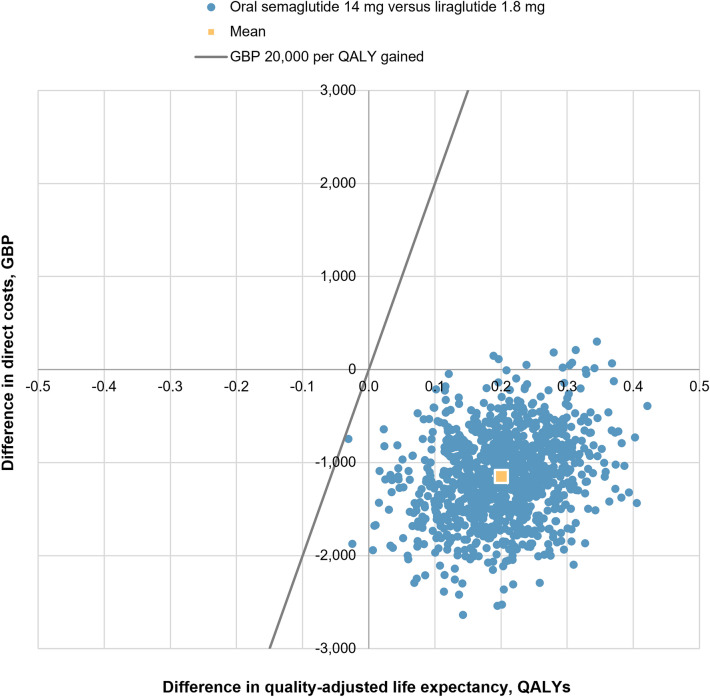
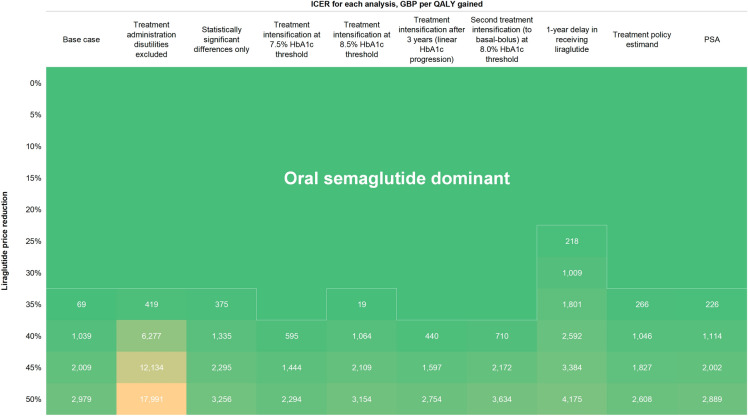
Results: Oral semaglutide was associated with improved quality-adjusted life expectancy of 0.18 quality-adjusted life years versus liraglutide 1.8 mg due to a reduced incidence of diabetes-related complications and a reduced treatment-administration burden. Direct, per-person complication costs were estimated to be GBP 187 lower with oral semaglutide. Oral semaglutide remained dominant or cost-effective in the majority of scenarios, even with liraglutide price reductions of 50% applied.
Conclusions: Oral semaglutide 14 mg was projected to be cost-effective versus lower-cost liraglutide 1.8 mg in the UK.
期刊介绍:
Diabetes Therapy is an international, peer reviewed, rapid-publication (peer review in 2 weeks, published 3–4 weeks from acceptance) journal dedicated to the publication of high-quality clinical (all phases), observational, real-world, and health outcomes research around the discovery, development, and use of therapeutics and interventions (including devices) across all areas of diabetes. Studies relating to diagnostics and diagnosis, pharmacoeconomics, public health, epidemiology, quality of life, and patient care, management, and education are also encouraged.
The journal is of interest to a broad audience of healthcare professionals and publishes original research, reviews, communications and letters. The journal is read by a global audience and receives submissions from all over the world. Diabetes Therapy will consider all scientifically sound research be it positive, confirmatory or negative data. Submissions are welcomed whether they relate to an international and/or a country-specific audience, something that is crucially important when researchers are trying to target more specific patient populations. This inclusive approach allows the journal to assist in the dissemination of all scientifically and ethically sound research.




 京公网安备 11010802042870号
京ICP备2023020795号-1
京公网安备 11010802042870号
京ICP备2023020795号-1

 分享
分享
 求助内容:
求助内容: 应助结果提醒方式:
 扫码关注我们
