{"title":"Trace metal contamination and health risk assessment in fish from Lake Tana and Lake Hayqe, Ethiopia","authors":"Tarekegn Fentie , Yezbie Kassa , Dessie Tibebe , Marye Mulugeta , Mulugeta Legese , Addis Kokeb Alemu , Dereje Yenealem , Asrese Kahaliw , Agmas Amare , Zerubabel Moges , Zemenay Zewdu , Desilal Kokebie , Likinaw Mengstie , Alemye Birhanu , Hailu Sheferaw Ayele , Tsegaye Adane Birhan","doi":"10.1016/j.jafr.2025.101705","DOIUrl":null,"url":null,"abstract":"<div><div>Trace metal contamination in aquatic ecosystems poses a significant environmental and public health challenge, especially in developing countries like Ethiopia. This study evaluates the concentrations, potential sources, and health risks of trace elements in Lakes Tana and Hayqe, focusing on the implications for adult fish consumers. Forty fish samples were collected, cleaned, and wet-digested using standard protocols, and trace element concentrations were determined using Flame Atomic Absorption Spectrophotometry (FAAS). The findings revealed that in Lake Tana, the mean concentrations (mg/kg) of Mn (22–27), Cd (6.8–15), Pb (4.8–7.8), and Cr (11) exceeded the permissible limits set by regulatory bodies for safe consumption, while Fe (15–57), Cu (4.7–6.1), and Zn (20–25) were within acceptable limits. Similarly, in Lake Hayqe, the mean concentrations of Zn (43–48), Cd (8.5–19), Cr (0.9–12), Pb (7.0–12), and Mn (35) were above satisfactory limits, except for Fe (86–90) and Cu (4.7–7.6), which were within safe thresholds. The non-cancer risks were less than 1, while the cancer risks were within the tolerable intake values of 10<sup>−4</sup> - 10<sup>−6</sup>, indicating less health risk for fish consumers. Statistical analyses highlighted interrelationships among trace elements and identified contamination sources, underscoring anthropogenic activities as significant contributors. These results call for comprehensive monitoring and stringent regulatory measures to curb trace metal pollution and safeguard public health. Further research should explore the broader ecological consequences of metal contamination and investigate emerging pollutants in aquatic ecosystems.</div></div>","PeriodicalId":34393,"journal":{"name":"Journal of Agriculture and Food Research","volume":"20 ","pages":"Article 101705"},"PeriodicalIF":6.2000,"publicationDate":"2025-02-11","publicationTypes":"Journal Article","fieldsOfStudy":null,"isOpenAccess":false,"openAccessPdf":"","citationCount":"0","resultStr":null,"platform":"Semanticscholar","paperid":null,"PeriodicalName":"Journal of Agriculture and Food Research","FirstCategoryId":"1085","ListUrlMain":"https://www.sciencedirect.com/science/article/pii/S2666154325000766","RegionNum":0,"RegionCategory":null,"ArticlePicture":[],"TitleCN":null,"AbstractTextCN":null,"PMCID":null,"EPubDate":"","PubModel":"","JCR":"Q1","JCRName":"AGRICULTURE, MULTIDISCIPLINARY","Score":null,"Total":0}
引用次数: 0
Abstract
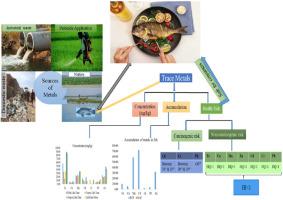
Trace metal contamination in aquatic ecosystems poses a significant environmental and public health challenge, especially in developing countries like Ethiopia. This study evaluates the concentrations, potential sources, and health risks of trace elements in Lakes Tana and Hayqe, focusing on the implications for adult fish consumers. Forty fish samples were collected, cleaned, and wet-digested using standard protocols, and trace element concentrations were determined using Flame Atomic Absorption Spectrophotometry (FAAS). The findings revealed that in Lake Tana, the mean concentrations (mg/kg) of Mn (22–27), Cd (6.8–15), Pb (4.8–7.8), and Cr (11) exceeded the permissible limits set by regulatory bodies for safe consumption, while Fe (15–57), Cu (4.7–6.1), and Zn (20–25) were within acceptable limits. Similarly, in Lake Hayqe, the mean concentrations of Zn (43–48), Cd (8.5–19), Cr (0.9–12), Pb (7.0–12), and Mn (35) were above satisfactory limits, except for Fe (86–90) and Cu (4.7–7.6), which were within safe thresholds. The non-cancer risks were less than 1, while the cancer risks were within the tolerable intake values of 10−4 - 10−6, indicating less health risk for fish consumers. Statistical analyses highlighted interrelationships among trace elements and identified contamination sources, underscoring anthropogenic activities as significant contributors. These results call for comprehensive monitoring and stringent regulatory measures to curb trace metal pollution and safeguard public health. Further research should explore the broader ecological consequences of metal contamination and investigate emerging pollutants in aquatic ecosystems.




 京公网安备 11010802042870号
京ICP备2023020795号-1
京公网安备 11010802042870号
京ICP备2023020795号-1

 分享
分享
 求助内容:
求助内容: 应助结果提醒方式:
 扫码关注我们
