Association between Metabolic Syndrome and Cardiovascular Events in a Japanese Population with and without Obesity: The Shizuoka Kokuho Database Study.
{"title":"Association between Metabolic Syndrome and Cardiovascular Events in a Japanese Population with and without Obesity: The Shizuoka Kokuho Database Study.","authors":"Yasuharu Tabara, Aya Shoji-Asahina, Yoko Sato","doi":"10.5551/jat.65357","DOIUrl":null,"url":null,"abstract":"<p><strong>Aim: </strong>The accumulation of metabolic risk factors, namely high blood pressure, hyperlipidemia, and hyperglycemia, has been associated with cardiovascular diseases. However, little evidence is available on the prognostic significance of metabolic risk factor accumulation in nonobese individuals. This study investigated this issue by analyzing prefecture-wide health checkup and health insurance data in Japan.</p><p><strong>Methods: </strong>We analyzed data from 366,881 adults aged 40-74 years who were enrolled in the National Health Insurance, excluding those who experienced a stroke or coronary artery diseases or required long-term care. Baseline clinical information was obtained from annual health checkup data. Incidences of stroke and coronary artery diseases were obtained from insurance data.</p><p><strong>Results: </strong>In the nonobese population, the hazard ratio for stroke increased linearly with the number of accumulated metabolic risk factors, particularly among those aged <65 years men (one factor: 2.21, two factors: 2.60; three factors: 3.93) and women (one factor: 1.49, two factors: 1.57; three factors: 2.27). Similar results were observed in the analysis for coronary artery diseases. After excluding participants receiving medications, the association of metabolic risk factor with stroke remained significant, although its association with coronary artery disease became less significant. In the analysis for each metabolic risk factors, high blood pressure (men: hazard ratio = 2.85; women: hazard ratio = 2.17; P<0.001), but not hyperlipidemia and hyperglycemia, was associated with stroke in the nonobese population.</p><p><strong>Conclusion: </strong>The accumulation of metabolic risk factors needs to be considered a risk factor for cardiovascular diseases even in individuals without obesity.</p>","PeriodicalId":15128,"journal":{"name":"Journal of atherosclerosis and thrombosis","volume":" ","pages":"1122-1138"},"PeriodicalIF":2.8000,"publicationDate":"2025-09-01","publicationTypes":"Journal Article","fieldsOfStudy":null,"isOpenAccess":false,"openAccessPdf":"https://www.ncbi.nlm.nih.gov/pmc/articles/PMC12416927/pdf/","citationCount":"0","resultStr":null,"platform":"Semanticscholar","paperid":null,"PeriodicalName":"Journal of atherosclerosis and thrombosis","FirstCategoryId":"3","ListUrlMain":"https://doi.org/10.5551/jat.65357","RegionNum":2,"RegionCategory":"医学","ArticlePicture":[],"TitleCN":null,"AbstractTextCN":null,"PMCID":null,"EPubDate":"2025/2/19 0:00:00","PubModel":"Epub","JCR":"Q2","JCRName":"PERIPHERAL VASCULAR DISEASE","Score":null,"Total":0}
引用次数: 0
Abstract
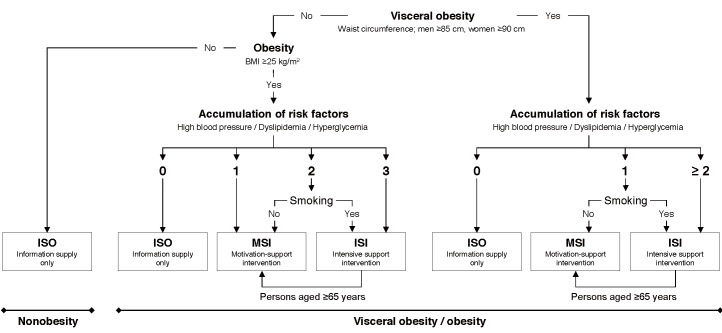
Aim: The accumulation of metabolic risk factors, namely high blood pressure, hyperlipidemia, and hyperglycemia, has been associated with cardiovascular diseases. However, little evidence is available on the prognostic significance of metabolic risk factor accumulation in nonobese individuals. This study investigated this issue by analyzing prefecture-wide health checkup and health insurance data in Japan.
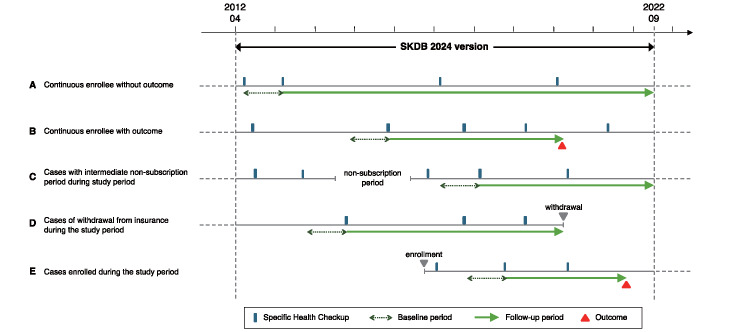
Methods: We analyzed data from 366,881 adults aged 40-74 years who were enrolled in the National Health Insurance, excluding those who experienced a stroke or coronary artery diseases or required long-term care. Baseline clinical information was obtained from annual health checkup data. Incidences of stroke and coronary artery diseases were obtained from insurance data.
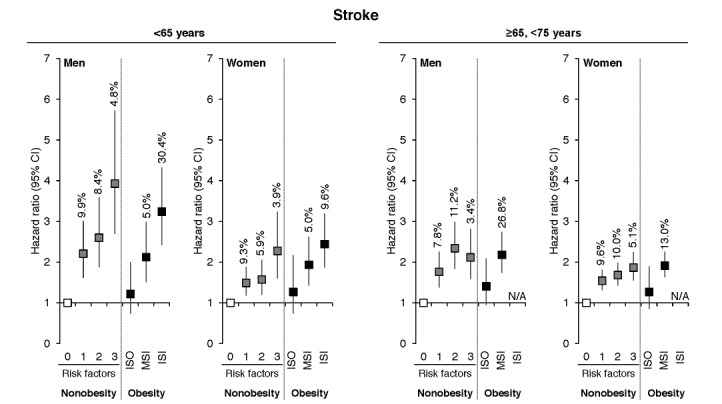
Results: In the nonobese population, the hazard ratio for stroke increased linearly with the number of accumulated metabolic risk factors, particularly among those aged <65 years men (one factor: 2.21, two factors: 2.60; three factors: 3.93) and women (one factor: 1.49, two factors: 1.57; three factors: 2.27). Similar results were observed in the analysis for coronary artery diseases. After excluding participants receiving medications, the association of metabolic risk factor with stroke remained significant, although its association with coronary artery disease became less significant. In the analysis for each metabolic risk factors, high blood pressure (men: hazard ratio = 2.85; women: hazard ratio = 2.17; P<0.001), but not hyperlipidemia and hyperglycemia, was associated with stroke in the nonobese population.
Conclusion: The accumulation of metabolic risk factors needs to be considered a risk factor for cardiovascular diseases even in individuals without obesity.



 京公网安备 11010802042870号
京ICP备2023020795号-1
京公网安备 11010802042870号
京ICP备2023020795号-1

 分享
分享

 求助内容:
求助内容: 应助结果提醒方式:
 扫码关注我们
