Shiven Bhardwaj, Nina Galanter, Lucas A Berenbrok, Parth D Shah, Jennifer L Bacci
{"title":"Pediatric vaccination in pharmacies is not associated with delayed well-child visits among commercially insured children.","authors":"Shiven Bhardwaj, Nina Galanter, Lucas A Berenbrok, Parth D Shah, Jennifer L Bacci","doi":"10.1093/haschl/qxaf028","DOIUrl":null,"url":null,"abstract":"<p><p>Pediatric vaccination rates in the United States lag national goals. Policies that expand pharmacy-based vaccinations among children could help improve vaccination rates. Opponents argue, however, that such policies will result in delayed or missed well-child visits as most children receive routine vaccinations in primary care settings. We evaluated the likelihood of having a timely well-child visit following a routine vaccination in pharmacies and primary care settings among children aged 4-17 years. We conducted a retrospective cohort analysis with commercial claims data from 2016-2019, using conditional logistic regression models. A timely well-child visit was defined as one within 12 months after a preceding well-child visit for primary analysis and 15 months for secondary analysis. Approximately 95% of the sample consisted of children with influenza among their index vaccine(s). The odds of having a timely well-child visit were similar between children who received vaccines in pharmacies and those who received them in primary care settings. Findings suggest that guardians or parents who choose pharmacy-based pediatric vaccinations for their commercially insured children do not forgo well-child visits and may actually be more likely to obtain a timely well-child visit. Extending pharmacy-based vaccinations to patients of all ages can help improve pediatric vaccination rates.</p>","PeriodicalId":94025,"journal":{"name":"Health affairs scholar","volume":"3 2","pages":"qxaf028"},"PeriodicalIF":2.7000,"publicationDate":"2025-02-10","publicationTypes":"Journal Article","fieldsOfStudy":null,"isOpenAccess":false,"openAccessPdf":"https://www.ncbi.nlm.nih.gov/pmc/articles/PMC11837177/pdf/","citationCount":"0","resultStr":null,"platform":"Semanticscholar","paperid":null,"PeriodicalName":"Health affairs scholar","FirstCategoryId":"1085","ListUrlMain":"https://doi.org/10.1093/haschl/qxaf028","RegionNum":0,"RegionCategory":null,"ArticlePicture":[],"TitleCN":null,"AbstractTextCN":null,"PMCID":null,"EPubDate":"2025/2/1 0:00:00","PubModel":"eCollection","JCR":"","JCRName":"","Score":null,"Total":0}
引用次数: 0
Abstract
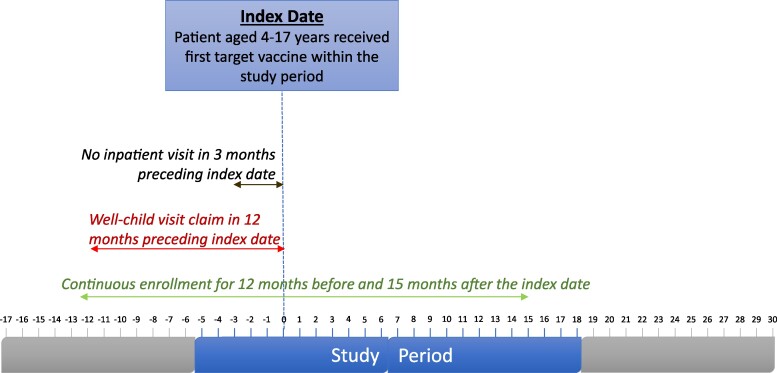
Pediatric vaccination rates in the United States lag national goals. Policies that expand pharmacy-based vaccinations among children could help improve vaccination rates. Opponents argue, however, that such policies will result in delayed or missed well-child visits as most children receive routine vaccinations in primary care settings. We evaluated the likelihood of having a timely well-child visit following a routine vaccination in pharmacies and primary care settings among children aged 4-17 years. We conducted a retrospective cohort analysis with commercial claims data from 2016-2019, using conditional logistic regression models. A timely well-child visit was defined as one within 12 months after a preceding well-child visit for primary analysis and 15 months for secondary analysis. Approximately 95% of the sample consisted of children with influenza among their index vaccine(s). The odds of having a timely well-child visit were similar between children who received vaccines in pharmacies and those who received them in primary care settings. Findings suggest that guardians or parents who choose pharmacy-based pediatric vaccinations for their commercially insured children do not forgo well-child visits and may actually be more likely to obtain a timely well-child visit. Extending pharmacy-based vaccinations to patients of all ages can help improve pediatric vaccination rates.





 京公网安备 11010802042870号
京ICP备2023020795号-1
京公网安备 11010802042870号
京ICP备2023020795号-1

 分享
分享

 求助内容:
求助内容: 应助结果提醒方式:
 扫码关注我们
