Differentiated community-based point-of-care early infant diagnosis to improve HIV diagnosis and ART initiation among infants and young children in Zambia: a quasi-experimental cohort study.
Albert Manasyan, Tannia Tembo, Helen Dale, Jake M Pry, Megumi Itoh, Dhelia Williamson, Herbert Kapesa, Josip Derado, Rachel Suzanne Beard, Shilpa Iyer, Salome Gass, Annie Mwila, Michael E Herce
{"title":"Differentiated community-based point-of-care early infant diagnosis to improve HIV diagnosis and ART initiation among infants and young children in Zambia: a quasi-experimental cohort study.","authors":"Albert Manasyan, Tannia Tembo, Helen Dale, Jake M Pry, Megumi Itoh, Dhelia Williamson, Herbert Kapesa, Josip Derado, Rachel Suzanne Beard, Shilpa Iyer, Salome Gass, Annie Mwila, Michael E Herce","doi":"10.1136/bmjgh-2024-015759","DOIUrl":null,"url":null,"abstract":"<p><strong>Introduction: </strong>An estimated 800 000 children (<15 years) globally living with HIV remain undiagnosed. To reach these children with timely HIV testing services during infancy, we implemented a community-based differentiated care model using mobile point-of-care (POC) technology for early infant diagnosis (EID) of HIV, and assessed its effects on EID positivity, antiretroviral therapy (ART) initiation and 3-month retention in care.</p><p><strong>Methods: </strong>Between 1 June 2019 and 31 May 2020 at six health facilities in Lusaka, Zambia, we enrolled mother-infant pairs (MIPs) at high risk for vertical transmission of HIV based on missing or late infant EID testing or other maternal risk factors. We offered these MIPs community POC EID testing (post-intervention), and compared their outcomes to historical high-risk controls at the same sites (1 June 2017-31 May 2018; pre-intervention). We used propensity score matched weighting and mixed effects regression modelling to estimate outcome differences pre-intervention and post-intervention, and to identify MIP characteristics predictive of vertical transmission of HIV.</p><p><strong>Results: </strong>2577 MIPs were included in the analysis: 1763 and 814 high-risk MIPs from the pre-intervention and post-intervention periods, respectively. Infant HIV positivity was significantly higher in the post-intervention (2.2%) vs pre-intervention (1.1%) period (p=0.038), however this difference was attenuated (0.83%, 95% CI: -0.50%, 2.15%) after adjusting for differences in maternal age, maternal antenatal care visits, infant birth month and facility. During the post-intervention period, MIPs where the mother disengaged from care were 12.97 (95% CI: 2.41, 69.98) times as likely to have an infant diagnosed with HIV vs those in which the infant received late EID testing without maternal care disengagement. Among 18 infants diagnosed with HIV by the intervention, 16 (88.9%) initiated same-day ART and all continued ART at 3-month follow-up.</p><p><strong>Conclusion: </strong>Community-based differentiated care employing POC EID technology increased testing positivity in unadjusted analyses, and resulted in high ART initiation and early care retention, suggesting it may be a promising approach for reaching infants and young children living with HIV being missed by current facility-based approaches.</p><p><strong>Trial registration number: </strong>This trial is registered under the following Clinicaltrials.gov Identifier: NCT03133728.</p>","PeriodicalId":9137,"journal":{"name":"BMJ Global Health","volume":"10 2","pages":""},"PeriodicalIF":6.1000,"publicationDate":"2025-02-20","publicationTypes":"Journal Article","fieldsOfStudy":null,"isOpenAccess":false,"openAccessPdf":"https://www.ncbi.nlm.nih.gov/pmc/articles/PMC11842996/pdf/","citationCount":"0","resultStr":null,"platform":"Semanticscholar","paperid":null,"PeriodicalName":"BMJ Global Health","FirstCategoryId":"3","ListUrlMain":"https://doi.org/10.1136/bmjgh-2024-015759","RegionNum":2,"RegionCategory":"医学","ArticlePicture":[],"TitleCN":null,"AbstractTextCN":null,"PMCID":null,"EPubDate":"","PubModel":"","JCR":"Q1","JCRName":"PUBLIC, ENVIRONMENTAL & OCCUPATIONAL HEALTH","Score":null,"Total":0}
引用次数: 0
Abstract
Introduction: An estimated 800 000 children (<15 years) globally living with HIV remain undiagnosed. To reach these children with timely HIV testing services during infancy, we implemented a community-based differentiated care model using mobile point-of-care (POC) technology for early infant diagnosis (EID) of HIV, and assessed its effects on EID positivity, antiretroviral therapy (ART) initiation and 3-month retention in care.
Methods: Between 1 June 2019 and 31 May 2020 at six health facilities in Lusaka, Zambia, we enrolled mother-infant pairs (MIPs) at high risk for vertical transmission of HIV based on missing or late infant EID testing or other maternal risk factors. We offered these MIPs community POC EID testing (post-intervention), and compared their outcomes to historical high-risk controls at the same sites (1 June 2017-31 May 2018; pre-intervention). We used propensity score matched weighting and mixed effects regression modelling to estimate outcome differences pre-intervention and post-intervention, and to identify MIP characteristics predictive of vertical transmission of HIV.
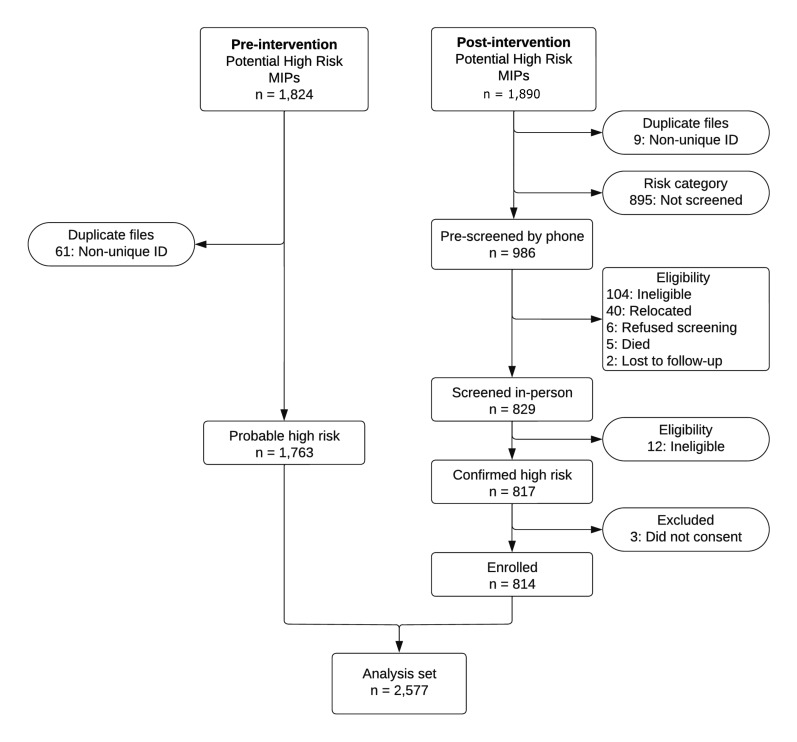
Results: 2577 MIPs were included in the analysis: 1763 and 814 high-risk MIPs from the pre-intervention and post-intervention periods, respectively. Infant HIV positivity was significantly higher in the post-intervention (2.2%) vs pre-intervention (1.1%) period (p=0.038), however this difference was attenuated (0.83%, 95% CI: -0.50%, 2.15%) after adjusting for differences in maternal age, maternal antenatal care visits, infant birth month and facility. During the post-intervention period, MIPs where the mother disengaged from care were 12.97 (95% CI: 2.41, 69.98) times as likely to have an infant diagnosed with HIV vs those in which the infant received late EID testing without maternal care disengagement. Among 18 infants diagnosed with HIV by the intervention, 16 (88.9%) initiated same-day ART and all continued ART at 3-month follow-up.
Conclusion: Community-based differentiated care employing POC EID technology increased testing positivity in unadjusted analyses, and resulted in high ART initiation and early care retention, suggesting it may be a promising approach for reaching infants and young children living with HIV being missed by current facility-based approaches.
Trial registration number: This trial is registered under the following Clinicaltrials.gov Identifier: NCT03133728.
期刊介绍:
BMJ Global Health is an online Open Access journal from BMJ that focuses on publishing high-quality peer-reviewed content pertinent to individuals engaged in global health, including policy makers, funders, researchers, clinicians, and frontline healthcare workers. The journal encompasses all facets of global health, with a special emphasis on submissions addressing underfunded areas such as non-communicable diseases (NCDs). It welcomes research across all study phases and designs, from study protocols to phase I trials to meta-analyses, including small or specialized studies. The journal also encourages opinionated discussions on controversial topics.




 京公网安备 11010802042870号
京ICP备2023020795号-1
京公网安备 11010802042870号
京ICP备2023020795号-1

 分享
分享
 求助内容:
求助内容: 应助结果提醒方式:
 扫码关注我们
