{"title":"Complex of intratumoral mycobiome and bacteriome predicts the recurrence of laryngeal squamous cell carcinoma.","authors":"Xinhui Mao, Huiying Huang, Limin Zhao, Feiran Li, Zhenwei Wang, Xiaohui Yuan, Hui-Ching Lau, Chi-Yao Hsueh, Ming Zhang","doi":"10.1128/aem.01954-24","DOIUrl":null,"url":null,"abstract":"<p><p>Dysbiosis of intratumoral fungal and bacterial communities is associated with poor prognosis in various cancers. However, the mycobiome characteristics in laryngeal squamous cell carcinoma (LSCC) and its correlation with recurrence have not yet been investigated. The mycobiome in 80 LSCC samples was characterized using internal transcribed spacer sequencing, encompassing both tumor tissues and their matched para-cancerous tissues. The intratumoral bacteriome was further identified using 16S rRNA sequencing. These two microbial communities were analyzed using bioinformatics and statistical methods to determine its potential correlation with LSCC recurrence. The fungal alpha diversity in tumors was higher compared with that in para-cancerous tissues (<i>P</i> < 0.001). A significant difference in the overall fungal community patterns between tumor tissues and para-cancerous tissues was observed based on Bray-Curtis dissimilarity (<i>P</i> < 0.001). The presence of <i>Alloprevotella</i>, <i>Porphyromonas</i>, <i>Candida</i>, and <i>Fusarium</i> in tumors exhibited a correlation with alcohol consumption. The relative abundance of <i>Penicillium</i>, <i>Exophiala</i>, and <i>Aspergillus</i> in the mycobiome, as well as that of <i>Alloprevotella</i>, <i>Porphyromonas</i>, and <i>Peptostreptococcus</i> in the bacteriome significantly increased the risk of LSCC recurrence (<i>P</i> < 0.05). These six microorganisms can combine to form a <i>microbial complex</i>, which may independently contribute to recurrence risk in patients with LSCC when enriched within the tumor (hazard ratio = 6.844, <i>P</i> < 0.01). Intratumoral fungi and bacteria can be valuable indicators for assessing recurrence in patients with LSCC, indicating their potential as valuable targets for therapeutic intervention.</p><p><strong>Importance: </strong>Our results revealed that dysbiosis of intratumoral microbiota, including increased fungal community diversity and overgrowth of several fungal or bacterial organisms, is substantially linked to the recurrence of LSCC. Drinking habits might alter the laryngeal microbiota to influence the recurrence of LSCC. We also explored a method to potentially predict the recurrence of LSCC from a novel perspective. These findings could offer insights into the etiology of LSCC and pave way to prevent and treat LSCC.</p>","PeriodicalId":8002,"journal":{"name":"Applied and Environmental Microbiology","volume":" ","pages":"e0195424"},"PeriodicalIF":3.7000,"publicationDate":"2025-03-19","publicationTypes":"Journal Article","fieldsOfStudy":null,"isOpenAccess":false,"openAccessPdf":"https://www.ncbi.nlm.nih.gov/pmc/articles/PMC11921384/pdf/","citationCount":"0","resultStr":null,"platform":"Semanticscholar","paperid":null,"PeriodicalName":"Applied and Environmental Microbiology","FirstCategoryId":"99","ListUrlMain":"https://doi.org/10.1128/aem.01954-24","RegionNum":2,"RegionCategory":"生物学","ArticlePicture":[],"TitleCN":null,"AbstractTextCN":null,"PMCID":null,"EPubDate":"2025/2/21 0:00:00","PubModel":"Epub","JCR":"Q2","JCRName":"BIOTECHNOLOGY & APPLIED MICROBIOLOGY","Score":null,"Total":0}
引用次数: 0
Abstract
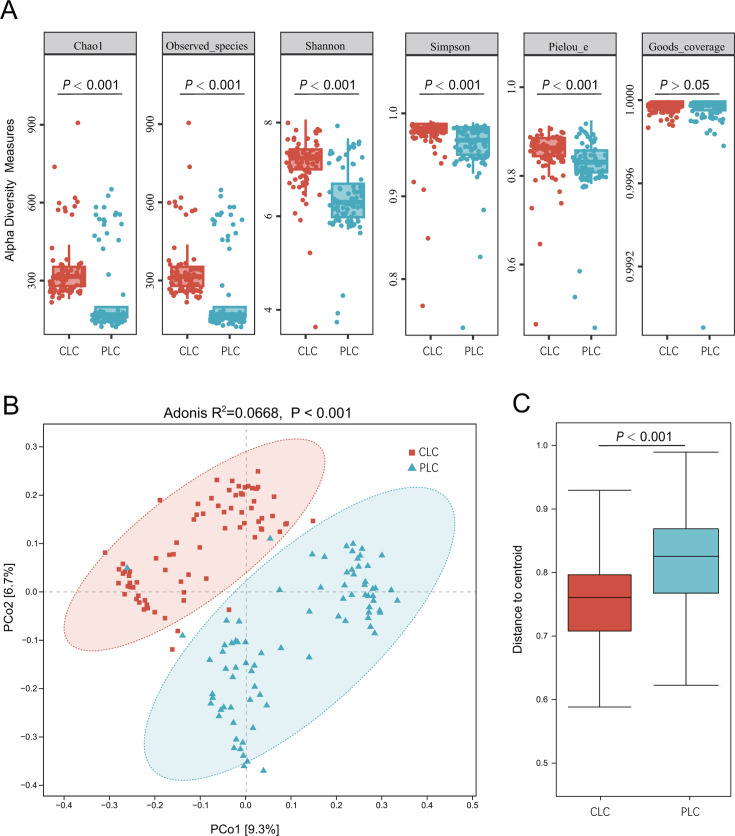
Dysbiosis of intratumoral fungal and bacterial communities is associated with poor prognosis in various cancers. However, the mycobiome characteristics in laryngeal squamous cell carcinoma (LSCC) and its correlation with recurrence have not yet been investigated. The mycobiome in 80 LSCC samples was characterized using internal transcribed spacer sequencing, encompassing both tumor tissues and their matched para-cancerous tissues. The intratumoral bacteriome was further identified using 16S rRNA sequencing. These two microbial communities were analyzed using bioinformatics and statistical methods to determine its potential correlation with LSCC recurrence. The fungal alpha diversity in tumors was higher compared with that in para-cancerous tissues (P < 0.001). A significant difference in the overall fungal community patterns between tumor tissues and para-cancerous tissues was observed based on Bray-Curtis dissimilarity (P < 0.001). The presence of Alloprevotella, Porphyromonas, Candida, and Fusarium in tumors exhibited a correlation with alcohol consumption. The relative abundance of Penicillium, Exophiala, and Aspergillus in the mycobiome, as well as that of Alloprevotella, Porphyromonas, and Peptostreptococcus in the bacteriome significantly increased the risk of LSCC recurrence (P < 0.05). These six microorganisms can combine to form a microbial complex, which may independently contribute to recurrence risk in patients with LSCC when enriched within the tumor (hazard ratio = 6.844, P < 0.01). Intratumoral fungi and bacteria can be valuable indicators for assessing recurrence in patients with LSCC, indicating their potential as valuable targets for therapeutic intervention.
Importance: Our results revealed that dysbiosis of intratumoral microbiota, including increased fungal community diversity and overgrowth of several fungal or bacterial organisms, is substantially linked to the recurrence of LSCC. Drinking habits might alter the laryngeal microbiota to influence the recurrence of LSCC. We also explored a method to potentially predict the recurrence of LSCC from a novel perspective. These findings could offer insights into the etiology of LSCC and pave way to prevent and treat LSCC.
期刊介绍:
Applied and Environmental Microbiology (AEM) publishes papers that make significant contributions to (a) applied microbiology, including biotechnology, protein engineering, bioremediation, and food microbiology, (b) microbial ecology, including environmental, organismic, and genomic microbiology, and (c) interdisciplinary microbiology, including invertebrate microbiology, plant microbiology, aquatic microbiology, and geomicrobiology.





 京公网安备 11010802042870号
京ICP备2023020795号-1
京公网安备 11010802042870号
京ICP备2023020795号-1

 分享
分享
 求助内容:
求助内容: 应助结果提醒方式:
 扫码关注我们
