Nagarajan Shastikaa, S Uma Maheswari, Rajkiran Rajasekar, Ashik Azad, Prasanna Venkatesh Ramesh
{"title":"Venom ophthalmia and acute angle closure glaucoma in capillary leak syndrome.","authors":"Nagarajan Shastikaa, S Uma Maheswari, Rajkiran Rajasekar, Ashik Azad, Prasanna Venkatesh Ramesh","doi":"10.4103/IJO.IJO_2220_24","DOIUrl":null,"url":null,"abstract":"<p><strong>Purpose: </strong>To investigate the incidence and management of acute angle-closure glaucoma (ACG) following venomous snakebites, along with its associated systemic complications, and to evaluate the importance of early detection and intervention in preventing long-term visual impairment.</p><p><strong>Design: </strong>Prospective interventional case series.</p><p><strong>Method: </strong>This study included patients admitted with venomous snakebites to a tertiary care hospital in rural Tamil Nadu, India, over four years (March 2019 to August 2023). All patients underwent both systemic and ocular assessments, regardless of their presenting symptoms. Ocular complications, particularly ACG, were managed with topical and systemic treatments. Data collected included demographic information, type of snakebite, systemic symptoms, treatment outcomes, and ocular findings.</p><p><strong>Results: </strong>Of the 126 patients admitted with venomous snakebites, 84 presented with neurotoxic bites and 42 with hematotoxic bites. Nine patients developed bilateral ACG, all of whom had sustained hematotoxic bites. Visual acuity (VA) ranged from hand motion to 6/9, with elevated intraocular pressure (IOP) ranging between 12 and 54 mm of Hg. Systemic complications included acute renal failure in 16 hematotoxic cases, with four patients requiring hemodialysis and subsequently succumbing to renal failure and multiorgan dysfunction. After treatment with antisnake venom, topical IOP-lowering agents, corticosteroids, and systemic therapies, five patients demonstrated full recovery, with normalized IOP and improved VA.</p><p><strong>Conclusion: </strong>ACG is a significant but underreported complication of hematotoxic snakebites. Early detection and intervention, including routine ocular screening, are crucial to prevent visual impairment. Ocular involvement may also serve as a prognostic indicator of severe systemic envenomation.</p>","PeriodicalId":13329,"journal":{"name":"Indian Journal of Ophthalmology","volume":"73 Suppl 2","pages":"S298-S302"},"PeriodicalIF":1.8000,"publicationDate":"2025-03-01","publicationTypes":"Journal Article","fieldsOfStudy":null,"isOpenAccess":false,"openAccessPdf":"https://www.ncbi.nlm.nih.gov/pmc/articles/PMC12013301/pdf/","citationCount":"0","resultStr":null,"platform":"Semanticscholar","paperid":null,"PeriodicalName":"Indian Journal of Ophthalmology","FirstCategoryId":"3","ListUrlMain":"https://doi.org/10.4103/IJO.IJO_2220_24","RegionNum":4,"RegionCategory":"医学","ArticlePicture":[],"TitleCN":null,"AbstractTextCN":null,"PMCID":null,"EPubDate":"2025/2/21 0:00:00","PubModel":"Epub","JCR":"Q2","JCRName":"OPHTHALMOLOGY","Score":null,"Total":0}
引用次数: 0
Abstract
Purpose: To investigate the incidence and management of acute angle-closure glaucoma (ACG) following venomous snakebites, along with its associated systemic complications, and to evaluate the importance of early detection and intervention in preventing long-term visual impairment.
Design: Prospective interventional case series.
Method: This study included patients admitted with venomous snakebites to a tertiary care hospital in rural Tamil Nadu, India, over four years (March 2019 to August 2023). All patients underwent both systemic and ocular assessments, regardless of their presenting symptoms. Ocular complications, particularly ACG, were managed with topical and systemic treatments. Data collected included demographic information, type of snakebite, systemic symptoms, treatment outcomes, and ocular findings.
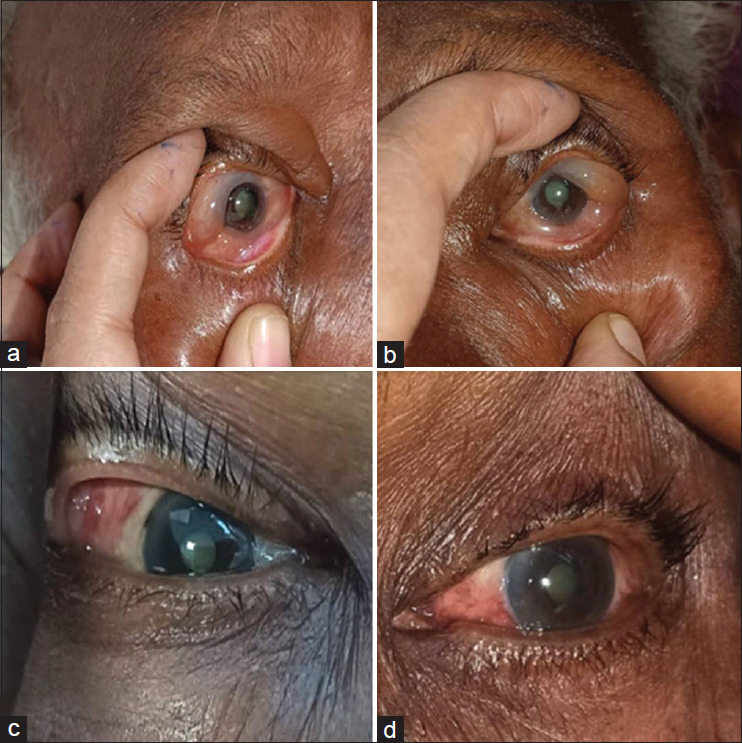
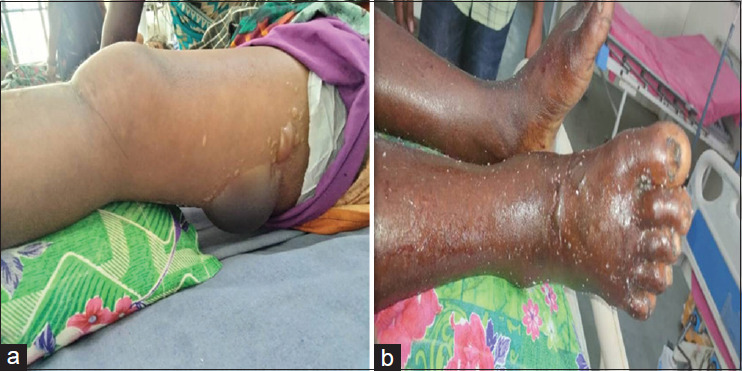
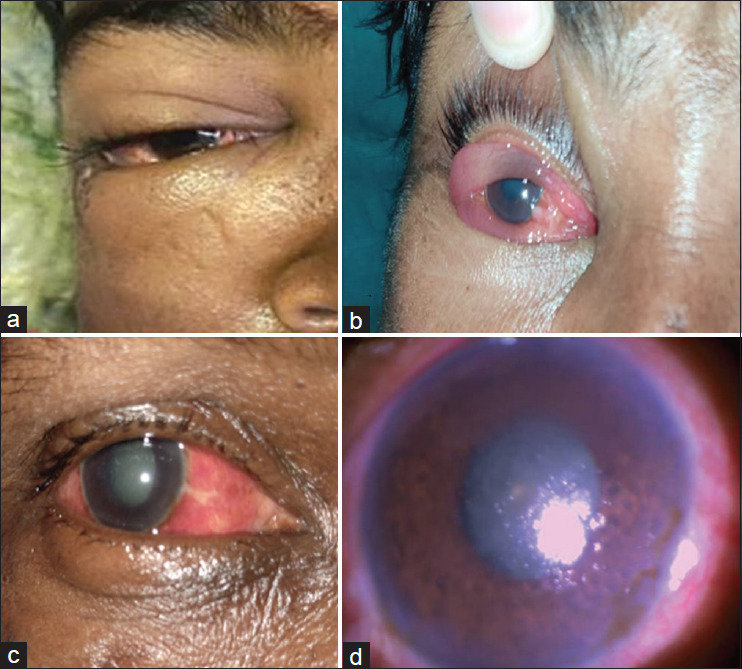
Results: Of the 126 patients admitted with venomous snakebites, 84 presented with neurotoxic bites and 42 with hematotoxic bites. Nine patients developed bilateral ACG, all of whom had sustained hematotoxic bites. Visual acuity (VA) ranged from hand motion to 6/9, with elevated intraocular pressure (IOP) ranging between 12 and 54 mm of Hg. Systemic complications included acute renal failure in 16 hematotoxic cases, with four patients requiring hemodialysis and subsequently succumbing to renal failure and multiorgan dysfunction. After treatment with antisnake venom, topical IOP-lowering agents, corticosteroids, and systemic therapies, five patients demonstrated full recovery, with normalized IOP and improved VA.
Conclusion: ACG is a significant but underreported complication of hematotoxic snakebites. Early detection and intervention, including routine ocular screening, are crucial to prevent visual impairment. Ocular involvement may also serve as a prognostic indicator of severe systemic envenomation.
目的:探讨毒蛇咬伤后急性闭角型青光眼(ACG)的发生率及处理方法,探讨早期发现和干预对预防长期视力损害的重要性。设计:前瞻性介入病例系列。方法:本研究纳入了四年(2019年3月至2023年8月)期间在印度泰米尔纳德邦农村一家三级保健医院因毒蛇咬伤入院的患者。所有患者均接受了系统和眼部评估,无论其表现如何。眼部并发症,特别是ACG,采用局部和全身治疗。收集的数据包括人口统计信息、蛇咬伤类型、全身症状、治疗结果和眼部检查结果。结果:126例毒蛇咬伤患者中,神经毒性咬伤84例,血液毒性咬伤42例。9例患者发生双侧ACG,均为血毒性咬伤。视力(VA)范围从手部运动到6/9,眼压升高(IOP)范围在12 - 54 mm Hg之间。全身性并发症包括16例血液中毒患者的急性肾功能衰竭,4例患者需要血液透析,随后死于肾功能衰竭和多器官功能障碍。经抗蛇毒、外用降眼压药物、皮质类固醇和全身治疗后,5例患者完全恢复,IOP恢复正常,va改善。结论:ACG是血毒性蛇咬伤的重要并发症,但未被报道。早期发现和干预,包括常规眼部筛查,对于预防视力损害至关重要。眼部受累也可作为严重全身性中毒的预后指标。
期刊介绍:
Indian Journal of Ophthalmology covers clinical, experimental, basic science research and translational research studies related to medical, ethical and social issues in field of ophthalmology and vision science. Articles with clinical interest and implications will be given preference.




 京公网安备 11010802042870号
京ICP备2023020795号-1
京公网安备 11010802042870号
京ICP备2023020795号-1

 分享
分享
 求助内容:
求助内容: 应助结果提醒方式:
 扫码关注我们
