Zhaoyu Li, Lingjun Deng, Mengting Cheng, Xiandong Ye, Nanyan Yang, Zaiwen Fan, Li Sun
{"title":"Emerging role of bile acids in colorectal liver metastasis: From molecular mechanism to clinical significance (Review).","authors":"Zhaoyu Li, Lingjun Deng, Mengting Cheng, Xiandong Ye, Nanyan Yang, Zaiwen Fan, Li Sun","doi":"10.3892/ijo.2025.5730","DOIUrl":null,"url":null,"abstract":"<p><p>Liver metastasis is the leading cause of colorectal cancer (CRC)‑related mortality. Microbiota dysbiosis serves a role in the pathogenesis of colorectal liver metastases. Bile acids (BAs), cholesterol metabolites synthesized by intestinal bacteria, contribute to the metastatic cascade of CRC, encompassing colorectal invasion, migration, angiogenesis, anoikis resistance and the establishment of a hepatic pre‑metastatic niche. BAs impact inflammation and modulate the immune landscape within the tumor microenvironment by activating signaling pathways, which are used by tumor cells to facilitate metastasis. Given the widespread distribution of BA‑activated receptors in both tumor and immune cells, strategies aimed at restoring BA homeostasis and blocking metastasis‑associated signaling are of importance in cancer therapy. The present study summarizes the specific role of BAs in each step of colorectal liver metastasis, elucidating the association between BA and CRC progression to highlight the potential of BAs as predictive biomarkers for colorectal liver metastasis and their therapeutic potential in developing novel treatment strategies.</p>","PeriodicalId":14175,"journal":{"name":"International journal of oncology","volume":"66 3","pages":""},"PeriodicalIF":4.9000,"publicationDate":"2025-03-01","publicationTypes":"Journal Article","fieldsOfStudy":null,"isOpenAccess":false,"openAccessPdf":"https://www.ncbi.nlm.nih.gov/pmc/articles/PMC11844338/pdf/","citationCount":"0","resultStr":null,"platform":"Semanticscholar","paperid":null,"PeriodicalName":"International journal of oncology","FirstCategoryId":"3","ListUrlMain":"https://doi.org/10.3892/ijo.2025.5730","RegionNum":3,"RegionCategory":"医学","ArticlePicture":[],"TitleCN":null,"AbstractTextCN":null,"PMCID":null,"EPubDate":"2025/2/21 0:00:00","PubModel":"Epub","JCR":"Q1","JCRName":"ONCOLOGY","Score":null,"Total":0}
引用次数: 0
Abstract
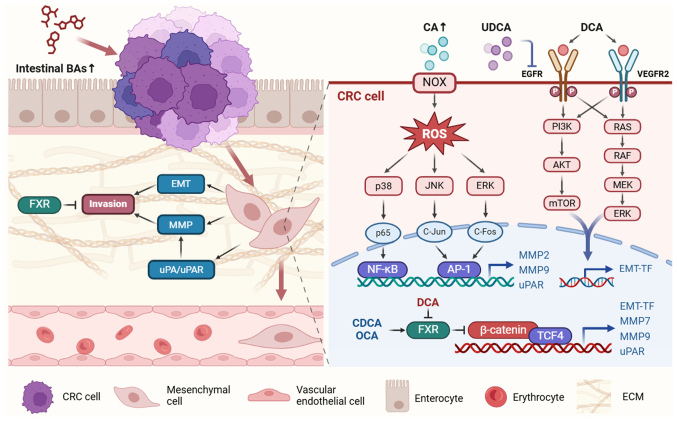
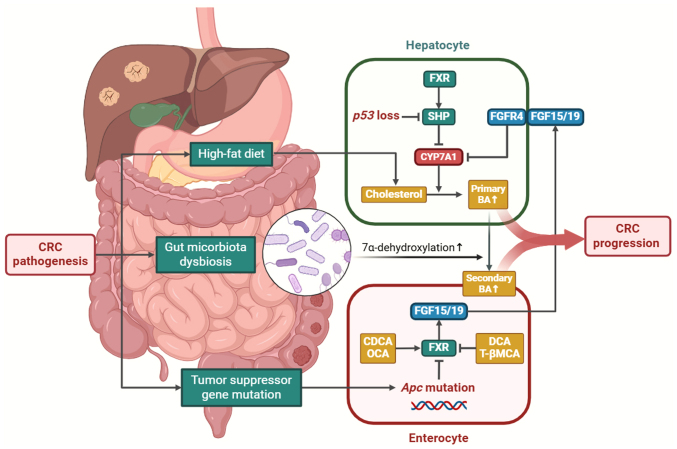
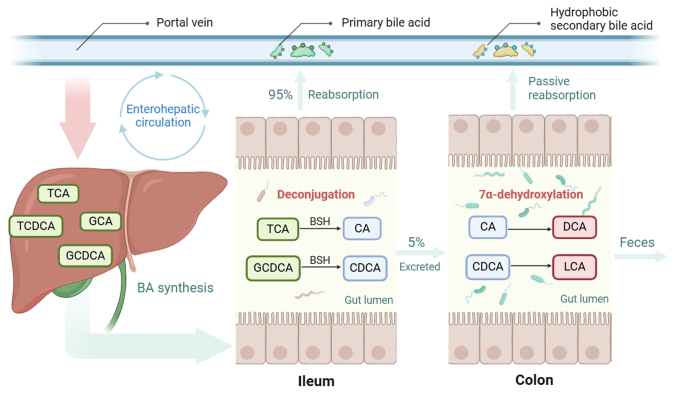
Liver metastasis is the leading cause of colorectal cancer (CRC)‑related mortality. Microbiota dysbiosis serves a role in the pathogenesis of colorectal liver metastases. Bile acids (BAs), cholesterol metabolites synthesized by intestinal bacteria, contribute to the metastatic cascade of CRC, encompassing colorectal invasion, migration, angiogenesis, anoikis resistance and the establishment of a hepatic pre‑metastatic niche. BAs impact inflammation and modulate the immune landscape within the tumor microenvironment by activating signaling pathways, which are used by tumor cells to facilitate metastasis. Given the widespread distribution of BA‑activated receptors in both tumor and immune cells, strategies aimed at restoring BA homeostasis and blocking metastasis‑associated signaling are of importance in cancer therapy. The present study summarizes the specific role of BAs in each step of colorectal liver metastasis, elucidating the association between BA and CRC progression to highlight the potential of BAs as predictive biomarkers for colorectal liver metastasis and their therapeutic potential in developing novel treatment strategies.
期刊介绍:
The main aim of Spandidos Publications is to facilitate scientific communication in a clear, concise and objective manner, while striving to provide prompt publication of original works of high quality.
The journals largely concentrate on molecular and experimental medicine, oncology, clinical and experimental cancer treatment and biomedical research.
All journals published by Spandidos Publications Ltd. maintain the highest standards of quality, and the members of their Editorial Boards are world-renowned scientists.



 京公网安备 11010802042870号
京ICP备2023020795号-1
京公网安备 11010802042870号
京ICP备2023020795号-1

 分享
分享
 求助内容:
求助内容: 应助结果提醒方式:
 扫码关注我们
