Chang-Xu Chen, Xi Wang, Wen Su, Yuan Tian, Yu Gao, Dong-Lan Liu, Hong Xiang, Bo-Chuan Liu, Jin-Li Shi, Yang Zhang, Dong Shen, Wen-Zhi He, Li Yang, Chao Hong, Fan Wu, Lei-Tai Shi, Yi-Na Cun, Jian Zhou
{"title":"Changes in the dynamic characteristics of G-protein can alter the immune-protection efficacy of rabies virus vaccine.","authors":"Chang-Xu Chen, Xi Wang, Wen Su, Yuan Tian, Yu Gao, Dong-Lan Liu, Hong Xiang, Bo-Chuan Liu, Jin-Li Shi, Yang Zhang, Dong Shen, Wen-Zhi He, Li Yang, Chao Hong, Fan Wu, Lei-Tai Shi, Yi-Na Cun, Jian Zhou","doi":"10.1128/jvi.01954-24","DOIUrl":null,"url":null,"abstract":"<p><p>The efficacy of the G-protein is influenced by N-linked glycosylation, which serves as the sole immunogen of the rabies virus vaccine. However, achieving satisfactory immune-protection efficacy remains challenging, owing to the heterogeneous glycosylation of G-proteins. Within molecular dynamics, examining the impact of N-glycan heterogeneity on the structural characteristics of G-proteins provides insights into the relationship between antigens and the efficacy of rabies virus vaccines. Glycosylation is regulated by host cells. In rabies virus cultured in Vero cells (VRV), all N-glycosylation sites of the G-protein underwent modification. In contrast, rabies virus G-protein cultured in KMB17 cells (human diploid cell vaccine [HDCV]) was only modified by N-glycans at amino acid positions 247 and 319. Furthermore, treatment of VRV with de-glycosylation significantly improved its immune-protective efficacy, whereas de-glycosylation did not alter the immune-protective efficacy of HDCV. To support the impact of glycosylation on VRV efficacy, the structures and dynamics of G-proteins were analyzed using GROMACS. Specifically, the hydrophobicity, flexibility, and radius of gyration of the G-protein trimer in VRV were significantly altered by excessive hydrogen bonds formed by the three-branched hybrid glycan at the aa 319 site. These changes increase the instability of the G-protein trimer and may lead to a decrease in vaccine protective efficacy. Ultimately, we determined that N-glycan heterogeneity affects the immune-protection effect of antigen proteins by altering their dynamic characteristics, enhancing our understanding of the correlation between antigen structural characteristics and efficacy.</p><p><strong>Importance: </strong>N-glycosylation of rabies virus glycoprotein dynamically regulates protein folding, stability, and antigenicity. Therefore, regulation of N-glycan modification is key to improving vaccine stability and protective efficacy. How the type and modification sites of N-glycans affect the protective efficacy of rabies vaccines remains unclear. Our research indicates that there are differences in the protective efficacy of rabies virus G-proteins modified with different N-glycans. Moreover, the modification of the three-branched hybrid glycan at the aa 319 site of G-protein significantly altered the hydrophobicity, flexibility, and radius, and increased its trimeric antigen instability through molecular dynamics demonstrations. These findings update the current understanding of the impact of glycans on vaccine antigenicity and develop a system to evaluate the stability of antigen glycoproteins based on molecular dynamics.</p>","PeriodicalId":17583,"journal":{"name":"Journal of Virology","volume":" ","pages":"e0195424"},"PeriodicalIF":3.8000,"publicationDate":"2025-03-18","publicationTypes":"Journal Article","fieldsOfStudy":null,"isOpenAccess":false,"openAccessPdf":"https://www.ncbi.nlm.nih.gov/pmc/articles/PMC11915851/pdf/","citationCount":"0","resultStr":null,"platform":"Semanticscholar","paperid":null,"PeriodicalName":"Journal of Virology","FirstCategoryId":"3","ListUrlMain":"https://doi.org/10.1128/jvi.01954-24","RegionNum":2,"RegionCategory":"医学","ArticlePicture":[],"TitleCN":null,"AbstractTextCN":null,"PMCID":null,"EPubDate":"2025/2/21 0:00:00","PubModel":"Epub","JCR":"Q2","JCRName":"VIROLOGY","Score":null,"Total":0}
引用次数: 0
Abstract
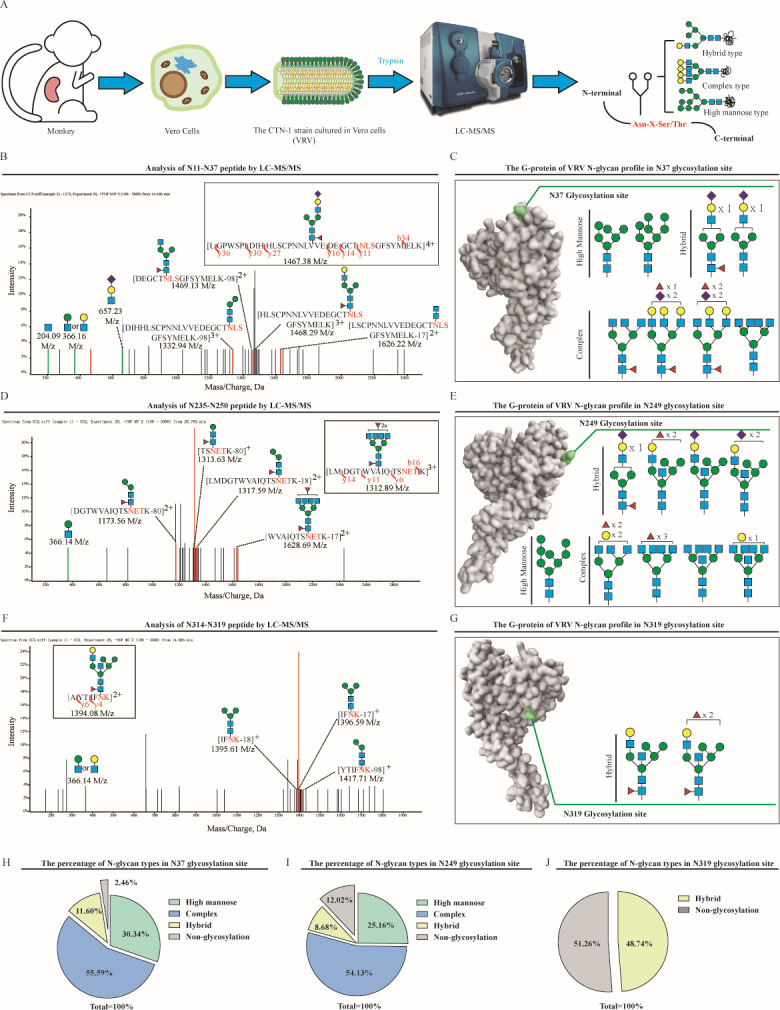
The efficacy of the G-protein is influenced by N-linked glycosylation, which serves as the sole immunogen of the rabies virus vaccine. However, achieving satisfactory immune-protection efficacy remains challenging, owing to the heterogeneous glycosylation of G-proteins. Within molecular dynamics, examining the impact of N-glycan heterogeneity on the structural characteristics of G-proteins provides insights into the relationship between antigens and the efficacy of rabies virus vaccines. Glycosylation is regulated by host cells. In rabies virus cultured in Vero cells (VRV), all N-glycosylation sites of the G-protein underwent modification. In contrast, rabies virus G-protein cultured in KMB17 cells (human diploid cell vaccine [HDCV]) was only modified by N-glycans at amino acid positions 247 and 319. Furthermore, treatment of VRV with de-glycosylation significantly improved its immune-protective efficacy, whereas de-glycosylation did not alter the immune-protective efficacy of HDCV. To support the impact of glycosylation on VRV efficacy, the structures and dynamics of G-proteins were analyzed using GROMACS. Specifically, the hydrophobicity, flexibility, and radius of gyration of the G-protein trimer in VRV were significantly altered by excessive hydrogen bonds formed by the three-branched hybrid glycan at the aa 319 site. These changes increase the instability of the G-protein trimer and may lead to a decrease in vaccine protective efficacy. Ultimately, we determined that N-glycan heterogeneity affects the immune-protection effect of antigen proteins by altering their dynamic characteristics, enhancing our understanding of the correlation between antigen structural characteristics and efficacy.
Importance: N-glycosylation of rabies virus glycoprotein dynamically regulates protein folding, stability, and antigenicity. Therefore, regulation of N-glycan modification is key to improving vaccine stability and protective efficacy. How the type and modification sites of N-glycans affect the protective efficacy of rabies vaccines remains unclear. Our research indicates that there are differences in the protective efficacy of rabies virus G-proteins modified with different N-glycans. Moreover, the modification of the three-branched hybrid glycan at the aa 319 site of G-protein significantly altered the hydrophobicity, flexibility, and radius, and increased its trimeric antigen instability through molecular dynamics demonstrations. These findings update the current understanding of the impact of glycans on vaccine antigenicity and develop a system to evaluate the stability of antigen glycoproteins based on molecular dynamics.
期刊介绍:
Journal of Virology (JVI) explores the nature of the viruses of animals, archaea, bacteria, fungi, plants, and protozoa. We welcome papers on virion structure and assembly, viral genome replication and regulation of gene expression, genetic diversity and evolution, virus-cell interactions, cellular responses to infection, transformation and oncogenesis, gene delivery, viral pathogenesis and immunity, and vaccines and antiviral agents.





 京公网安备 11010802042870号
京ICP备2023020795号-1
京公网安备 11010802042870号
京ICP备2023020795号-1

 分享
分享
 求助内容:
求助内容: 应助结果提醒方式:
 扫码关注我们
