Sangeetha Devi Kumar, Japita Ghosh, Swati Ghosh, Sandeep M Eswarappa
{"title":"Emerging concepts in the molecular cell biology and functions of mammalian erythrocytes.","authors":"Sangeetha Devi Kumar, Japita Ghosh, Swati Ghosh, Sandeep M Eswarappa","doi":"10.1016/j.jbc.2025.108331","DOIUrl":null,"url":null,"abstract":"<p><p>Erythrocytes, or red blood cells, are essential components of vertebrate blood, comprising approximately 45% of human blood volume. Their distinctive features, including small size, biconcave shape, extended lifespan (∼115 days), and lack of a nucleus or other membrane-bound organelles, make them unique among mammalian cell types. Traditionally regarded as passive carriers of oxygen and carbon dioxide, erythrocytes were long thought to function merely as hemoglobin-filled sacs, incapable of gene expression or roles beyond gas transport. However, advancements in molecular biology have revealed a more complex picture. Recent studies have identified various RNA types within erythrocytes, demonstrated globin mRNA translation, and uncovered miRNA-mediated defenses against Plasmodium infection. Beyond gas exchange, erythrocytes play critical roles in regulating regional blood flow via nitric oxide, contribute to innate immunity through toll-like receptors, transport amino acids between tissues, and maintain water homeostasis. Furthermore, emerging technologies have repurposed erythrocytes as drug-delivery vehicles, opening new avenues for therapeutic applications. This review highlights these recent discoveries and explores the expanding functional landscape of erythrocytes, shedding light on their multifaceted roles in physiology and medicine.</p>","PeriodicalId":15140,"journal":{"name":"Journal of Biological Chemistry","volume":" ","pages":"108331"},"PeriodicalIF":4.0000,"publicationDate":"2025-04-01","publicationTypes":"Journal Article","fieldsOfStudy":null,"isOpenAccess":false,"openAccessPdf":"https://www.ncbi.nlm.nih.gov/pmc/articles/PMC12131192/pdf/","citationCount":"0","resultStr":null,"platform":"Semanticscholar","paperid":null,"PeriodicalName":"Journal of Biological Chemistry","FirstCategoryId":"99","ListUrlMain":"https://doi.org/10.1016/j.jbc.2025.108331","RegionNum":2,"RegionCategory":"生物学","ArticlePicture":[],"TitleCN":null,"AbstractTextCN":null,"PMCID":null,"EPubDate":"2025/2/19 0:00:00","PubModel":"Epub","JCR":"Q2","JCRName":"BIOCHEMISTRY & MOLECULAR BIOLOGY","Score":null,"Total":0}
引用次数: 0
Abstract
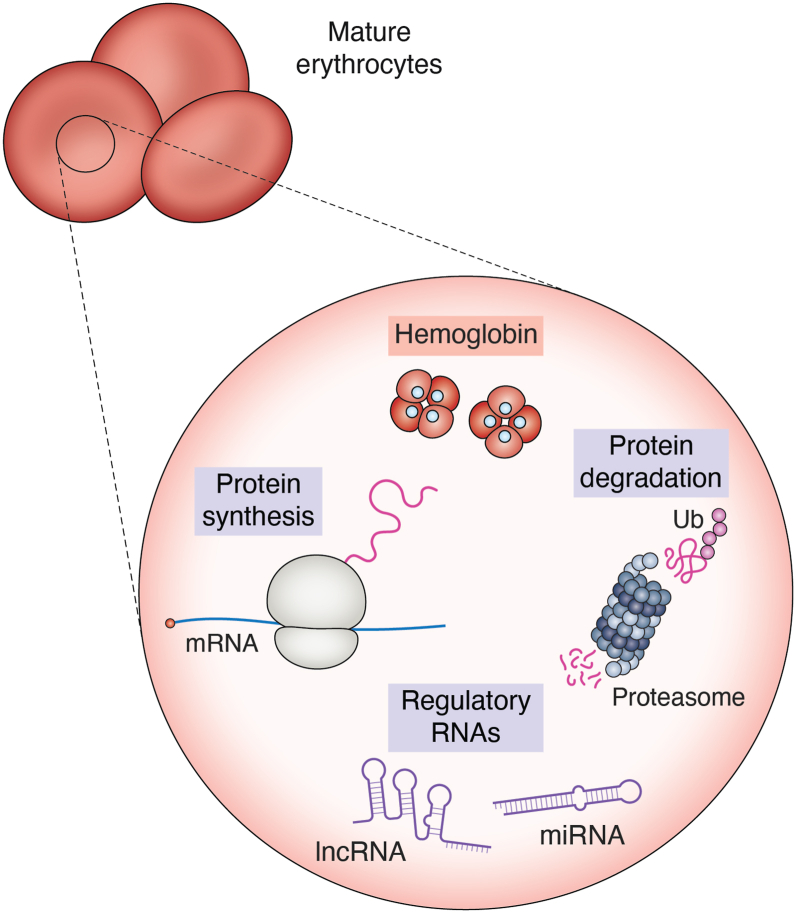
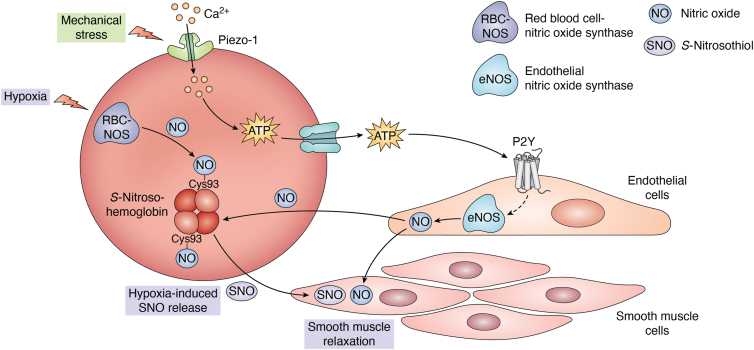
Erythrocytes, or red blood cells, are essential components of vertebrate blood, comprising approximately 45% of human blood volume. Their distinctive features, including small size, biconcave shape, extended lifespan (∼115 days), and lack of a nucleus or other membrane-bound organelles, make them unique among mammalian cell types. Traditionally regarded as passive carriers of oxygen and carbon dioxide, erythrocytes were long thought to function merely as hemoglobin-filled sacs, incapable of gene expression or roles beyond gas transport. However, advancements in molecular biology have revealed a more complex picture. Recent studies have identified various RNA types within erythrocytes, demonstrated globin mRNA translation, and uncovered miRNA-mediated defenses against Plasmodium infection. Beyond gas exchange, erythrocytes play critical roles in regulating regional blood flow via nitric oxide, contribute to innate immunity through toll-like receptors, transport amino acids between tissues, and maintain water homeostasis. Furthermore, emerging technologies have repurposed erythrocytes as drug-delivery vehicles, opening new avenues for therapeutic applications. This review highlights these recent discoveries and explores the expanding functional landscape of erythrocytes, shedding light on their multifaceted roles in physiology and medicine.
期刊介绍:
The Journal of Biological Chemistry welcomes high-quality science that seeks to elucidate the molecular and cellular basis of biological processes. Papers published in JBC can therefore fall under the umbrellas of not only biological chemistry, chemical biology, or biochemistry, but also allied disciplines such as biophysics, systems biology, RNA biology, immunology, microbiology, neurobiology, epigenetics, computational biology, ’omics, and many more. The outcome of our focus on papers that contribute novel and important mechanistic insights, rather than on a particular topic area, is that JBC is truly a melting pot for scientists across disciplines. In addition, JBC welcomes papers that describe methods that will help scientists push their biochemical inquiries forward and resources that will be of use to the research community.




 京公网安备 11010802042870号
京ICP备2023020795号-1
京公网安备 11010802042870号
京ICP备2023020795号-1

 分享
分享
 求助内容:
求助内容: 应助结果提醒方式:
 扫码关注我们
