Phase one of a hybrid effectiveness-implementation study to assess the feasibility, acceptability and effectiveness of implementing seasonal malaria chemoprevention in Nampula Province, Mozambique.
Kevin Baker, Ivan Alejandro Pulido Tarquino, Pedro Aide, Craig Bonnington, Christian Rassi, Sol Richardson, Chuks Nnaji, Arantxa Roca-Feltrer, Maria Rodrigues, Mercia Sitoe, Sonia Enosse, Caitlin McGugan, Francisco Saute, Gloria Matambisso, Baltazar Candrinho
{"title":"Phase one of a hybrid effectiveness-implementation study to assess the feasibility, acceptability and effectiveness of implementing seasonal malaria chemoprevention in Nampula Province, Mozambique.","authors":"Kevin Baker, Ivan Alejandro Pulido Tarquino, Pedro Aide, Craig Bonnington, Christian Rassi, Sol Richardson, Chuks Nnaji, Arantxa Roca-Feltrer, Maria Rodrigues, Mercia Sitoe, Sonia Enosse, Caitlin McGugan, Francisco Saute, Gloria Matambisso, Baltazar Candrinho","doi":"10.1186/s12936-024-05229-x","DOIUrl":null,"url":null,"abstract":"<p><strong>Background: </strong>Seasonal malaria chemoprevention (SMC) is a highly effective intervention for malaria prevention in high burden areas with seasonal transmission, historically implemented in the Sahel. Mozambique contributes to 4% of global malaria cases. Malaria Consortium, in partnership with the National Malaria Control Programme, conducted a two-year phased SMC study in Nampula province using sulfadoxine-pyrimethamine (SP) plus amodiaquine (AQ), or SPAQ, in children under five. Phase one results presented here highlight acceptability, feasibility, and protective effect of SMC.</p><p><strong>Methods: </strong>A pragmatic type II hybrid effectiveness-implementation study design was adopted, using mixed methods. The study was conducted in three districts, utilizing: (1) non-randomized controlled trial reporting on malaria incidence; (2) drug resistance molecular marker study reporting on resistance marker changes over time; (3) coverage and quality assessment on the SMC distribution; and (4) a qualitative acceptability and feasibility assessment with stakeholders.</p><p><strong>Results: </strong>Children who received SMC had 86% (hazard ratio 0.14, 95% CI 0.09-0.24) lower hazards of developing clinical malaria during the peak transmission season compared with children in the comparison district. Prevalence of SP molecular markers associated with resistance was high at baseline (K540E 66.1%). SMC achieved high coverage of eligible children over four cycles (87.7%, 95% CI 83.9-90.8%). Qualitative results indicate SMC was positively accepted by the targeted community.</p><p><strong>Conclusions: </strong>Results suggest that SMC was effective at preventing clinical malaria, did not significantly impact resistance profile, and was feasible and acceptable in the context. Phase two will assess SMC impact in reducing malaria incidence and if chemoprevention efficacy of SPAQ is impacted by drug resistance and drug concentrations.</p>","PeriodicalId":18317,"journal":{"name":"Malaria Journal","volume":"24 1","pages":"56"},"PeriodicalIF":3.7000,"publicationDate":"2025-02-21","publicationTypes":"Journal Article","fieldsOfStudy":null,"isOpenAccess":false,"openAccessPdf":"https://www.ncbi.nlm.nih.gov/pmc/articles/PMC11846204/pdf/","citationCount":"0","resultStr":null,"platform":"Semanticscholar","paperid":null,"PeriodicalName":"Malaria Journal","FirstCategoryId":"3","ListUrlMain":"https://doi.org/10.1186/s12936-024-05229-x","RegionNum":3,"RegionCategory":"医学","ArticlePicture":[],"TitleCN":null,"AbstractTextCN":null,"PMCID":null,"EPubDate":"","PubModel":"","JCR":"Q3","JCRName":"INFECTIOUS DISEASES","Score":null,"Total":0}
引用次数: 0
Abstract
Background: Seasonal malaria chemoprevention (SMC) is a highly effective intervention for malaria prevention in high burden areas with seasonal transmission, historically implemented in the Sahel. Mozambique contributes to 4% of global malaria cases. Malaria Consortium, in partnership with the National Malaria Control Programme, conducted a two-year phased SMC study in Nampula province using sulfadoxine-pyrimethamine (SP) plus amodiaquine (AQ), or SPAQ, in children under five. Phase one results presented here highlight acceptability, feasibility, and protective effect of SMC.
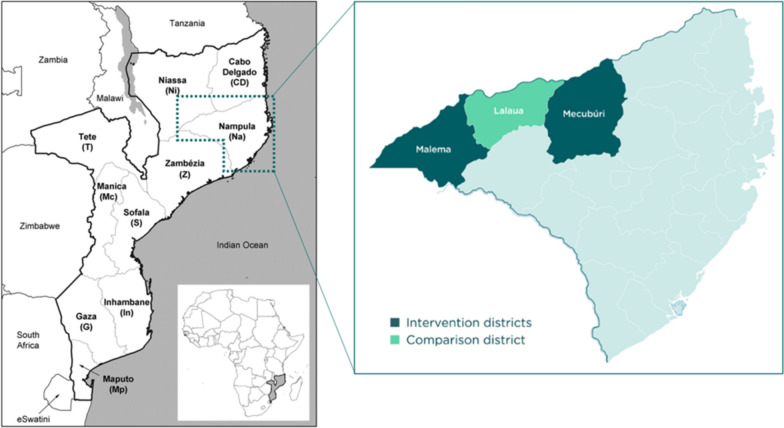
Methods: A pragmatic type II hybrid effectiveness-implementation study design was adopted, using mixed methods. The study was conducted in three districts, utilizing: (1) non-randomized controlled trial reporting on malaria incidence; (2) drug resistance molecular marker study reporting on resistance marker changes over time; (3) coverage and quality assessment on the SMC distribution; and (4) a qualitative acceptability and feasibility assessment with stakeholders.
Results: Children who received SMC had 86% (hazard ratio 0.14, 95% CI 0.09-0.24) lower hazards of developing clinical malaria during the peak transmission season compared with children in the comparison district. Prevalence of SP molecular markers associated with resistance was high at baseline (K540E 66.1%). SMC achieved high coverage of eligible children over four cycles (87.7%, 95% CI 83.9-90.8%). Qualitative results indicate SMC was positively accepted by the targeted community.
Conclusions: Results suggest that SMC was effective at preventing clinical malaria, did not significantly impact resistance profile, and was feasible and acceptable in the context. Phase two will assess SMC impact in reducing malaria incidence and if chemoprevention efficacy of SPAQ is impacted by drug resistance and drug concentrations.
背景:季节性疟疾化学预防(SMC)是在季节性传播高负担地区预防疟疾的一种非常有效的干预措施,历史上在萨赫勒地区实施。莫桑比克占全球疟疾病例的4%。疟疾联盟与国家疟疾控制规划合作,在楠普拉省对五岁以下儿童使用磺胺多辛-乙胺嘧啶(SP)加阿莫地喹(AQ)进行了一项为期两年的分阶段SMC研究。第一阶段的研究结果强调了SMC的可接受性、可行性和保护作用。方法:采用实用型II型有效性-实施性混合研究设计,采用混合方法。该研究在三个地区进行,利用:(1)报告疟疾发病率的非随机对照试验;(2)耐药分子标记研究,报告耐药标记随时间的变化;(3) SMC分布的覆盖率和质量评价;(4)与利益相关者进行定性的可接受性和可行性评估。结果:与对照区儿童相比,接受SMC治疗的儿童在传播高峰期发生临床疟疾的风险降低86%(风险比0.14,95% CI 0.09-0.24)。与耐药相关的SP分子标记在基线时的患病率较高(K540E为66.1%)。SMC在四个周期内实现了对符合条件的儿童的高覆盖率(87.7%,95% CI 83.9-90.8%)。定性结果表明,SMC被目标社区积极接受。结论:SMC可有效预防临床疟疾,对疟疾耐药性无显著影响,是可行和可接受的。第二阶段将评估SMC在降低疟疾发病率方面的影响,以及SPAQ的化学预防效果是否受到耐药性和药物浓度的影响。
期刊介绍:
Malaria Journal is aimed at the scientific community interested in malaria in its broadest sense. It is the only journal that publishes exclusively articles on malaria and, as such, it aims to bring together knowledge from the different specialities involved in this very broad discipline, from the bench to the bedside and to the field.






 京公网安备 11010802042870号
京ICP备2023020795号-1
京公网安备 11010802042870号
京ICP备2023020795号-1

 分享
分享
 求助内容:
求助内容: 应助结果提醒方式:
 扫码关注我们
