Exploring artificial intelligence in orthopaedics: A collaborative survey from the ISAKOS Young Professional Task Force

IF 2.7 Q2 ORTHOPEDICS Journal of Experimental Orthopaedics Pub Date : 2025-02-24 DOI:10.1002/jeo2.70181
Filippo Familiari, Adnan Saithna, Juan Pablo Martinez-Cano, Jorge Chahla, Juan Miguel Del Castillo, Nicholas N. DePhillipo, Gilbert Moatshe, Edoardo Monaco, Jaime Palos Lucio, Pieter D'Hooghe, Robert F. LaPrade, the ISAKOS Young Professionals Task Force
{"title":"Exploring artificial intelligence in orthopaedics: A collaborative survey from the ISAKOS Young Professional Task Force","authors":"Filippo Familiari,&nbsp;Adnan Saithna,&nbsp;Juan Pablo Martinez-Cano,&nbsp;Jorge Chahla,&nbsp;Juan Miguel Del Castillo,&nbsp;Nicholas N. DePhillipo,&nbsp;Gilbert Moatshe,&nbsp;Edoardo Monaco,&nbsp;Jaime Palos Lucio,&nbsp;Pieter D'Hooghe,&nbsp;Robert F. LaPrade,&nbsp;the ISAKOS Young Professionals Task Force","doi":"10.1002/jeo2.70181","DOIUrl":null,"url":null,"abstract":"<div>\n \n \n <section>\n \n <h3> Purpose</h3>\n \n <p>Through an analysis of findings from a survey about the use of artificial intelligence (AI) in orthopaedics, the aim of this study was to establish a scholarly foundation for the discourse on AI in orthopaedics and to elucidate key patterns, challenges and potential future trajectories for AI applications within the field.</p>\n </section>\n \n <section>\n \n <h3> Methods</h3>\n \n <p>The International Society of Arthroscopy, Knee Surgery and Orthopaedic Sports Medicine (ISAKOS) Young Professionals Task Force developed a survey to collect feedback on issues related to the use of AI in the orthopaedic field. The survey included 26 questions. Data obtained from the completed questionnaires were transferred to a spreadsheet and then analyzed.</p>\n </section>\n \n <section>\n \n <h3> Results</h3>\n \n <p>Two hundred and eleven orthopaedic surgeons completed the survey. The survey encompassed responses from a diverse cohort of orthopaedic professionals, predominantly comprising males (92.9%). There was wide representation across all geographic regions. A notable proportion (52.1%) reported uncertainty or lack of differentiation among AI, machine learning and deep learning (47.9%). Respondents identified imaging-based diagnosis (60.2%) as the primary field of orthopaedics poised to benefit from AI. A considerable proportion (25.1%) reported using AI in their practice, with primary reasons including referencing scientific literature/publications (40.3%). The vast majority expressed interest in leveraging AI technologies (95.3%), demonstrating an inclination towards incorporating AI into orthopaedic practice. Respondents indicated specific areas of interest for further study, including prediction of patient outcomes after surgery (30.8%) and image-based diagnosis of osteoarthritis (28%).</p>\n </section>\n \n <section>\n \n <h3> Conclusions</h3>\n \n <p>This survey demonstrates that there is currently limited use of AI in orthopaedic practice, mainly due to a lack of knowledge about the subject, a lack of proven evidence of its real utility and high costs. These findings are in accordance with other surveys in the literature. However, there is also a high level of interest in its use in the future, in increased study and further research on the subject, so that it can be of real benefit and make AI an integral part of the orthopaedic surgeon's daily work.</p>\n </section>\n \n <section>\n \n <h3> Level of Evidence</h3>\n \n <p>Level IV, survey study.</p>\n </section>\n </div>","PeriodicalId":36909,"journal":{"name":"Journal of Experimental Orthopaedics","volume":"12 1","pages":""},"PeriodicalIF":2.7000,"publicationDate":"2025-02-24","publicationTypes":"Journal Article","fieldsOfStudy":null,"isOpenAccess":false,"openAccessPdf":"https://onlinelibrary.wiley.com/doi/epdf/10.1002/jeo2.70181","citationCount":"0","resultStr":null,"platform":"Semanticscholar","paperid":null,"PeriodicalName":"Journal of Experimental Orthopaedics","FirstCategoryId":"1085","ListUrlMain":"https://esskajournals.onlinelibrary.wiley.com/doi/10.1002/jeo2.70181","RegionNum":0,"RegionCategory":null,"ArticlePicture":[],"TitleCN":null,"AbstractTextCN":null,"PMCID":null,"EPubDate":"","PubModel":"","JCR":"Q2","JCRName":"ORTHOPEDICS","Score":null,"Total":0}
引用次数: 0

Abstract

Purpose

Through an analysis of findings from a survey about the use of artificial intelligence (AI) in orthopaedics, the aim of this study was to establish a scholarly foundation for the discourse on AI in orthopaedics and to elucidate key patterns, challenges and potential future trajectories for AI applications within the field.

Methods

The International Society of Arthroscopy, Knee Surgery and Orthopaedic Sports Medicine (ISAKOS) Young Professionals Task Force developed a survey to collect feedback on issues related to the use of AI in the orthopaedic field. The survey included 26 questions. Data obtained from the completed questionnaires were transferred to a spreadsheet and then analyzed.

Results

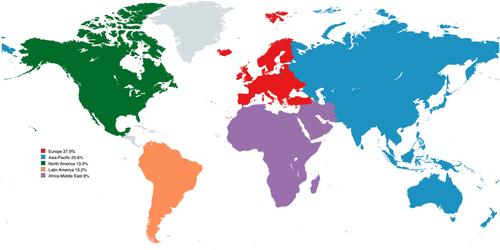
Two hundred and eleven orthopaedic surgeons completed the survey. The survey encompassed responses from a diverse cohort of orthopaedic professionals, predominantly comprising males (92.9%). There was wide representation across all geographic regions. A notable proportion (52.1%) reported uncertainty or lack of differentiation among AI, machine learning and deep learning (47.9%). Respondents identified imaging-based diagnosis (60.2%) as the primary field of orthopaedics poised to benefit from AI. A considerable proportion (25.1%) reported using AI in their practice, with primary reasons including referencing scientific literature/publications (40.3%). The vast majority expressed interest in leveraging AI technologies (95.3%), demonstrating an inclination towards incorporating AI into orthopaedic practice. Respondents indicated specific areas of interest for further study, including prediction of patient outcomes after surgery (30.8%) and image-based diagnosis of osteoarthritis (28%).

Conclusions

This survey demonstrates that there is currently limited use of AI in orthopaedic practice, mainly due to a lack of knowledge about the subject, a lack of proven evidence of its real utility and high costs. These findings are in accordance with other surveys in the literature. However, there is also a high level of interest in its use in the future, in increased study and further research on the subject, so that it can be of real benefit and make AI an integral part of the orthopaedic surgeon's daily work.

Level of Evidence

Level IV, survey study.

Abstract Image

Abstract Image

Abstract Image

Abstract Image

查看原文
分享 分享
微信好友 朋友圈 QQ好友 复制链接
本刊更多论文
探索骨科中的人工智能:ISAKOS青年专业工作组的一项合作调查
通过对人工智能(AI)在骨科中的应用调查结果的分析,本研究的目的是为人工智能在骨科中的应用建立学术基础,并阐明人工智能在该领域应用的关键模式、挑战和潜在的未来轨迹。方法国际关节镜、膝关节外科和骨科运动医学学会(ISAKOS)青年专业人员工作组开展了一项调查,收集有关人工智能在骨科领域应用的反馈。调查包括26个问题。从完成的问卷中获得的数据被转移到电子表格中,然后进行分析。结果共211名骨科医生完成调查。调查的回应来自不同的骨科专业人士,主要包括男性(92.9%)。在所有地理区域都有广泛的代表。显著比例(52.1%)的受访者表示,人工智能、机器学习和深度学习(47.9%)之间存在不确定性或缺乏区别。受访者认为基于成像的诊断(60.2%)是骨科的主要领域,有望从人工智能中受益。相当大比例(25.1%)的受访者表示在实践中使用人工智能,主要原因包括参考科学文献/出版物(40.3%)。绝大多数受访者表示有兴趣利用人工智能技术(95.3%),这表明他们倾向于将人工智能纳入骨科实践。受访者指出了需要进一步研究的特定领域,包括手术后患者预后预测(30.8%)和基于图像的骨关节炎诊断(28%)。本调查表明,目前人工智能在骨科实践中的应用有限,主要原因是缺乏对该主题的了解,缺乏证明其实际效用的证据,以及成本高。这些发现与文献中的其他调查结果一致。然而,在未来,人们对人工智能的使用也有很高的兴趣,对这一主题进行更多的研究和进一步的研究,以便它能够真正受益,并使人工智能成为骨科医生日常工作中不可或缺的一部分。证据等级四级,调查研究。
本文章由计算机程序翻译,如有差异,请以英文原文为准。
求助全文
约1分钟内获得全文 去求助
来源期刊
Journal of Experimental Orthopaedics
Journal of Experimental Orthopaedics Medicine-Orthopedics and Sports Medicine
CiteScore
3.20
自引率
5.60%
发文量
114
审稿时长
13 weeks
期刊最新文献
Knee skin temperature following unicompartmental knee arthroplasty and its relationship with inflammatory indicators. Low all-cause 90-day mortality after revision knee arthroplasty: A study based on the Swedish Perioperative Register (SPOR), 2017-2022. Greater medial arterial supply revealed by 7-Tesla quantitative magnetic resonance imaging, histology and high-resolution computed tomography of the patellar tendon. Knee rotation significantly increases measured tibial tubercle-trochlear groove distance in female patients with anterior knee pain: Findings after rotational measurement correction. MRI-measured tendon retraction distance is associated with EMG-confirmed neurotrauma in proximal hamstring avulsion.
×
引用
GB/T 7714-2015
复制
MLA
复制
APA
复制
导出至
BibTeX EndNote RefMan NoteFirst NoteExpress
×
×
提示
您的信息不完整,为了账户安全,请先补充。
现在去补充
×
提示
您因"违规操作"
具体请查看互助需知
我知道了
×
提示
现在去查看 取消
×
提示
确定
0
微信
客服QQ
Book学术公众号 扫码关注我们
反馈
×
意见反馈
请填写您的意见或建议
请填写您的手机或邮箱
已复制链接
已复制链接
快去分享给好友吧!
我知道了
×
扫码分享
扫码分享
Book学术官方微信
Book学术文献互助
Book学术文献互助群
群 号:604180095
Book学术
文献互助 智能选刊 最新文献 互助须知 联系我们:info@booksci.cn
Book学术提供免费学术资源搜索服务,方便国内外学者检索中英文文献。致力于提供最便捷和优质的服务体验。
Copyright © 2023 Book学术 All rights reserved.
ghs 京公网安备 11010802042870号 京ICP备2023020795号-1