{"title":"Unveiling the thermotolerance mechanism of Pichia kudriavzevii LC375240 through transcriptomic and genetic analyses.","authors":"Yanhua Qi, Qijian Qin, Jiayin Ma, Bin Wang, Cheng Jin, Wenxia Fang","doi":"10.1186/s12915-025-02159-1","DOIUrl":null,"url":null,"abstract":"<p><strong>Background: </strong>Thermotolerance is a critical trait for yeasts employed in industrial settings, and the utilization of unconventional yeasts has gained notable attention in recent years. However, the mechanisms underlying thermotolerance in unconventional yeasts, particularly Pichia spp., remain insufficiently elucidated.</p><p><strong>Results: </strong>This study focuses on the thermotolerance of a non-traditional yeast strain Pichia kudriavzevii LC375240, renowned for its remarkable thermotolerance. Through transcriptomic analysis of both short-term and long-term heat shock exposures, we uncovered an intricate regulatory response in P. kudriavzevii. During long-term heat treatment, the yeast exhibited elevated expression of genes involved in the tricarboxylic acid (TCA) cycle and suppressed expression of genes in the pentose phosphate pathway (PPP). Additionally, long-term heat treatment led to an upregulation of heat shock proteins (HSPs) and an increase in trehalose, glutathione (GSH), and superoxide dismutase (SOD) levels, along with a reduction in the intracellular NADPH/NADP<sup>+</sup> ratio and pyruvate content. These changes collectively contribute to the thermotolerance of P. kudriavzevii. CRISPR-Cas9-mediated knockout experiments further highlighted the critical roles of HSPs, antioxidases, and the trehalose metabolic pathway in the yeast's response to high temperatures.</p><p><strong>Conclusions: </strong>Taken together, this study demonstrates that P. kudriavzevii adapts to thermal stress through a combination of enhanced TCA cycle, reduced PPP, increased HSPs, trehalose, GSH, and SOD levels. These findings provide a comprehensive understanding of the molecular mechanisms underlying thermotolerance in P. kudriavzevii.</p>","PeriodicalId":9339,"journal":{"name":"BMC Biology","volume":"23 1","pages":"55"},"PeriodicalIF":4.5000,"publicationDate":"2025-02-23","publicationTypes":"Journal Article","fieldsOfStudy":null,"isOpenAccess":false,"openAccessPdf":"https://www.ncbi.nlm.nih.gov/pmc/articles/PMC11849260/pdf/","citationCount":"0","resultStr":null,"platform":"Semanticscholar","paperid":null,"PeriodicalName":"BMC Biology","FirstCategoryId":"99","ListUrlMain":"https://doi.org/10.1186/s12915-025-02159-1","RegionNum":1,"RegionCategory":"生物学","ArticlePicture":[],"TitleCN":null,"AbstractTextCN":null,"PMCID":null,"EPubDate":"","PubModel":"","JCR":"Q1","JCRName":"BIOLOGY","Score":null,"Total":0}
引用次数: 0
Abstract
Background: Thermotolerance is a critical trait for yeasts employed in industrial settings, and the utilization of unconventional yeasts has gained notable attention in recent years. However, the mechanisms underlying thermotolerance in unconventional yeasts, particularly Pichia spp., remain insufficiently elucidated.
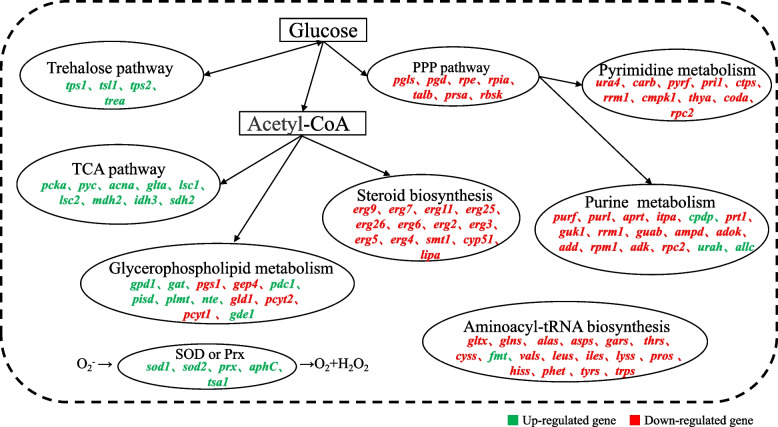
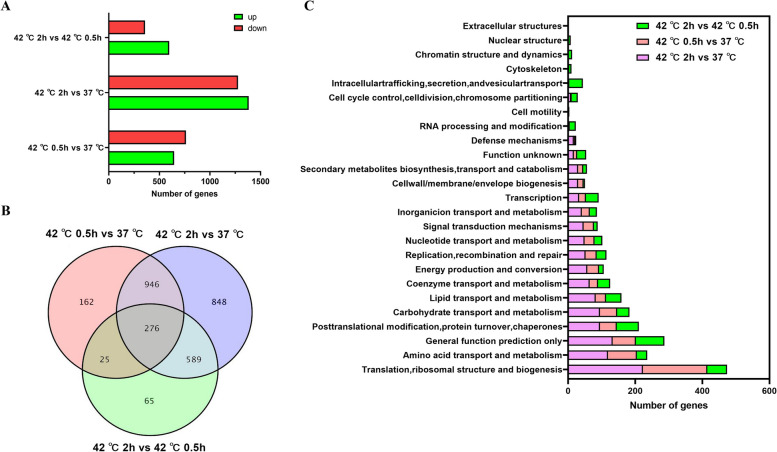
Results: This study focuses on the thermotolerance of a non-traditional yeast strain Pichia kudriavzevii LC375240, renowned for its remarkable thermotolerance. Through transcriptomic analysis of both short-term and long-term heat shock exposures, we uncovered an intricate regulatory response in P. kudriavzevii. During long-term heat treatment, the yeast exhibited elevated expression of genes involved in the tricarboxylic acid (TCA) cycle and suppressed expression of genes in the pentose phosphate pathway (PPP). Additionally, long-term heat treatment led to an upregulation of heat shock proteins (HSPs) and an increase in trehalose, glutathione (GSH), and superoxide dismutase (SOD) levels, along with a reduction in the intracellular NADPH/NADP+ ratio and pyruvate content. These changes collectively contribute to the thermotolerance of P. kudriavzevii. CRISPR-Cas9-mediated knockout experiments further highlighted the critical roles of HSPs, antioxidases, and the trehalose metabolic pathway in the yeast's response to high temperatures.
Conclusions: Taken together, this study demonstrates that P. kudriavzevii adapts to thermal stress through a combination of enhanced TCA cycle, reduced PPP, increased HSPs, trehalose, GSH, and SOD levels. These findings provide a comprehensive understanding of the molecular mechanisms underlying thermotolerance in P. kudriavzevii.
期刊介绍:
BMC Biology is a broad scope journal covering all areas of biology. Our content includes research articles, new methods and tools. BMC Biology also publishes reviews, Q&A, and commentaries.




 京公网安备 11010802042870号
京ICP备2023020795号-1
京公网安备 11010802042870号
京ICP备2023020795号-1

 分享
分享
 求助内容:
求助内容: 应助结果提醒方式:
 扫码关注我们
