{"title":"Global, regional, and national burden of epilepsy, 1990–2021: a systematic analysis for the Global Burden of Disease Study 2021","authors":"","doi":"10.1016/s2468-2667(24)00302-5","DOIUrl":null,"url":null,"abstract":"<h3>Background</h3>Epilepsy is one of the most common serious neurological disorders and affects individuals of all ages across the globe. The aim of this study is to provide estimates of the epilepsy burden on the global, regional, and national levels for 1990–2021.<h3>Methods</h3>Using well established Global Burden of Diseases, Injuries, and Risk Factors Study (GBD) methodology, we quantified the prevalence of active idiopathic (epilepsy of genetic or unknown origin) and secondary epilepsy (epilepsy due to an underlying abnormality of the brain structure or chemistry), as well as incidence, death, and disability-adjusted life-years (DALYs) by age, sex, and location (globally, 21 GBD regions and seven super-regions, World Bank country income levels, Socio-demographic Index [SDI], and 204 countries) and their trends from 1990 to 2021. Vital registrations and verbal autopsies provided information about deaths, and data on the prevalence and severity of epilepsy, largely came from population representative surveys. All estimates were calculated with 95% uncertainty intervals (UIs).<h3>Findings</h3>In 2021, there were 51·7 million (95% UI 44·9–58·9) people with epilepsy (idiopathic and secondary combined) globally, with an age-standardised prevalence of 658 per 100 000 (569–748). Idiopathic epilepsy had an age-standardised prevalence of 307 per 100 000 (235–389) globally, with 24·2 million (18·5–30·7) prevalent cases, and secondary epilepsy had a global age-standardised prevalence of 350 per 100 000 (322–380). In 2021, 0·7% of the population had active epilepsy (0·3% attributed to idiopathic epilepsy and 0·4% to secondary epilepsy), and the age-standardised global prevalence of epilepsy from idiopathic and secondary epilepsy combined increased from 1990 to 2021 by 10·8% (1·1–21·3), mainly due to corresponding changes in secondary epilepsy. However, age-standardised death and DALY rates of idiopathic epilepsy reduced from 1990 to 2021 (decline of 15·8% [8·8–22·8] and 14·5% [4·2–24·2], respectively). There were three-fold to four-fold geographical differences in the burden of active idiopathic epilepsy, with the bulk of the burden residing in low-income to middle-income countries: 82·1% (81·1–83·4) of incident, 80·4% prevalent (79·7–82·7), 84·7% (83·7–85·1) fatal epilepsy, and 87·9% (86·2–89·2) epilepsy DALYs.<h3>Interpretation</h3>Although the global trends in idiopathic epilepsy deaths and DALY rates have improved in the preceding decades, in 2021 there were almost 52 million people with active epilepsy (24 million from idiopathic epilepsy and 28 million from secondary epilepsy), with the bulk of the burden (>80%) residing in low-income to middle-income countries. Better treatment and prevention of epilepsy are required, along with further research on risk factors of idiopathic epilepsy, good-quality long-term epilepsy surveillance studies, and exploration of the possible effect of stigma and cultural differences in seeking medical attention for epilepsy.<h3>Funding</h3>Bill and Melinda Gates Foundation","PeriodicalId":56027,"journal":{"name":"Lancet Public Health","volume":"65 1","pages":""},"PeriodicalIF":25.2000,"publicationDate":"2025-02-24","publicationTypes":"Journal Article","fieldsOfStudy":null,"isOpenAccess":false,"openAccessPdf":"","citationCount":"0","resultStr":null,"platform":"Semanticscholar","paperid":null,"PeriodicalName":"Lancet Public Health","FirstCategoryId":"3","ListUrlMain":"https://doi.org/10.1016/s2468-2667(24)00302-5","RegionNum":1,"RegionCategory":"医学","ArticlePicture":[],"TitleCN":null,"AbstractTextCN":null,"PMCID":null,"EPubDate":"","PubModel":"","JCR":"Q1","JCRName":"PUBLIC, ENVIRONMENTAL & OCCUPATIONAL HEALTH","Score":null,"Total":0}
引用次数: 0
Abstract
Background
Epilepsy is one of the most common serious neurological disorders and affects individuals of all ages across the globe. The aim of this study is to provide estimates of the epilepsy burden on the global, regional, and national levels for 1990–2021.
Methods
Using well established Global Burden of Diseases, Injuries, and Risk Factors Study (GBD) methodology, we quantified the prevalence of active idiopathic (epilepsy of genetic or unknown origin) and secondary epilepsy (epilepsy due to an underlying abnormality of the brain structure or chemistry), as well as incidence, death, and disability-adjusted life-years (DALYs) by age, sex, and location (globally, 21 GBD regions and seven super-regions, World Bank country income levels, Socio-demographic Index [SDI], and 204 countries) and their trends from 1990 to 2021. Vital registrations and verbal autopsies provided information about deaths, and data on the prevalence and severity of epilepsy, largely came from population representative surveys. All estimates were calculated with 95% uncertainty intervals (UIs).
Findings
In 2021, there were 51·7 million (95% UI 44·9–58·9) people with epilepsy (idiopathic and secondary combined) globally, with an age-standardised prevalence of 658 per 100 000 (569–748). Idiopathic epilepsy had an age-standardised prevalence of 307 per 100 000 (235–389) globally, with 24·2 million (18·5–30·7) prevalent cases, and secondary epilepsy had a global age-standardised prevalence of 350 per 100 000 (322–380). In 2021, 0·7% of the population had active epilepsy (0·3% attributed to idiopathic epilepsy and 0·4% to secondary epilepsy), and the age-standardised global prevalence of epilepsy from idiopathic and secondary epilepsy combined increased from 1990 to 2021 by 10·8% (1·1–21·3), mainly due to corresponding changes in secondary epilepsy. However, age-standardised death and DALY rates of idiopathic epilepsy reduced from 1990 to 2021 (decline of 15·8% [8·8–22·8] and 14·5% [4·2–24·2], respectively). There were three-fold to four-fold geographical differences in the burden of active idiopathic epilepsy, with the bulk of the burden residing in low-income to middle-income countries: 82·1% (81·1–83·4) of incident, 80·4% prevalent (79·7–82·7), 84·7% (83·7–85·1) fatal epilepsy, and 87·9% (86·2–89·2) epilepsy DALYs.
Interpretation
Although the global trends in idiopathic epilepsy deaths and DALY rates have improved in the preceding decades, in 2021 there were almost 52 million people with active epilepsy (24 million from idiopathic epilepsy and 28 million from secondary epilepsy), with the bulk of the burden (>80%) residing in low-income to middle-income countries. Better treatment and prevention of epilepsy are required, along with further research on risk factors of idiopathic epilepsy, good-quality long-term epilepsy surveillance studies, and exploration of the possible effect of stigma and cultural differences in seeking medical attention for epilepsy.
Lancet Public HealthMedicine-Public Health, Environmental and Occupational Health
CiteScore
55.60
自引率
0.80%
发文量
305
审稿时长
8 weeks
期刊介绍:
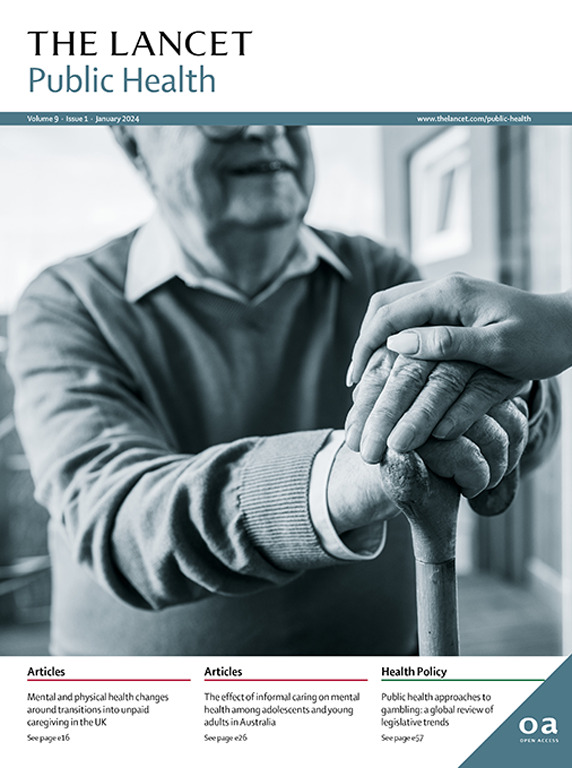
The Lancet Public Health is committed to tackling the most pressing issues across all aspects of public health. We have a strong commitment to using science to improve health equity and social justice. In line with the values and vision of The Lancet, we take a broad and inclusive approach to public health and are interested in interdisciplinary research.
We publish a range of content types that can advance public health policies and outcomes. These include Articles, Review, Comment, and Correspondence. Learn more about the types of papers we publish.



 京公网安备 11010802042870号
京ICP备2023020795号-1
京公网安备 11010802042870号
京ICP备2023020795号-1

 分享
分享
 求助内容:
求助内容: 应助结果提醒方式:
 扫码关注我们
