{"title":"Radiographic and Clinical Assessment of Unidirectional Porous Beta-Tricalcium Phosphate to Treat Benign Bone Tumors.","authors":"Toshiyuki Kunisada, Eiji Nakata, Tomohiro Fujiwara, Haruyoshi Katayama, Takuto Itano, Takanao Kurozumi, Teruhiko Ando, Toshifumi Ozaki","doi":"10.3390/biomimetics10020101","DOIUrl":null,"url":null,"abstract":"<p><p>The purpose of this study was to evaluate radiographic changes, clinical outcomes, and complications following unidirectional porous beta-tricalcium phosphate (UDPTCP) implantation for the treatment of benign bone tumors. We retrospectively analyzed 46 patients who underwent intralesional resection. The patients were divided into two cohorts: Cohort 1 (n = 32), which included all bones except the phalanges and metacarpal/tarsal bones, and Cohort 2 (n = 14), which included the phalanges and metacarpal/tarsal bones. Radiographic changes were assessed at each reading based on resorption of the implanted UDPTCP and bone trabeculation through the defect. UDPTCP resorption and bone trabeculation were observed on radiographs within 3 months of surgery in all patients. Bone remodeling in the cavity progressed steadily for up to 3 years postoperatively. In Cohort 1, resorption and trabeculation progressed significantly in young patients, and trabeculation developed significantly in small lesions. The rates of resorption and trabeculation at 3 months postoperatively correlated statistically with their increased rates at one year. There was no statistical difference in resorption and trabeculation rates between Cohort 1 and Cohort 2. There were no cases of postoperative deep infections or allergic reactions related to the implant. UDPTCP is a useful bone-filling substitute for the treatment of benign bone tumors and has a low complication rate.</p>","PeriodicalId":8907,"journal":{"name":"Biomimetics","volume":"10 2","pages":""},"PeriodicalIF":3.9000,"publicationDate":"2025-02-10","publicationTypes":"Journal Article","fieldsOfStudy":null,"isOpenAccess":false,"openAccessPdf":"https://www.ncbi.nlm.nih.gov/pmc/articles/PMC11853659/pdf/","citationCount":"0","resultStr":null,"platform":"Semanticscholar","paperid":null,"PeriodicalName":"Biomimetics","FirstCategoryId":"5","ListUrlMain":"https://doi.org/10.3390/biomimetics10020101","RegionNum":3,"RegionCategory":"医学","ArticlePicture":[],"TitleCN":null,"AbstractTextCN":null,"PMCID":null,"EPubDate":"","PubModel":"","JCR":"Q1","JCRName":"ENGINEERING, MULTIDISCIPLINARY","Score":null,"Total":0}
引用次数: 0
Abstract
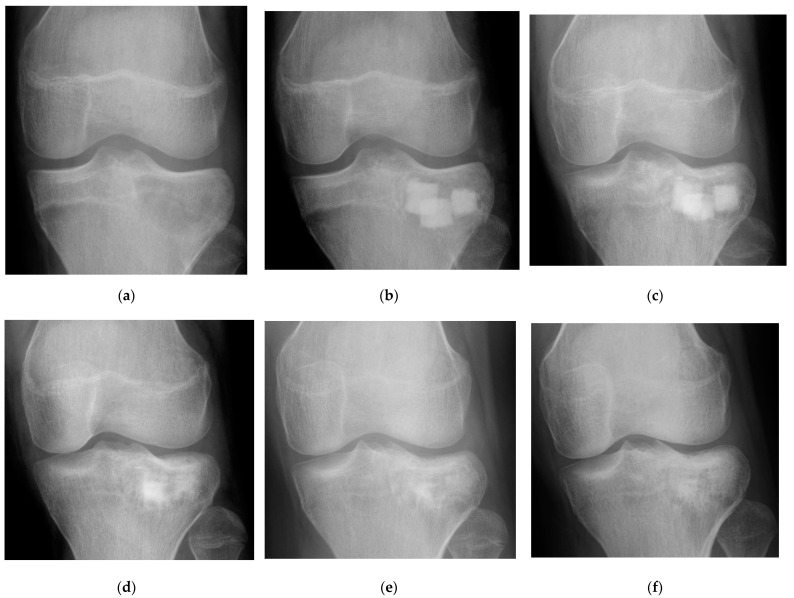
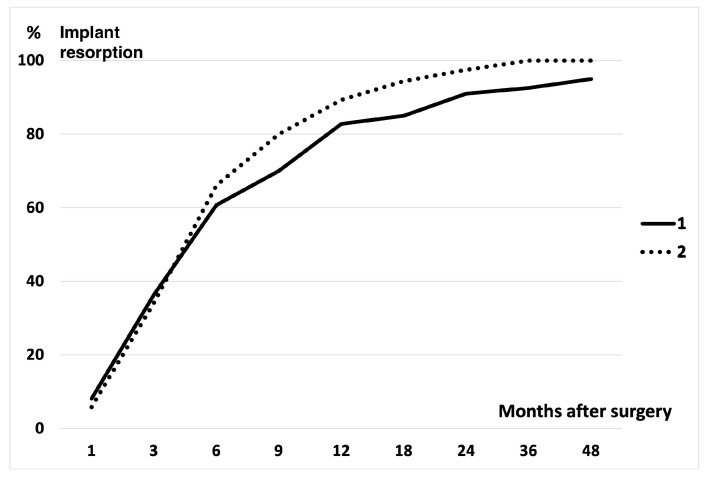
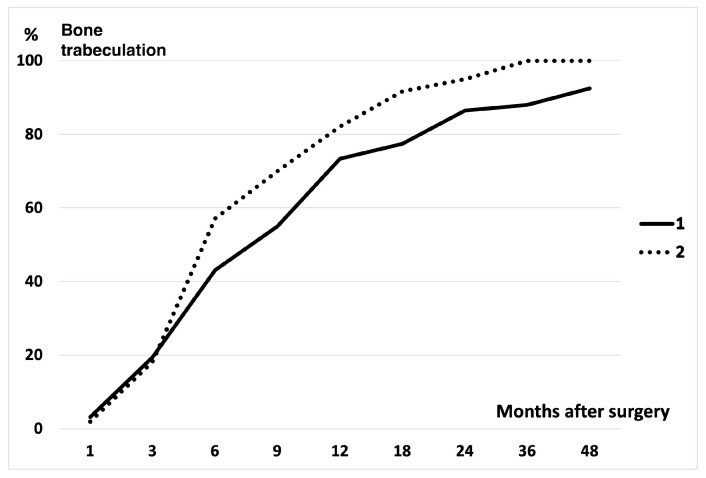
The purpose of this study was to evaluate radiographic changes, clinical outcomes, and complications following unidirectional porous beta-tricalcium phosphate (UDPTCP) implantation for the treatment of benign bone tumors. We retrospectively analyzed 46 patients who underwent intralesional resection. The patients were divided into two cohorts: Cohort 1 (n = 32), which included all bones except the phalanges and metacarpal/tarsal bones, and Cohort 2 (n = 14), which included the phalanges and metacarpal/tarsal bones. Radiographic changes were assessed at each reading based on resorption of the implanted UDPTCP and bone trabeculation through the defect. UDPTCP resorption and bone trabeculation were observed on radiographs within 3 months of surgery in all patients. Bone remodeling in the cavity progressed steadily for up to 3 years postoperatively. In Cohort 1, resorption and trabeculation progressed significantly in young patients, and trabeculation developed significantly in small lesions. The rates of resorption and trabeculation at 3 months postoperatively correlated statistically with their increased rates at one year. There was no statistical difference in resorption and trabeculation rates between Cohort 1 and Cohort 2. There were no cases of postoperative deep infections or allergic reactions related to the implant. UDPTCP is a useful bone-filling substitute for the treatment of benign bone tumors and has a low complication rate.




 京公网安备 11010802042870号
京ICP备2023020795号-1
京公网安备 11010802042870号
京ICP备2023020795号-1

 分享
分享
 求助内容:
求助内容: 应助结果提醒方式:
 扫码关注我们
