Aniruddha Vijay Savargaonkar, Emma Holloway, Liszt Y C Madruga, Bruno L Pereira, Paulo Soares, Ketul C Popat
{"title":"Anti-Bacterial Properties and Hemocompatibility of Alkali Treated Nano-Structured Micro-Porous Titanium Surfaces.","authors":"Aniruddha Vijay Savargaonkar, Emma Holloway, Liszt Y C Madruga, Bruno L Pereira, Paulo Soares, Ketul C Popat","doi":"10.3390/biomimetics10020115","DOIUrl":null,"url":null,"abstract":"<p><p>Titanium and its alloys have been the material of choice for orthopedic implants due to their excellent physical properties as well as biocompatibility. However, titanium is not able to integrate with bone due to the mismatch of mechanical properties. Additionally, bone has a micro-nano hierarchy, which is absent on titanium's surface. A potential solution to the former is to make the surfaces porous to bring the mechanical properties closer to that of the bone, and a solution for the latter is to fabricate nanostructures. In this study, micro-porous titanium surfaces were hydrothermally treated using an alkali medium to fabricate nanostructures on the existing micro-porosity of the surface. The surface properties were evaluated using scanning electron microscopy, X-ray photoelectron spectroscopy, X-ray diffraction, and nanoindentation. The anti-bacterial properties of the surfaces were evaluated against Gram-positive and Gram-negative bacteria using fluorescence microscopy and scanning electron microscopy. Blood clotting is shown to improve the surface-to-bone integration; hence, whole blood clotting and platelet adhesion and activation were evaluated using a whole blood clotting assay, fluorescence microscopy, and scanning electron microscopy. The results indicate that nanostructured micro-porous titanium surfaces display significantly enhanced anti-bacterial properties as well as equivalent blood clotting characteristics compared to non-porous titanium surfaces.</p>","PeriodicalId":8907,"journal":{"name":"Biomimetics","volume":"10 2","pages":""},"PeriodicalIF":3.9000,"publicationDate":"2025-02-17","publicationTypes":"Journal Article","fieldsOfStudy":null,"isOpenAccess":false,"openAccessPdf":"https://www.ncbi.nlm.nih.gov/pmc/articles/PMC11852526/pdf/","citationCount":"0","resultStr":null,"platform":"Semanticscholar","paperid":null,"PeriodicalName":"Biomimetics","FirstCategoryId":"5","ListUrlMain":"https://doi.org/10.3390/biomimetics10020115","RegionNum":3,"RegionCategory":"医学","ArticlePicture":[],"TitleCN":null,"AbstractTextCN":null,"PMCID":null,"EPubDate":"","PubModel":"","JCR":"Q1","JCRName":"ENGINEERING, MULTIDISCIPLINARY","Score":null,"Total":0}
引用次数: 0
Abstract
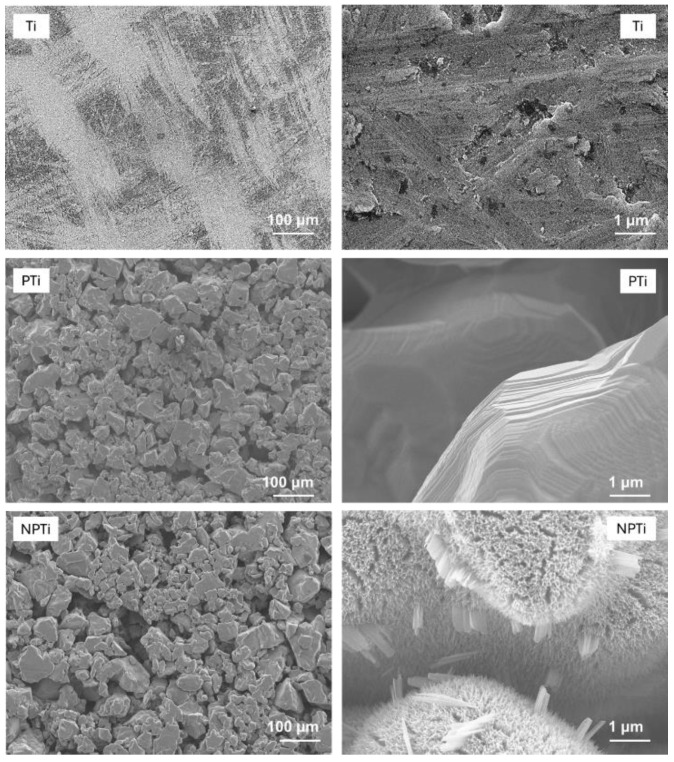
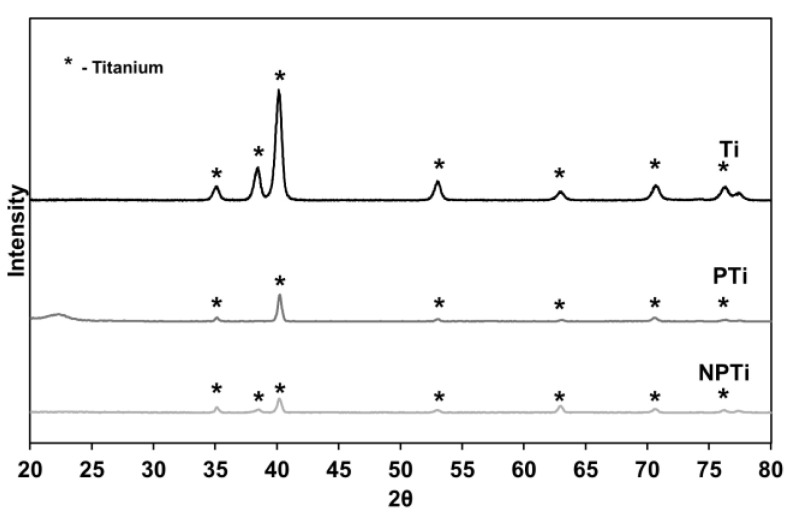
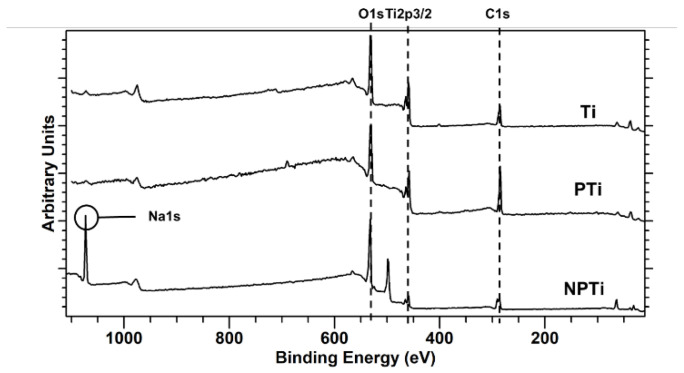
Titanium and its alloys have been the material of choice for orthopedic implants due to their excellent physical properties as well as biocompatibility. However, titanium is not able to integrate with bone due to the mismatch of mechanical properties. Additionally, bone has a micro-nano hierarchy, which is absent on titanium's surface. A potential solution to the former is to make the surfaces porous to bring the mechanical properties closer to that of the bone, and a solution for the latter is to fabricate nanostructures. In this study, micro-porous titanium surfaces were hydrothermally treated using an alkali medium to fabricate nanostructures on the existing micro-porosity of the surface. The surface properties were evaluated using scanning electron microscopy, X-ray photoelectron spectroscopy, X-ray diffraction, and nanoindentation. The anti-bacterial properties of the surfaces were evaluated against Gram-positive and Gram-negative bacteria using fluorescence microscopy and scanning electron microscopy. Blood clotting is shown to improve the surface-to-bone integration; hence, whole blood clotting and platelet adhesion and activation were evaluated using a whole blood clotting assay, fluorescence microscopy, and scanning electron microscopy. The results indicate that nanostructured micro-porous titanium surfaces display significantly enhanced anti-bacterial properties as well as equivalent blood clotting characteristics compared to non-porous titanium surfaces.




 京公网安备 11010802042870号
京ICP备2023020795号-1
京公网安备 11010802042870号
京ICP备2023020795号-1

 分享
分享
 求助内容:
求助内容: 应助结果提醒方式:
 扫码关注我们
