{"title":"Gallic Acid Enhances Olaparib-Induced Cell Death and Attenuates Olaparib Resistance in Human Osteosarcoma U2OS Cell Line.","authors":"Mehmet Kadir Erdogan, Ayse Busra Usca","doi":"10.3390/cimb47020104","DOIUrl":null,"url":null,"abstract":"<p><p>Cancer remains one of the most formidable diseases globally and continues to be a leading cause of mortality. While chemotherapeutic agents are crucial in cancer treatment, they often come with severe side effects. Furthermore, the development of acquired drug resistance poses a significant challenge in the ongoing battle against cancer. Combining these chemotherapeutic agents with plant-derived phenolic compounds offers a promising approach, potentially reducing side effects and counteracting drug resistance. Phytochemicals, the bioactive compounds found in plants, exhibit a range of health-promoting properties, including anticarcinogenic, antimutagenic, antiproliferative, antioxidant, antimicrobial, neuroprotective, and cardioprotective effects. Their ability to enhance treatment, coupled with their non-toxic, multi-targeted nature and synergistic potential when used alongside conventional drugs, underscores the growing importance of natural therapeutics. In this study, we investigated the anticancer effects of olaparib (OL), a small-molecule PARP inhibitor that has shown promising results in both preclinical and clinical trials, and gallic acid (GA), a phenolic compound, in olaparib-resistant human osteosarcoma U2OS cells (U2OS-PIR). Both parental U2OS and U2OS-PIR cell lines were treated with increasing concentrations of olaparib and gallic acid, and their cytotoxic effects were assessed using the WST-1 cell viability assay. The synergistic potential of OL and GA, based on their determined IC<sub>50</sub> values, was further explored in combination treatment. A colony survival assay revealed the combination's ability to significantly reduce the colony-forming capacity of cancer cells. Additionally, the apoptotic effects of OL and GA, both individually and in combination, were examined in U2OS-PIR cells using acridine orange/ethidium bromide dual staining. The anti-angiogenic properties were assessed through a VEGF ELISA, while the expression of proteins involved in DNA damage and apoptotic signaling pathways was analyzed via Western blot. The results of this study demonstrate that gallic acid effectively suppresses cell viability and colony formation, particularly when used in combination therapy to combat OL resistance. Additionally, GA inhibits angiogenesis and induces DNA damage and apoptosis by modulating key apoptosis-related proteins, including cPARP, Bcl-2, and Bax. These findings highlight gallic acid as a potential compound for enhancing therapeutic efficacy in overcoming acquired drug resistance.</p>","PeriodicalId":10839,"journal":{"name":"Current Issues in Molecular Biology","volume":"47 2","pages":""},"PeriodicalIF":3.0000,"publicationDate":"2025-02-07","publicationTypes":"Journal Article","fieldsOfStudy":null,"isOpenAccess":false,"openAccessPdf":"https://www.ncbi.nlm.nih.gov/pmc/articles/PMC11854715/pdf/","citationCount":"0","resultStr":null,"platform":"Semanticscholar","paperid":null,"PeriodicalName":"Current Issues in Molecular Biology","FirstCategoryId":"99","ListUrlMain":"https://doi.org/10.3390/cimb47020104","RegionNum":3,"RegionCategory":"生物学","ArticlePicture":[],"TitleCN":null,"AbstractTextCN":null,"PMCID":null,"EPubDate":"","PubModel":"","JCR":"Q3","JCRName":"BIOCHEMISTRY & MOLECULAR BIOLOGY","Score":null,"Total":0}
引用次数: 0
Abstract
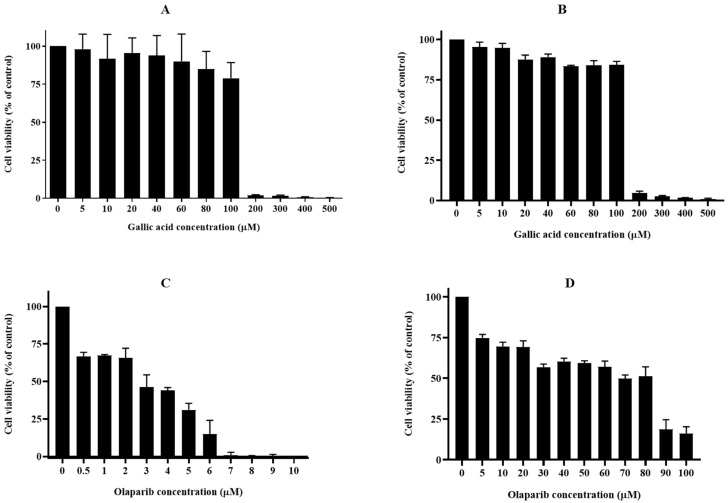
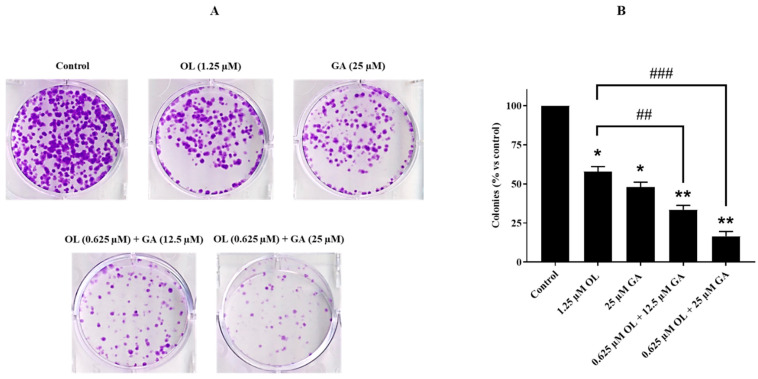
Cancer remains one of the most formidable diseases globally and continues to be a leading cause of mortality. While chemotherapeutic agents are crucial in cancer treatment, they often come with severe side effects. Furthermore, the development of acquired drug resistance poses a significant challenge in the ongoing battle against cancer. Combining these chemotherapeutic agents with plant-derived phenolic compounds offers a promising approach, potentially reducing side effects and counteracting drug resistance. Phytochemicals, the bioactive compounds found in plants, exhibit a range of health-promoting properties, including anticarcinogenic, antimutagenic, antiproliferative, antioxidant, antimicrobial, neuroprotective, and cardioprotective effects. Their ability to enhance treatment, coupled with their non-toxic, multi-targeted nature and synergistic potential when used alongside conventional drugs, underscores the growing importance of natural therapeutics. In this study, we investigated the anticancer effects of olaparib (OL), a small-molecule PARP inhibitor that has shown promising results in both preclinical and clinical trials, and gallic acid (GA), a phenolic compound, in olaparib-resistant human osteosarcoma U2OS cells (U2OS-PIR). Both parental U2OS and U2OS-PIR cell lines were treated with increasing concentrations of olaparib and gallic acid, and their cytotoxic effects were assessed using the WST-1 cell viability assay. The synergistic potential of OL and GA, based on their determined IC50 values, was further explored in combination treatment. A colony survival assay revealed the combination's ability to significantly reduce the colony-forming capacity of cancer cells. Additionally, the apoptotic effects of OL and GA, both individually and in combination, were examined in U2OS-PIR cells using acridine orange/ethidium bromide dual staining. The anti-angiogenic properties were assessed through a VEGF ELISA, while the expression of proteins involved in DNA damage and apoptotic signaling pathways was analyzed via Western blot. The results of this study demonstrate that gallic acid effectively suppresses cell viability and colony formation, particularly when used in combination therapy to combat OL resistance. Additionally, GA inhibits angiogenesis and induces DNA damage and apoptosis by modulating key apoptosis-related proteins, including cPARP, Bcl-2, and Bax. These findings highlight gallic acid as a potential compound for enhancing therapeutic efficacy in overcoming acquired drug resistance.
期刊介绍:
Current Issues in Molecular Biology (CIMB) is a peer-reviewed journal publishing review articles and minireviews in all areas of molecular biology and microbiology. Submitted articles are subject to an Article Processing Charge (APC) and are open access immediately upon publication. All manuscripts undergo a peer-review process.





 京公网安备 11010802042870号
京ICP备2023020795号-1
京公网安备 11010802042870号
京ICP备2023020795号-1

 分享
分享
 求助内容:
求助内容: 应助结果提醒方式:
 扫码关注我们
