{"title":"The Role of the DNA Methyltransferase Family and the Therapeutic Potential of DNMT Inhibitors in Tumor Treatment.","authors":"Dae Joong Kim","doi":"10.3390/curroncol32020088","DOIUrl":null,"url":null,"abstract":"<p><p>Members of the DNA methyltransferase (DNMT) family have been recognized as major epigenetic regulators of altered gene expression during tumor development. They establish and maintain DNA methylation of the CpG island of promoter and non-CpG region of the genome. The abnormal methylation status of tumor suppressor genes (TSGs) has been associated with tumorigenesis, leading to genomic instability, improper gene silence, and immune evasion. DNMT1 helps preserve methylation patterns during DNA replication, whereas the DNMT3 family is responsible for de novo methylation, creating new methylation patterns. Altered DNA methylation significantly supports tumor growth by changing gene expression patterns. FDA-approved DNMT inhibitors reverse hypermethylation-induced gene repression and improve therapeutic outcomes for cancer. Recent studies indicate that combining DNMT inhibitors with chemotherapies and immunotherapies can have synergistic effects, especially in aggressive metastatic tumors. Improving the treatment schedules, increasing isoform specificity, reducing toxicity, and utilizing genome-wide analyses of CRISPR-based editing to create personalized epigenetic therapies tailored to individual patient needs are promising strategies for enhancing therapeutic outcomes. This review discusses the interaction between DNMT regulators and DNMT1, its binding partners, the connection between DNA methylation and tumors, how these processes contribute to tumor development, and DNMT inhibitors' advancements and pharmacological properties.</p>","PeriodicalId":11012,"journal":{"name":"Current oncology","volume":"32 2","pages":""},"PeriodicalIF":3.4000,"publicationDate":"2025-02-05","publicationTypes":"Journal Article","fieldsOfStudy":null,"isOpenAccess":false,"openAccessPdf":"https://www.ncbi.nlm.nih.gov/pmc/articles/PMC11854558/pdf/","citationCount":"0","resultStr":null,"platform":"Semanticscholar","paperid":null,"PeriodicalName":"Current oncology","FirstCategoryId":"3","ListUrlMain":"https://doi.org/10.3390/curroncol32020088","RegionNum":4,"RegionCategory":"医学","ArticlePicture":[],"TitleCN":null,"AbstractTextCN":null,"PMCID":null,"EPubDate":"","PubModel":"","JCR":"Q2","JCRName":"ONCOLOGY","Score":null,"Total":0}
引用次数: 0
Abstract
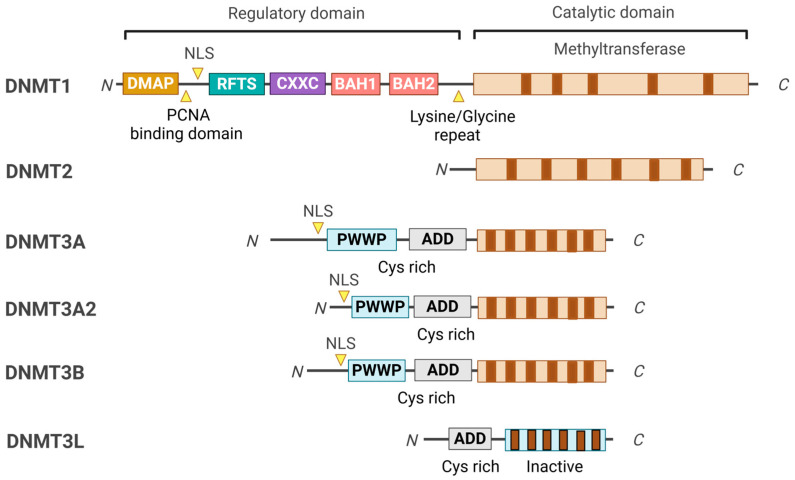
Members of the DNA methyltransferase (DNMT) family have been recognized as major epigenetic regulators of altered gene expression during tumor development. They establish and maintain DNA methylation of the CpG island of promoter and non-CpG region of the genome. The abnormal methylation status of tumor suppressor genes (TSGs) has been associated with tumorigenesis, leading to genomic instability, improper gene silence, and immune evasion. DNMT1 helps preserve methylation patterns during DNA replication, whereas the DNMT3 family is responsible for de novo methylation, creating new methylation patterns. Altered DNA methylation significantly supports tumor growth by changing gene expression patterns. FDA-approved DNMT inhibitors reverse hypermethylation-induced gene repression and improve therapeutic outcomes for cancer. Recent studies indicate that combining DNMT inhibitors with chemotherapies and immunotherapies can have synergistic effects, especially in aggressive metastatic tumors. Improving the treatment schedules, increasing isoform specificity, reducing toxicity, and utilizing genome-wide analyses of CRISPR-based editing to create personalized epigenetic therapies tailored to individual patient needs are promising strategies for enhancing therapeutic outcomes. This review discusses the interaction between DNMT regulators and DNMT1, its binding partners, the connection between DNA methylation and tumors, how these processes contribute to tumor development, and DNMT inhibitors' advancements and pharmacological properties.
期刊介绍:
Current Oncology is a peer-reviewed, Canadian-based and internationally respected journal. Current Oncology represents a multidisciplinary medium encompassing health care workers in the field of cancer therapy in Canada to report upon and to review progress in the management of this disease.
We encourage submissions from all fields of cancer medicine, including radiation oncology, surgical oncology, medical oncology, pediatric oncology, pathology, and cancer rehabilitation and survivorship. Articles published in the journal typically contain information that is relevant directly to clinical oncology practice, and have clear potential for application to the current or future practice of cancer medicine.





 京公网安备 11010802042870号
京ICP备2023020795号-1
京公网安备 11010802042870号
京ICP备2023020795号-1

 分享
分享
 求助内容:
求助内容: 应助结果提醒方式:
 扫码关注我们
