Bone Remodeling Around Implants with Different Macro-Design Placed in Post-Extraction Sockets: A Cone-Beam Computed Tomography (CBCT) Randomized Controlled Clinical Trial (RCT).
Roberta Grassi, Fábio França Vieira E Silva, Gennaro Musella, Francesco Pettini, Gisela Cristina Vianna Camolesi, Martina Coppini, Stefania Cantore
{"title":"Bone Remodeling Around Implants with Different Macro-Design Placed in Post-Extraction Sockets: A Cone-Beam Computed Tomography (CBCT) Randomized Controlled Clinical Trial (RCT).","authors":"Roberta Grassi, Fábio França Vieira E Silva, Gennaro Musella, Francesco Pettini, Gisela Cristina Vianna Camolesi, Martina Coppini, Stefania Cantore","doi":"10.3390/dj13020078","DOIUrl":null,"url":null,"abstract":"<p><p><b>Background:</b> Immediate post-extraction dental implants are increasingly popular, but ensuring primary stability and managing peri-implant tissues remain challenging. Implant macro-design significantly impacts stability and osseointegration. This study used Cone-beam Computed Tomography (CBCT) to evaluate changes in alveolar bone following immediate placement of two implant designs, System 2P and Dura-Vit 3P, which feature semi-conical microgeometry and apical self-tapping portions for improved stability and bone regeneration. <b>Methods:</b> With a 1:1 allocation ratio, the current investigation was a two-arm parallel group randomized clinical trial. Patients qualified if they required immediate dental replacements with adequate buccal bone support. Two types of implants were placed: System 2P (cylindrical shape) and Dura-Vit 3P (more conical shape, with a particular architecture of threads). Following the intervention, CBCT was performed both immediately (T1) and six months later (T2). Measurements of CBCT horizontal bone level at apical, medial, and bevel height on the palatal/lingual and vestibular sides as well as the buccal vertical gap were the primary results. Complications, implant stability quotient (ISQ), and torque insertion were evaluated. The Mann-Whitney test was used to determine time-based differences within each group, while the Wilcoxon test was used to estimate differences between groups. The impact of baseline marginal gap dimension and gingival biotype was estimated using multiple regressions. <b>Results:</b> Thirty patients were recruited and randomized to treatments, with two lost to follow-up. One System 2P implant failed and two patients of the Dura-Vit 3P group dropped out. At T1, the Dura-Vit 3P group exhibited a lower mean insertion torque and a higher ISQ than the System 2P group. Furthermore, the Dura-Vit 3P group showed lower bone reduction compared to System 2P at horizontal and vertical measurements with significant differences for the vestibular and palatal base and medial level (<i>p</i>-values < 0.05). Regression models indicated a positive effect of thick biotypes on gap filling and dimensional bone reduction. No complications were observed in both groups. <b>Conclusions:</b> The Dura-Vit 3P implant exhibits high primary stability when inserted in post-extraction sites. Furthermore, this kind of implant stimulates higher bone stability on both the palatal and buccal side when compared to the System 2P implant. The present findings support the evidence that the macro-design of the Dura-Vit 3P implant promotes increased primary stability and reduces bone loss.</p>","PeriodicalId":11269,"journal":{"name":"Dentistry Journal","volume":"13 2","pages":""},"PeriodicalIF":3.1000,"publicationDate":"2025-02-11","publicationTypes":"Journal Article","fieldsOfStudy":null,"isOpenAccess":false,"openAccessPdf":"https://www.ncbi.nlm.nih.gov/pmc/articles/PMC11854716/pdf/","citationCount":"0","resultStr":null,"platform":"Semanticscholar","paperid":null,"PeriodicalName":"Dentistry Journal","FirstCategoryId":"1085","ListUrlMain":"https://doi.org/10.3390/dj13020078","RegionNum":0,"RegionCategory":null,"ArticlePicture":[],"TitleCN":null,"AbstractTextCN":null,"PMCID":null,"EPubDate":"","PubModel":"","JCR":"Q2","JCRName":"DENTISTRY, ORAL SURGERY & MEDICINE","Score":null,"Total":0}
引用次数: 0
Abstract
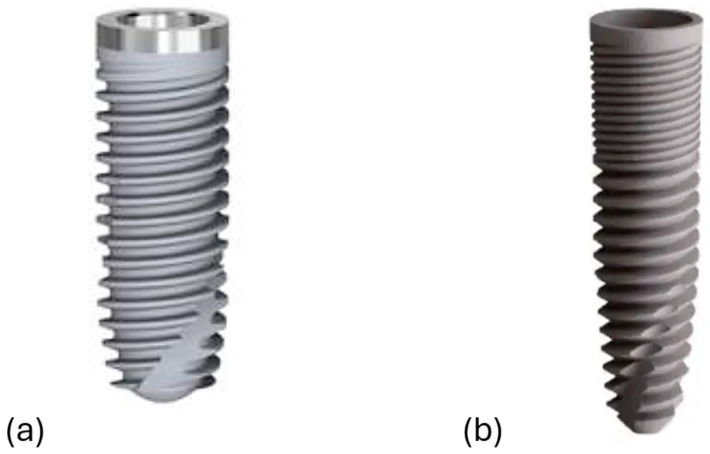
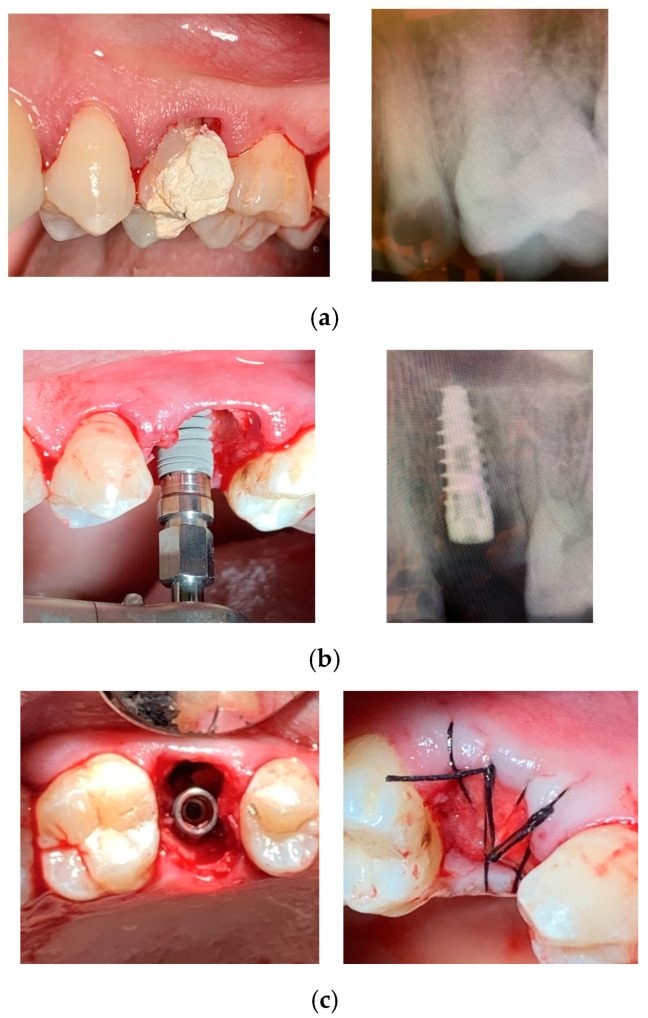
Background: Immediate post-extraction dental implants are increasingly popular, but ensuring primary stability and managing peri-implant tissues remain challenging. Implant macro-design significantly impacts stability and osseointegration. This study used Cone-beam Computed Tomography (CBCT) to evaluate changes in alveolar bone following immediate placement of two implant designs, System 2P and Dura-Vit 3P, which feature semi-conical microgeometry and apical self-tapping portions for improved stability and bone regeneration. Methods: With a 1:1 allocation ratio, the current investigation was a two-arm parallel group randomized clinical trial. Patients qualified if they required immediate dental replacements with adequate buccal bone support. Two types of implants were placed: System 2P (cylindrical shape) and Dura-Vit 3P (more conical shape, with a particular architecture of threads). Following the intervention, CBCT was performed both immediately (T1) and six months later (T2). Measurements of CBCT horizontal bone level at apical, medial, and bevel height on the palatal/lingual and vestibular sides as well as the buccal vertical gap were the primary results. Complications, implant stability quotient (ISQ), and torque insertion were evaluated. The Mann-Whitney test was used to determine time-based differences within each group, while the Wilcoxon test was used to estimate differences between groups. The impact of baseline marginal gap dimension and gingival biotype was estimated using multiple regressions. Results: Thirty patients were recruited and randomized to treatments, with two lost to follow-up. One System 2P implant failed and two patients of the Dura-Vit 3P group dropped out. At T1, the Dura-Vit 3P group exhibited a lower mean insertion torque and a higher ISQ than the System 2P group. Furthermore, the Dura-Vit 3P group showed lower bone reduction compared to System 2P at horizontal and vertical measurements with significant differences for the vestibular and palatal base and medial level (p-values < 0.05). Regression models indicated a positive effect of thick biotypes on gap filling and dimensional bone reduction. No complications were observed in both groups. Conclusions: The Dura-Vit 3P implant exhibits high primary stability when inserted in post-extraction sites. Furthermore, this kind of implant stimulates higher bone stability on both the palatal and buccal side when compared to the System 2P implant. The present findings support the evidence that the macro-design of the Dura-Vit 3P implant promotes increased primary stability and reduces bone loss.






 京公网安备 11010802042870号
京ICP备2023020795号-1
京公网安备 11010802042870号
京ICP备2023020795号-1

 分享
分享
 求助内容:
求助内容: 应助结果提醒方式:
 扫码关注我们
