Hyperacute reactivation of cytomegalovirus-induced gastroduodenitis during remission induction in a young male patient with granulomatosis with polyangiitis: a case report and review of literature.
Nisha Annie George, Sandeep Surendran, Roopa Rachel Paulose, Manu Pradeep
{"title":"Hyperacute reactivation of cytomegalovirus-induced gastroduodenitis during remission induction in a young male patient with granulomatosis with polyangiitis: a case report and review of literature.","authors":"Nisha Annie George, Sandeep Surendran, Roopa Rachel Paulose, Manu Pradeep","doi":"10.1186/s13256-025-05103-7","DOIUrl":null,"url":null,"abstract":"<p><strong>Background: </strong>Cytomegalovirus is a pathogen known to aggravate the inflammatory response in autoimmune diseases via molecular mimicry. Although it is recognized that cytomegalovirus activation can happen during extended but variable periods of immunosuppression (14-90 days), it is rarely reported in conjunction with an acute flare-up of an autoimmune disease. Currently, there is no consensus on cytomegalovirus prophylaxis for patients initiating remission induction.</p><p><strong>Case presentation: </strong>Here, we present the case of a 31-year-old male patient of South Indian ethnicity, presenting with a 2-month history of fever, conductive hearing loss, and ear discharge. This was associated with symmetrical inflammatory polyarthritis for 1 month, unilateral painful conjunctivitis, and skin erythema for 5 days. Blood analyses showed elevated inflammatory markers; strongly positive anti-proteinase 3 and cytoplasmic antineutrophil cytoplasmic antibody levels; normal procalcitonin and complement levels; and negative anti-myeloperoxidase and perinuclear antineutrophil cytoplasmic antibody levels. A nasal endoscopy revealed a midline granuloma with vasculitis features on biopsy. Imaging revealed pulmonary nodules and otomastoiditis. Now diagnosed with granulomatosis with polyangiitis, the patient developed signs of gastroduodenitis within a day of initiation of immunosuppression with high-dose \"pulse\" intravenous methylprednisolone. We evaluated him for mesenteric ischemia/gastrointestinal vasculitis. However, the duodenal biopsies from the bleeding ulcers revealed a probable cytomegalovirus infection, confirmed with high serum viral loads. We treated him with a ganciclovir regimen and transitioned him to steroid-sparing immunosuppressant therapy with mycophenolate mofetil, which was selected over cyclophosphamide for its noninferior effectiveness and better safety profile in non-life-threatening granulomatosis with polyangiitis disease. The patient recovered uneventfully and is currently in remission.</p><p><strong>Conclusion: </strong>Cytomegalovirus reactivation is possible during short-term steroid pulse therapy. Further research is needed to evaluate whether routine cytomegalovirus screening is warranted before starting immunosuppressive treatment with high-dose steroids in autoimmune conditions.</p>","PeriodicalId":16236,"journal":{"name":"Journal of Medical Case Reports","volume":"19 1","pages":"68"},"PeriodicalIF":0.8000,"publicationDate":"2025-02-24","publicationTypes":"Journal Article","fieldsOfStudy":null,"isOpenAccess":false,"openAccessPdf":"https://www.ncbi.nlm.nih.gov/pmc/articles/PMC11849236/pdf/","citationCount":"0","resultStr":null,"platform":"Semanticscholar","paperid":null,"PeriodicalName":"Journal of Medical Case Reports","FirstCategoryId":"1085","ListUrlMain":"https://doi.org/10.1186/s13256-025-05103-7","RegionNum":0,"RegionCategory":null,"ArticlePicture":[],"TitleCN":null,"AbstractTextCN":null,"PMCID":null,"EPubDate":"","PubModel":"","JCR":"Q3","JCRName":"MEDICINE, GENERAL & INTERNAL","Score":null,"Total":0}
引用次数: 0
Abstract
Background: Cytomegalovirus is a pathogen known to aggravate the inflammatory response in autoimmune diseases via molecular mimicry. Although it is recognized that cytomegalovirus activation can happen during extended but variable periods of immunosuppression (14-90 days), it is rarely reported in conjunction with an acute flare-up of an autoimmune disease. Currently, there is no consensus on cytomegalovirus prophylaxis for patients initiating remission induction.
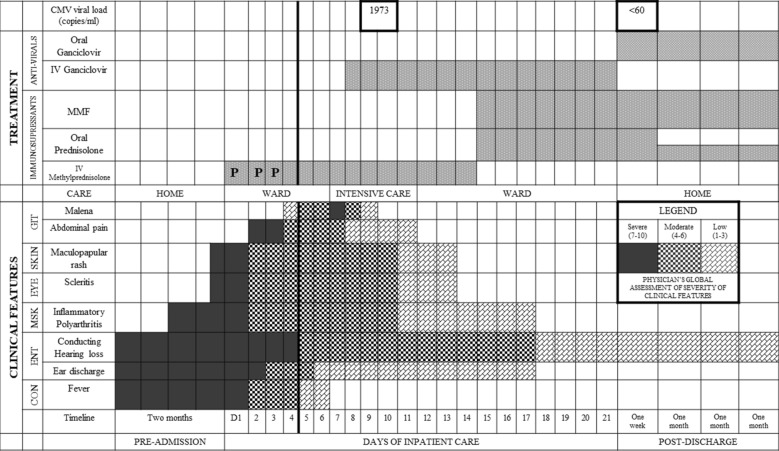
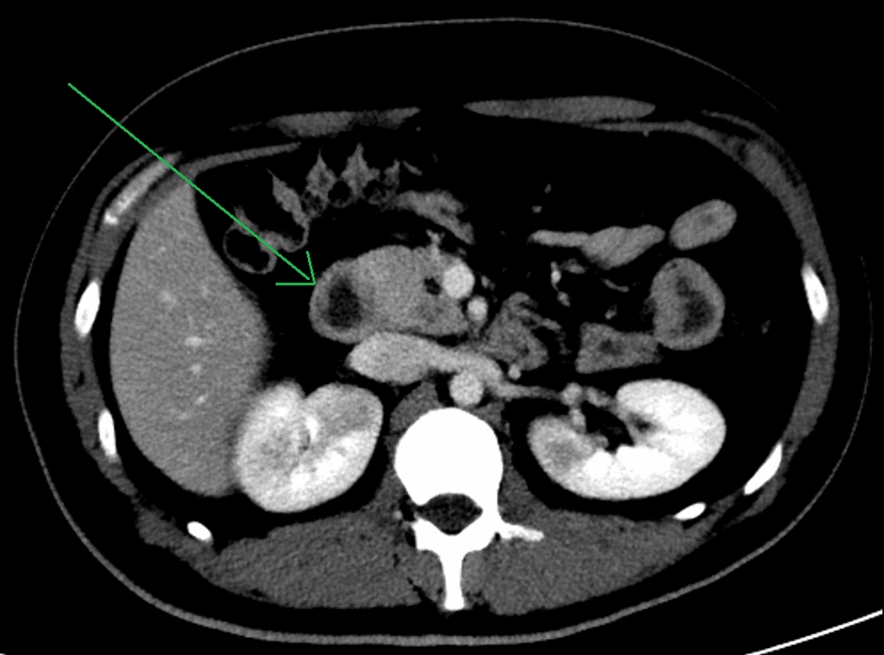
Case presentation: Here, we present the case of a 31-year-old male patient of South Indian ethnicity, presenting with a 2-month history of fever, conductive hearing loss, and ear discharge. This was associated with symmetrical inflammatory polyarthritis for 1 month, unilateral painful conjunctivitis, and skin erythema for 5 days. Blood analyses showed elevated inflammatory markers; strongly positive anti-proteinase 3 and cytoplasmic antineutrophil cytoplasmic antibody levels; normal procalcitonin and complement levels; and negative anti-myeloperoxidase and perinuclear antineutrophil cytoplasmic antibody levels. A nasal endoscopy revealed a midline granuloma with vasculitis features on biopsy. Imaging revealed pulmonary nodules and otomastoiditis. Now diagnosed with granulomatosis with polyangiitis, the patient developed signs of gastroduodenitis within a day of initiation of immunosuppression with high-dose "pulse" intravenous methylprednisolone. We evaluated him for mesenteric ischemia/gastrointestinal vasculitis. However, the duodenal biopsies from the bleeding ulcers revealed a probable cytomegalovirus infection, confirmed with high serum viral loads. We treated him with a ganciclovir regimen and transitioned him to steroid-sparing immunosuppressant therapy with mycophenolate mofetil, which was selected over cyclophosphamide for its noninferior effectiveness and better safety profile in non-life-threatening granulomatosis with polyangiitis disease. The patient recovered uneventfully and is currently in remission.
Conclusion: Cytomegalovirus reactivation is possible during short-term steroid pulse therapy. Further research is needed to evaluate whether routine cytomegalovirus screening is warranted before starting immunosuppressive treatment with high-dose steroids in autoimmune conditions.
期刊介绍:
JMCR is an open access, peer-reviewed online journal that will consider any original case report that expands the field of general medical knowledge. Reports should show one of the following: 1. Unreported or unusual side effects or adverse interactions involving medications 2. Unexpected or unusual presentations of a disease 3. New associations or variations in disease processes 4. Presentations, diagnoses and/or management of new and emerging diseases 5. An unexpected association between diseases or symptoms 6. An unexpected event in the course of observing or treating a patient 7. Findings that shed new light on the possible pathogenesis of a disease or an adverse effect



 京公网安备 11010802042870号
京ICP备2023020795号-1
京公网安备 11010802042870号
京ICP备2023020795号-1

 分享
分享
 求助内容:
求助内容: 应助结果提醒方式:
 扫码关注我们
