Elena Porcellato, Corrado Lanera, Honoria Ocagli, Matteo Danielis
{"title":"Exploring Applications of Artificial Intelligence in Critical Care Nursing: A Systematic Review.","authors":"Elena Porcellato, Corrado Lanera, Honoria Ocagli, Matteo Danielis","doi":"10.3390/nursrep15020055","DOIUrl":null,"url":null,"abstract":"<p><p><b>Background:</b> Artificial intelligence (AI) has been increasingly employed in healthcare across diverse domains, including medical imaging, personalized diagnostics, therapeutic interventions, and predictive analytics using electronic health records. Its integration is particularly impactful in critical care, where AI has demonstrated the potential to enhance patient outcomes. This systematic review critically evaluates the current applications of AI within the domain of critical care nursing. <b>Methods:</b> This systematic review is registered with PROSPERO (CRD42024545955) and was conducted in accordance with PRISMA guidelines. Comprehensive searches were performed across MEDLINE/PubMed, SCOPUS, CINAHL, and Web of Science. <b>Results:</b> The initial review identified 1364 articles, of which 24 studies met the inclusion criteria. These studies employed diverse AI techniques, including classical models (e.g., logistic regression), machine learning approaches (e.g., support vector machines, random forests), deep learning architectures (e.g., neural networks), and generative AI tools (e.g., ChatGPT). The analyzed health outcomes encompassed postoperative complications, ICU admissions and discharges, triage assessments, pressure injuries, sepsis, delirium, and predictions of adverse events or critical vital signs. Most studies relied on structured data from electronic medical records, such as vital signs and laboratory results, supplemented by unstructured data, including nursing notes and patient histories; two studies also integrated audio data. <b>Conclusion:</b> AI demonstrates significant potential in nursing, facilitating the use of clinical practice data for research and decision-making. The choice of AI techniques varies based on the specific objectives and requirements of the model. However, the heterogeneity of the studies included in this review limits the ability to draw definitive conclusions about the effectiveness of AI applications in critical care nursing. Future research should focus on more robust, interventional studies to assess the impact of AI on nursing-sensitive outcomes. Additionally, exploring a broader range of health outcomes and AI applications in critical care will be crucial for advancing AI integration in nursing practices.</p>","PeriodicalId":40753,"journal":{"name":"Nursing Reports","volume":"15 2","pages":""},"PeriodicalIF":2.0000,"publicationDate":"2025-02-04","publicationTypes":"Journal Article","fieldsOfStudy":null,"isOpenAccess":false,"openAccessPdf":"https://www.ncbi.nlm.nih.gov/pmc/articles/PMC11857867/pdf/","citationCount":"0","resultStr":null,"platform":"Semanticscholar","paperid":null,"PeriodicalName":"Nursing Reports","FirstCategoryId":"1085","ListUrlMain":"https://doi.org/10.3390/nursrep15020055","RegionNum":0,"RegionCategory":null,"ArticlePicture":[],"TitleCN":null,"AbstractTextCN":null,"PMCID":null,"EPubDate":"","PubModel":"","JCR":"Q1","JCRName":"NURSING","Score":null,"Total":0}
引用次数: 0
Abstract
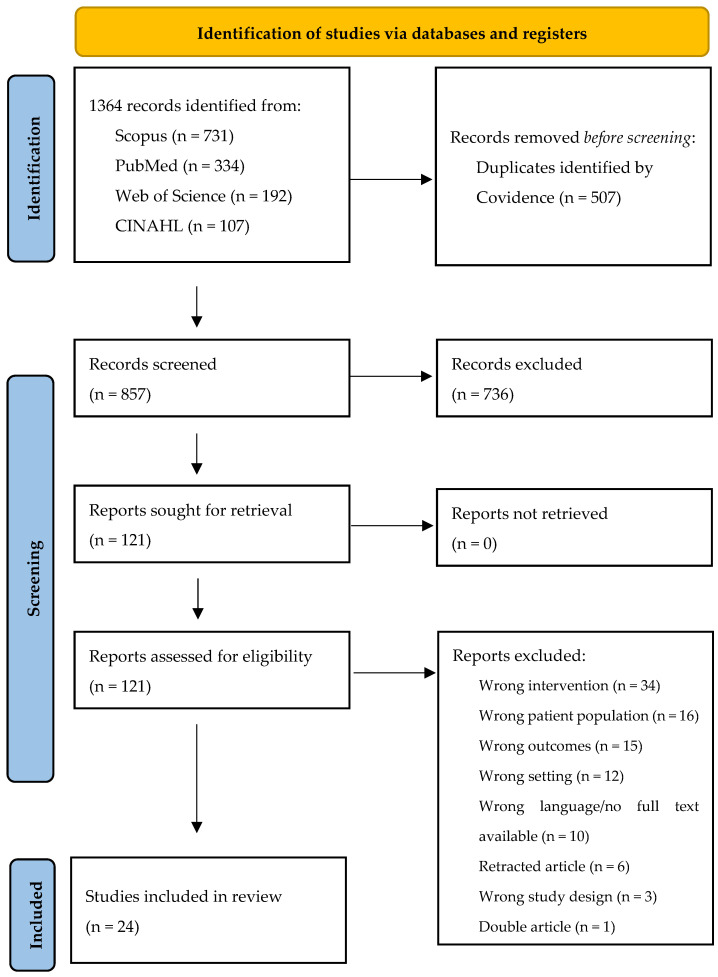
Background: Artificial intelligence (AI) has been increasingly employed in healthcare across diverse domains, including medical imaging, personalized diagnostics, therapeutic interventions, and predictive analytics using electronic health records. Its integration is particularly impactful in critical care, where AI has demonstrated the potential to enhance patient outcomes. This systematic review critically evaluates the current applications of AI within the domain of critical care nursing. Methods: This systematic review is registered with PROSPERO (CRD42024545955) and was conducted in accordance with PRISMA guidelines. Comprehensive searches were performed across MEDLINE/PubMed, SCOPUS, CINAHL, and Web of Science. Results: The initial review identified 1364 articles, of which 24 studies met the inclusion criteria. These studies employed diverse AI techniques, including classical models (e.g., logistic regression), machine learning approaches (e.g., support vector machines, random forests), deep learning architectures (e.g., neural networks), and generative AI tools (e.g., ChatGPT). The analyzed health outcomes encompassed postoperative complications, ICU admissions and discharges, triage assessments, pressure injuries, sepsis, delirium, and predictions of adverse events or critical vital signs. Most studies relied on structured data from electronic medical records, such as vital signs and laboratory results, supplemented by unstructured data, including nursing notes and patient histories; two studies also integrated audio data. Conclusion: AI demonstrates significant potential in nursing, facilitating the use of clinical practice data for research and decision-making. The choice of AI techniques varies based on the specific objectives and requirements of the model. However, the heterogeneity of the studies included in this review limits the ability to draw definitive conclusions about the effectiveness of AI applications in critical care nursing. Future research should focus on more robust, interventional studies to assess the impact of AI on nursing-sensitive outcomes. Additionally, exploring a broader range of health outcomes and AI applications in critical care will be crucial for advancing AI integration in nursing practices.
背景:人工智能(AI)已越来越多地应用于医疗保健的各个领域,包括医学成像、个性化诊断、治疗干预和使用电子健康记录的预测分析。它的整合在重症监护方面尤其有影响力,人工智能已经证明了提高患者治疗效果的潜力。这篇系统综述批判性地评估了目前人工智能在重症护理领域的应用。方法:本系统评价已在PROSPERO注册(CRD42024545955),并按照PRISMA指南进行。在MEDLINE/PubMed、SCOPUS、CINAHL和Web of Science上进行了全面的搜索。结果:初审共纳入1364篇文献,其中24篇符合纳入标准。这些研究采用了多种人工智能技术,包括经典模型(如逻辑回归)、机器学习方法(如支持向量机、随机森林)、深度学习架构(如神经网络)和生成式人工智能工具(如ChatGPT)。分析的健康结果包括术后并发症、ICU入院和出院、分诊评估、压力损伤、败血症、谵妄以及不良事件或关键生命体征的预测。大多数研究依赖于电子医疗记录中的结构化数据,如生命体征和实验室结果,辅以非结构化数据,包括护理记录和患者病史;两项研究也整合了音频数据。结论:人工智能在护理领域显示出巨大的潜力,有助于将临床实践数据用于研究和决策。AI技术的选择取决于模型的具体目标和要求。然而,本综述中纳入的研究的异质性限制了对人工智能在重症护理中应用的有效性得出明确结论的能力。未来的研究应侧重于更稳健的介入研究,以评估人工智能对护理敏感结果的影响。此外,探索更广泛的健康结果和人工智能在重症监护中的应用对于推进人工智能在护理实践中的整合至关重要。
期刊介绍:
Nursing Reports is an open access, peer-reviewed, online-only journal that aims to influence the art and science of nursing by making rigorously conducted research accessible and understood to the full spectrum of practicing nurses, academics, educators and interested members of the public. The journal represents an exhilarating opportunity to make a unique and significant contribution to nursing and the wider community by addressing topics, theories and issues that concern the whole field of Nursing Science, including research, practice, policy and education. The primary intent of the journal is to present scientifically sound and influential empirical and theoretical studies, critical reviews and open debates to the global community of nurses. Short reports, opinions and insight into the plight of nurses the world-over will provide a voice for those of all cultures, governments and perspectives. The emphasis of Nursing Reports will be on ensuring that the highest quality of evidence and contribution is made available to the greatest number of nurses. Nursing Reports aims to make original, evidence-based, peer-reviewed research available to the global community of nurses and to interested members of the public. In addition, reviews of the literature, open debates on professional issues and short reports from around the world are invited to contribute to our vibrant and dynamic journal. All published work will adhere to the most stringent ethical standards and journalistic principles of fairness, worth and credibility. Our journal publishes Editorials, Original Articles, Review articles, Critical Debates, Short Reports from Around the Globe and Letters to the Editor.




 京公网安备 11010802042870号
京ICP备2023020795号-1
京公网安备 11010802042870号
京ICP备2023020795号-1

 分享
分享
 求助内容:
求助内容: 应助结果提醒方式:
 扫码关注我们
