{"title":"Biting Hour and Host Seeking Behavior of <i>Aedes</i> Species in Urban Settings, Metema District, Northwest Ethiopia.","authors":"Wondmeneh Jemberie, Sisay Dugassa, Abebe Animut","doi":"10.3390/tropicalmed10020038","DOIUrl":null,"url":null,"abstract":"<p><strong>Background: </strong><i>Aedes</i> species transmit arboviral diseases, such as dengue, chikungunya, yellow fever, and Zika. The diseases cause severe sickness, mortality, and economic losses. This study describes the biting hour and host-seeking behavior of <i>Ae. aegypti</i> and <i>Ae. vittatus</i> in three towns. Recently, chikungunya and dengue infections were reported in the study sites.</p><p><strong>Methods: </strong>Biting hour and host-seeking behaviors of <i>Ae. aegypti</i> and <i>Ae. vittatus</i> were studied from June to September 2023, in Genda-Wuha, Kokit, and Metema-Yohannes towns, Metema district, Northwest Ethiopia. CDC-LT traps were set running indoors and outdoors for 24 h closer to humans sleeping inside unimpregnated mosquito nets. At the same time, CDC-LT traps were set running overnight closer to domestic animals' shelters located within a 50-m radius of the main residence. Mosquitoes trapped in CDC-LT were collected every hour. The study was conducted four times in each town during the wet season. A chi-square test was employed to examine biting hour and host-seeking behavior.</p><p><strong>Results: </strong><i>Aedes aegypti</i> was observed to be highly exophilic and active during the daylight hours. <i>Aedes aegypti</i> exhibited a peak biting rate between 07:00 and 08:00 with the biting rate of 4.5/person/hour followed by from 17:00 pm to 18:00 pm with the biting rate of 3.75/person/hour. The hourly biting rate of <i>Ae. aegypti</i> differed significantly. Its peak indoor biting rate was from 19:00 to 20:00 with the rate of 2.00 bites/person/hour followed by from 08:00 to 09:00 with the rate of 1.50 bites/person/hour and the biting rates differed significantly across the hours (F = 240.046; <i>p</i> = 0.001). <i>Aedes vittatus</i> also exhibited a biting rate similar to that of <i>Ae. aegypti</i>. Both <i>Ae. aegypti</i> and <i>Ae. vittatus</i> were abundantly collected from nearby human sleeping arrangements than from the shelters of cattle, sheep, goats, and donkeys. The highest proportions of <i>Ae. aegypti</i> (91.21%) and <i>Ae. vittatus</i> (89.87%) were unfed.</p><p><strong>Conclusions: </strong><i>Aedes aegypti</i> and <i>Ae. vittatus</i> exhibited peak biting rates during morning and early night hours that aligned with the active daily routine practices of the local community. This could potentially expose the inhabitants to viral diseases transmitted by <i>Ae. aegypti</i> and <i>Ae. vittatus</i>.</p>","PeriodicalId":23330,"journal":{"name":"Tropical Medicine and Infectious Disease","volume":"10 2","pages":""},"PeriodicalIF":3.1000,"publicationDate":"2025-01-28","publicationTypes":"Journal Article","fieldsOfStudy":null,"isOpenAccess":false,"openAccessPdf":"https://www.ncbi.nlm.nih.gov/pmc/articles/PMC11860606/pdf/","citationCount":"0","resultStr":null,"platform":"Semanticscholar","paperid":null,"PeriodicalName":"Tropical Medicine and Infectious Disease","FirstCategoryId":"3","ListUrlMain":"https://doi.org/10.3390/tropicalmed10020038","RegionNum":4,"RegionCategory":"医学","ArticlePicture":[],"TitleCN":null,"AbstractTextCN":null,"PMCID":null,"EPubDate":"","PubModel":"","JCR":"Q2","JCRName":"INFECTIOUS DISEASES","Score":null,"Total":0}
引用次数: 0
Abstract
Background: Aedes species transmit arboviral diseases, such as dengue, chikungunya, yellow fever, and Zika. The diseases cause severe sickness, mortality, and economic losses. This study describes the biting hour and host-seeking behavior of Ae. aegypti and Ae. vittatus in three towns. Recently, chikungunya and dengue infections were reported in the study sites.
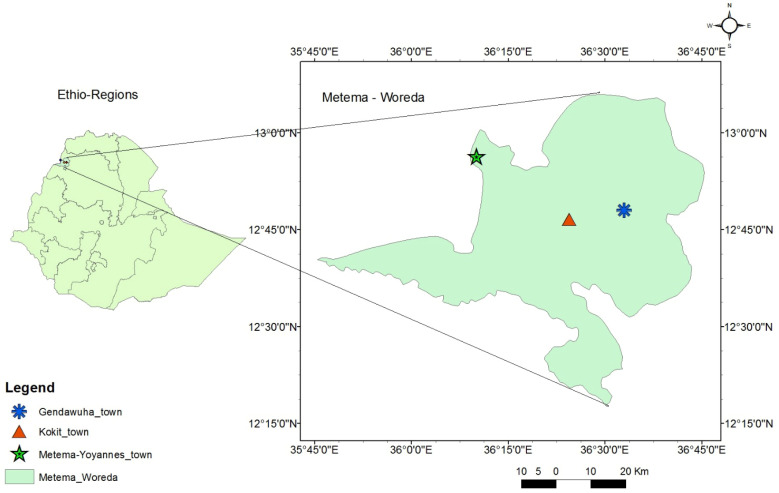
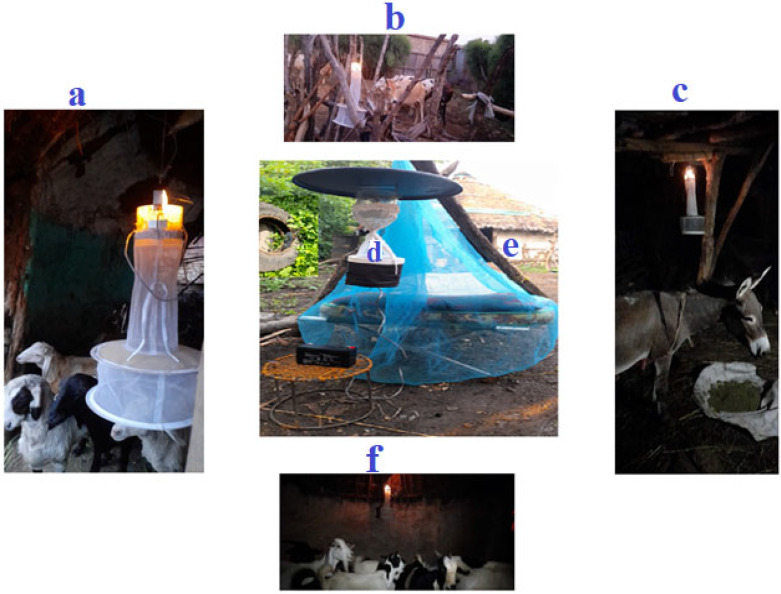
Methods: Biting hour and host-seeking behaviors of Ae. aegypti and Ae. vittatus were studied from June to September 2023, in Genda-Wuha, Kokit, and Metema-Yohannes towns, Metema district, Northwest Ethiopia. CDC-LT traps were set running indoors and outdoors for 24 h closer to humans sleeping inside unimpregnated mosquito nets. At the same time, CDC-LT traps were set running overnight closer to domestic animals' shelters located within a 50-m radius of the main residence. Mosquitoes trapped in CDC-LT were collected every hour. The study was conducted four times in each town during the wet season. A chi-square test was employed to examine biting hour and host-seeking behavior.
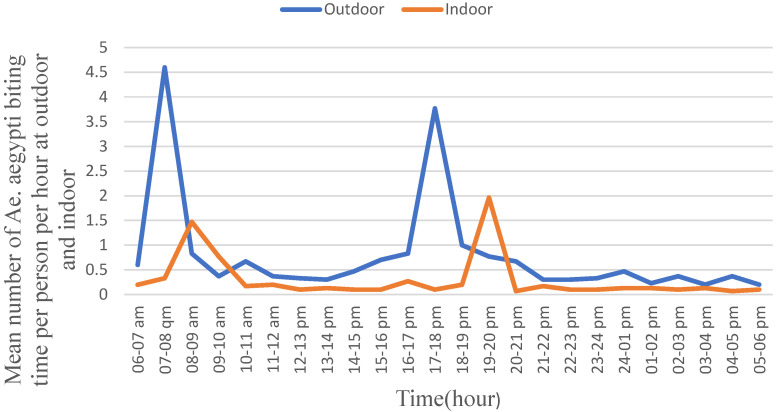
Results: Aedes aegypti was observed to be highly exophilic and active during the daylight hours. Aedes aegypti exhibited a peak biting rate between 07:00 and 08:00 with the biting rate of 4.5/person/hour followed by from 17:00 pm to 18:00 pm with the biting rate of 3.75/person/hour. The hourly biting rate of Ae. aegypti differed significantly. Its peak indoor biting rate was from 19:00 to 20:00 with the rate of 2.00 bites/person/hour followed by from 08:00 to 09:00 with the rate of 1.50 bites/person/hour and the biting rates differed significantly across the hours (F = 240.046; p = 0.001). Aedes vittatus also exhibited a biting rate similar to that of Ae. aegypti. Both Ae. aegypti and Ae. vittatus were abundantly collected from nearby human sleeping arrangements than from the shelters of cattle, sheep, goats, and donkeys. The highest proportions of Ae. aegypti (91.21%) and Ae. vittatus (89.87%) were unfed.
Conclusions: Aedes aegypti and Ae. vittatus exhibited peak biting rates during morning and early night hours that aligned with the active daily routine practices of the local community. This could potentially expose the inhabitants to viral diseases transmitted by Ae. aegypti and Ae. vittatus.





 京公网安备 11010802042870号
京ICP备2023020795号-1
京公网安备 11010802042870号
京ICP备2023020795号-1

 分享
分享
 求助内容:
求助内容: 应助结果提醒方式:
 扫码关注我们
