{"title":"Predictive Value of Hyperintense Acute Reperfusion Marker in Transient Ischemic Attacks: Stroke Recurrence and TOAST Classification.","authors":"Sang-Hoon Han, Kyu-Sun Yum","doi":"10.3390/brainsci15020170","DOIUrl":null,"url":null,"abstract":"<p><strong>Background: </strong>Transient ischemic attack (TIA) is a recognized precursor of stroke that also indicates a high risk of recurrence. The Hyperintense Acute Reperfusion Marker (HARM), which is linked to blood-brain barrier disruption, may serve as a novel imaging biomarker for TIA.</p><p><strong>Methods: </strong>A retrospective cohort study of 715 patients with TIA evaluated the predictive value of HARM for stroke recurrence and its association with TOAST subtype. Imaging findings, including those of diffusion-weighted imaging, were analyzed using logistic regression.</p><p><strong>Results: </strong>HARM-positive patients had significantly higher recurrence rates at 3 months (20.9%; odds ratio [OR] = 5.3) and 1 year (30.2%; OR = 5.8) compared to HARM-negative patients, relative to other imaging markers (<i>p</i> < 0.001). HARM was significantly associated with the cardioembolic stroke (<i>p</i> < 0.001).</p><p><strong>Conclusions: </strong>HARM is a promising imaging biomarker for predicting stroke recurrence and etiology in patients experiencing TIA. Incorporating HARM into clinical frameworks may enhance diagnostic and prognostic accuracy.</p>","PeriodicalId":9095,"journal":{"name":"Brain Sciences","volume":"15 2","pages":""},"PeriodicalIF":2.8000,"publicationDate":"2025-02-10","publicationTypes":"Journal Article","fieldsOfStudy":null,"isOpenAccess":false,"openAccessPdf":"https://www.ncbi.nlm.nih.gov/pmc/articles/PMC11853318/pdf/","citationCount":"0","resultStr":null,"platform":"Semanticscholar","paperid":null,"PeriodicalName":"Brain Sciences","FirstCategoryId":"3","ListUrlMain":"https://doi.org/10.3390/brainsci15020170","RegionNum":3,"RegionCategory":"医学","ArticlePicture":[],"TitleCN":null,"AbstractTextCN":null,"PMCID":null,"EPubDate":"","PubModel":"","JCR":"Q3","JCRName":"NEUROSCIENCES","Score":null,"Total":0}
引用次数: 0
Abstract
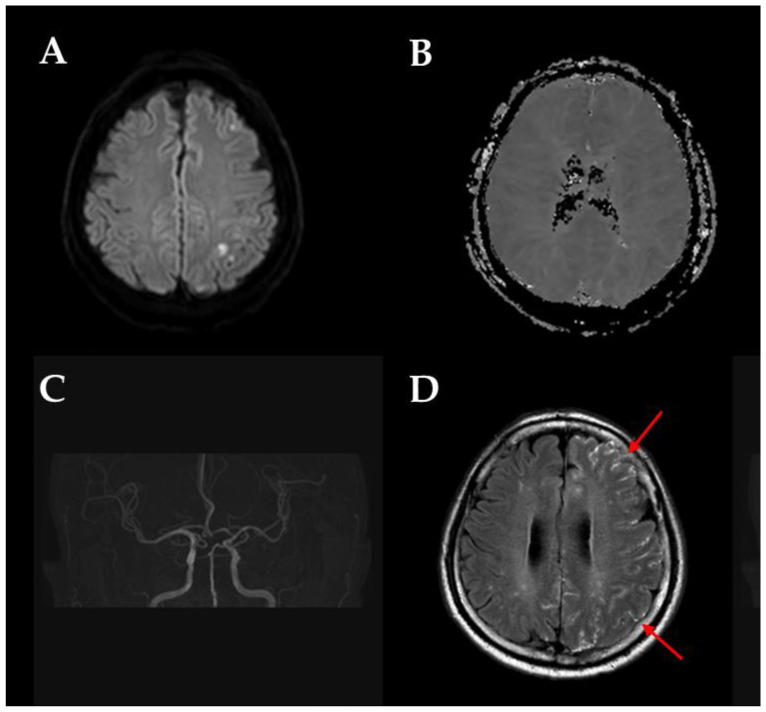
Background: Transient ischemic attack (TIA) is a recognized precursor of stroke that also indicates a high risk of recurrence. The Hyperintense Acute Reperfusion Marker (HARM), which is linked to blood-brain barrier disruption, may serve as a novel imaging biomarker for TIA.
Methods: A retrospective cohort study of 715 patients with TIA evaluated the predictive value of HARM for stroke recurrence and its association with TOAST subtype. Imaging findings, including those of diffusion-weighted imaging, were analyzed using logistic regression.
Results: HARM-positive patients had significantly higher recurrence rates at 3 months (20.9%; odds ratio [OR] = 5.3) and 1 year (30.2%; OR = 5.8) compared to HARM-negative patients, relative to other imaging markers (p < 0.001). HARM was significantly associated with the cardioembolic stroke (p < 0.001).
Conclusions: HARM is a promising imaging biomarker for predicting stroke recurrence and etiology in patients experiencing TIA. Incorporating HARM into clinical frameworks may enhance diagnostic and prognostic accuracy.
期刊介绍:
Brain Sciences (ISSN 2076-3425) is a peer-reviewed scientific journal that publishes original articles, critical reviews, research notes and short communications in the areas of cognitive neuroscience, developmental neuroscience, molecular and cellular neuroscience, neural engineering, neuroimaging, neurolinguistics, neuropathy, systems neuroscience, and theoretical and computational neuroscience. Our aim is to encourage scientists to publish their experimental and theoretical results in as much detail as possible. There is no restriction on the length of the papers. The full experimental details must be provided so that the results can be reproduced. Electronic files or software regarding the full details of the calculation and experimental procedure, if unable to be published in a normal way, can be deposited as supplementary material.





 京公网安备 11010802042870号
京ICP备2023020795号-1
京公网安备 11010802042870号
京ICP备2023020795号-1

 分享
分享
 求助内容:
求助内容: 应助结果提醒方式:
 扫码关注我们
